Inquire: Call 0086-755-23203480, or reach out via the form below/your sales contact to discuss our design, manufacturing, and assembly capabilities.
Quote: Email your PCB files to Sales@pcbsync.com (Preferred for large files) or submit online. We will contact you promptly. Please ensure your email is correct.
Notes: For PCB fabrication, we require PCB design file in Gerber RS-274X format (most preferred), *.PCB/DDB (Protel, inform your program version) format or *.BRD (Eagle) format. For PCB assembly, we require PCB design file in above mentioned format, drilling file and BOM. Click to download BOM template To avoid file missing, please include all files into one folder and compress it into .zip or .rar format.
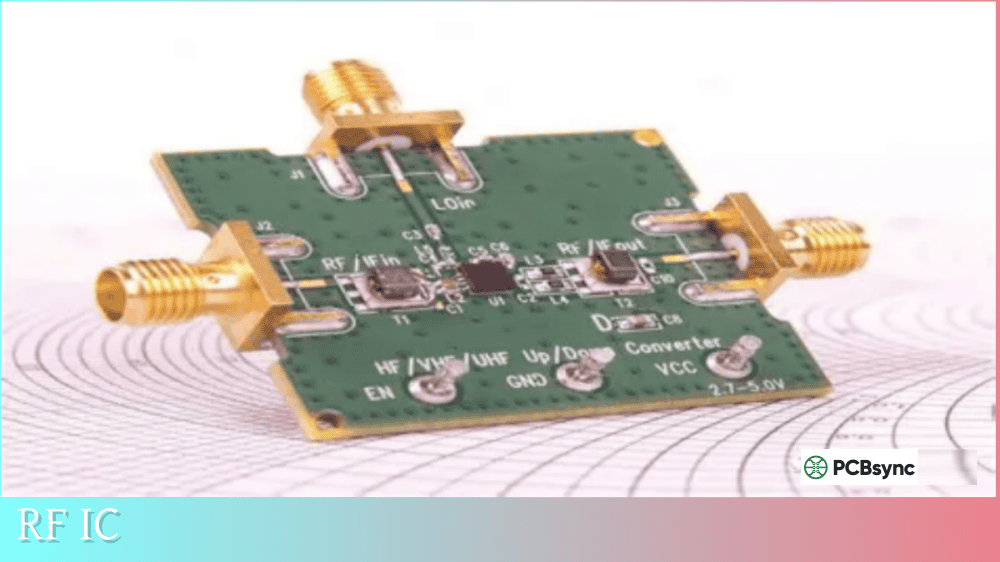
After spending over a decade designing PCBs with RF sections, I can tell you that understanding RF IC fundamentals separates functional wireless designs from those that end up in the rework pile. This radio frequency IC guide covers everything you need to know about RF IC technology, from basic principles to practical PCB implementation.
What is an RF IC and Why Does It Matter?
An RF IC, or Radio Frequency Integrated Circuit, is a specialized chip designed to process signals in the radio frequency spectrum, typically ranging from 3 kHz to 300 GHz. Unlike standard digital ICs that work with discrete logic levels, RF ICs handle continuous analog signals that require precise control over frequency, phase, and amplitude.
Back when I started in this field, building a wireless transceiver meant soldering dozens of discrete components, each introducing its own impedance mismatches and noise problems. Modern RF ICs pack all that functionality into a single chip the size of your thumbnail. This integration has enabled everything from the smartphone in your pocket to the satellite communication systems orbiting overhead.
The global RF IC market reflects this importance. Industry projections estimate the market reaching $68.6 billion by 2030, driven primarily by 5G deployment, IoT proliferation, and increasing demand for wireless connectivity across virtually every electronic device category.
Every RF IC contains several fundamental circuit blocks working together. Understanding these components helps you make better decisions during component selection and troubleshooting.
Low Noise Amplifier (LNA)
The LNA sits at the front end of any receiver chain, amplifying weak incoming signals while adding minimal noise. Here’s the thing most datasheets don’t emphasize enough: the LNA’s noise figure essentially sets the noise floor for your entire receive path. The Friis equation tells us that noise contributions from subsequent stages get divided by the preceding gain, so getting that first stage right is critical.
When evaluating LNAs, I focus on three parameters: noise figure (lower is better, typically 1-3 dB for good designs), gain (10-20 dB range works well), and input P1dB (determines how much signal the stage can handle before compressing).
Mixer
Mixers perform frequency translation by combining the incoming RF signal with a local oscillator signal. This produces sum and difference frequencies, allowing the system to shift signals to more convenient intermediate frequencies for processing. Double-balanced mixer architectures reduce LO feedthrough and improve isolation between ports.
Power Amplifier (PA)
On the transmit side, the PA boosts signal power for transmission. This is where efficiency matters enormously, especially in battery-powered devices. Class AB and Class D amplifier topologies represent different tradeoffs between linearity and power efficiency that you’ll need to navigate based on your modulation scheme.
Voltage Controlled Oscillator (VCO)
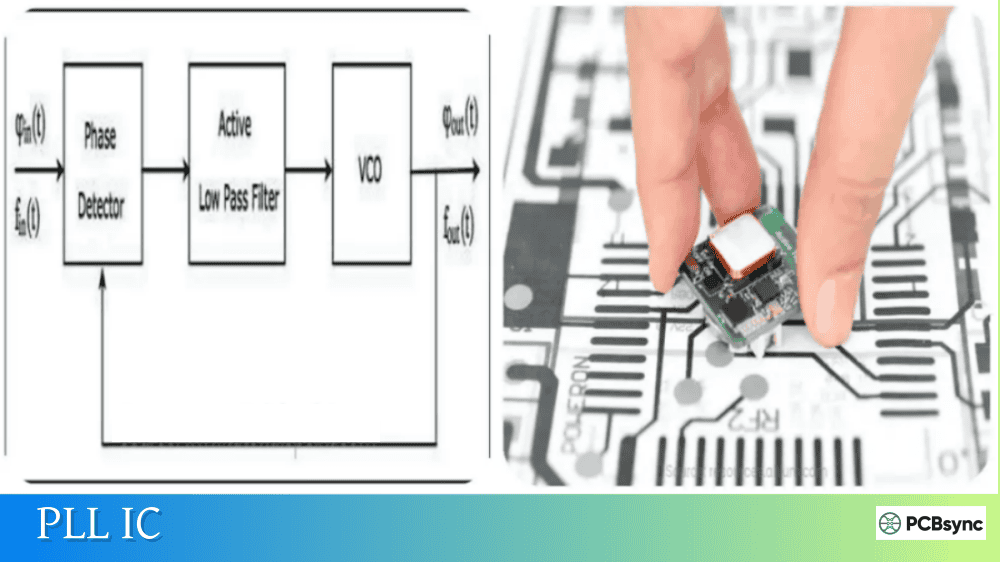
The VCO generates the local oscillator signal used for frequency mixing. Phase noise from the VCO directly impacts receiver sensitivity and transmitter spectral purity. Modern RF ICs typically integrate the VCO with a phase-locked loop (PLL) for stable frequency synthesis.
Filters
Bandpass, lowpass, and highpass filters shape the frequency response throughout the signal chain. Surface acoustic wave (SAW) and bulk acoustic wave (BAW) filters provide the selectivity needed for modern wireless standards, though some RF ICs integrate on-chip filtering for less demanding applications.
RF IC Technology Comparison
Different semiconductor processes offer distinct advantages for RF applications. Your choice impacts performance, power consumption, and cost.
CMOS dominates consumer applications due to its excellent integration capabilities and low cost. You can put RF, analog, and digital circuits on the same die, which is exactly what happens inside your phone’s wireless chipset. For applications demanding the absolute best noise performance, GaAs pHEMT remains the gold standard, though SiGe offers a compelling middle ground.
Key RF IC Parameters Every Designer Should Know
When reviewing RF IC datasheets, these specifications determine whether a part will work in your application.
Noise Figure (NF)
Noise figure quantifies how much the device degrades signal-to-noise ratio. It’s expressed in dB, with lower values indicating better performance. For receiver front-ends, target noise figures below 3 dB. The cascaded noise figure equation shows why LNA selection matters so much:
Measured in dB, gain indicates signal amplification. Most RF ICs specify gain at several frequencies since it varies across the operating band. Gain flatness (variation across frequency) matters for wideband applications.
Third-Order Intercept Point (IP3)
IP3 characterizes linearity and indicates how well the device handles multiple signals without generating distortion products. Higher IP3 values mean better performance in congested RF environments. This becomes critical when designing receivers that must operate near strong interfering signals.
P1dB Compression Point
The input or output power level at which gain drops 1 dB from its linear value. This tells you the maximum signal level the device can handle while maintaining acceptable linearity.
Summary of Critical RF IC Parameters
Parameter
Typical Range
Design Impact
Noise Figure
0.5 – 6 dB
Receiver sensitivity
Gain
10 – 30 dB
Signal chain architecture
IP3 (input)
-10 to +25 dBm
Dynamic range, blocking performance
P1dB (output)
-5 to +35 dBm
Maximum output power
Return Loss
10 – 20 dB
Impedance matching quality
Isolation
20 – 40 dB
Port-to-port leakage
Operating Frequency
MHz to 100+ GHz
Application suitability
RF IC Applications Across Industries
Radio frequency ICs enable wireless functionality across an remarkably diverse range of applications.
Mobile Communications
Smartphones contain multiple RF ICs handling cellular (4G LTE, 5G NR), WiFi, Bluetooth, GPS, and NFC. Modern devices use RF front-end modules that integrate LNAs, PAs, switches, and filters into compact packages.
Internet of Things (IoT)
IoT devices prioritize low power consumption and small form factor. RF ICs supporting Bluetooth Low Energy, Zigbee, Thread, and LoRa enable the sensor networks and smart home devices that define this space.
Automotive Systems
Vehicle applications include radar (77 GHz for collision avoidance), V2X communication, keyless entry, tire pressure monitoring, and infotainment connectivity. Automotive-grade RF ICs meet stringent reliability requirements for extended temperature ranges and long operational lifetimes.
Satellite Communications
Ground terminals and spacecraft alike rely on RF ICs for signal amplification, frequency conversion, and modulation. Ka-band and Ku-band systems demand performance at frequencies well above typical consumer applications.
Industrial and Medical
RFID systems for inventory tracking, wireless patient monitoring, medical imaging equipment, and industrial automation all depend on specialized RF IC solutions.
PCB Design Guidelines for RF IC Integration
Getting RF ICs to perform correctly on your board requires attention to layout details that digital designers often overlook. These lessons come from boards that worked and boards that didn’t.
Ground Plane Strategy
Use a solid, unbroken ground plane directly beneath RF components and transmission lines. On a 4-layer board, dedicate Layer 2 entirely to ground. Never route signals across splits in the ground plane under RF traces. Ground discontinuities create return current detours that radiate and couple noise.
For BGA packaged RF ICs, include thermal vias under the ground paddle. I typically use a 5×5 array of 0.25mm vias for a 7mm package. These serve dual purposes: providing RF ground return and conducting heat away from the die.
Transmission Line Design
RF traces aren’t just wires, they’re transmission lines. Maintain consistent 50Ω impedance throughout the RF signal path. For microstrip on FR-4 with a 10-mil dielectric, you’re looking at approximately 18-mil trace width, but always verify with your actual stackup and material properties.
Keep RF traces as short as possible. At 2.4 GHz, wavelength in FR-4 is roughly 62mm, so a 15mm trace represents nearly a quarter wavelength where impedance transformations become significant.
When turns are necessary, use curved traces with a radius at least three times the trace width. Right angles create impedance discontinuities and radiate at higher frequencies.
Component Placement
Position matching network components immediately adjacent to the RF IC pins. Every millimeter of trace between the IC and the first matching component adds parasitic inductance that detunes your circuit. Use 0402 or smaller components to minimize parasitics.
Keep decoupling capacitors within 1mm of power pins. Use multiple values in parallel: a bulk cap (10µF) at the power entry, medium values (100nF) near the IC, and small values (10pF-100pF) right at the pins for RF bypassing. The small caps must have self-resonant frequencies above your operating frequency to remain capacitive.
Isolation Techniques
Separate RF sections from digital circuitry. Clock harmonics and switching noise from MCUs and Altera FPGA devices can desensitize receivers if not properly managed. Use guard traces connected to ground with via stitching at λ/10 to λ/20 intervals around sensitive nodes.
These problems show up repeatedly across RF projects.
Impedance Mismatch
Symptoms include poor range, high current draw, and return loss failures. Use a vector network analyzer to measure actual impedance, then design matching networks using L-sections, π-networks, or transmission line stubs. Smith chart analysis helps visualize the transformation needed.
Oscillator Instability
Frequency drift or phase noise problems often trace to inadequate power supply decoupling or thermal issues. Add ferrite beads in series with power lines feeding the VCO section. Ensure thermal paths conduct heat away from oscillator components.
Desensitization
When your receiver works fine in isolation but fails in the complete system, look for interference sources. Digital clocks, switching regulators, and even LED drivers generate harmonics that can land in your receive band. Shield sensitive areas and filter aggressively.
PCB Material Considerations
Standard FR-4 works acceptably to about 3 GHz. Beyond that, increased loss tangent causes excessive signal attenuation. Rogers 4350B or similar low-loss materials become necessary for millimeter-wave designs, though they cost significantly more.
RF IC Selection Criteria
When choosing an RF IC for your project, evaluate these factors systematically.
Frequency compatibility: Ensure the IC covers your target bands with margin. ISM bands (915 MHz, 2.4 GHz, 5.8 GHz) have specific regulatory requirements.
Modulation support: Match the modulation schemes to your protocol requirements. FSK handles noisy environments better than ASK. QAM variants enable higher data rates but demand better linearity.
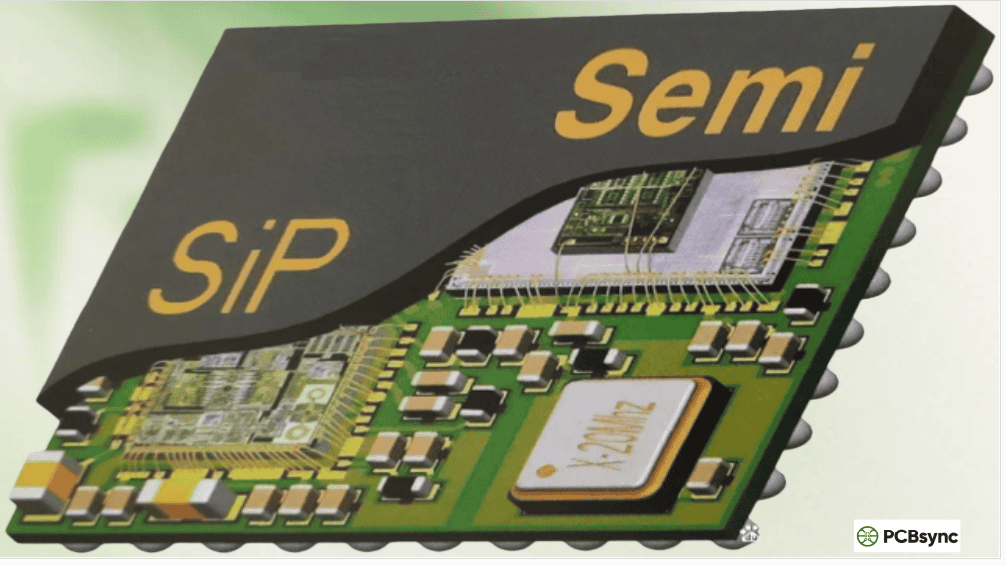
Integration level: More integrated solutions simplify design but offer less flexibility. Single-chip transceivers work great for standard protocols; discrete implementations allow optimization for custom requirements.
Power consumption: Battery life depends heavily on RF IC efficiency. Check both active and standby current specifications.
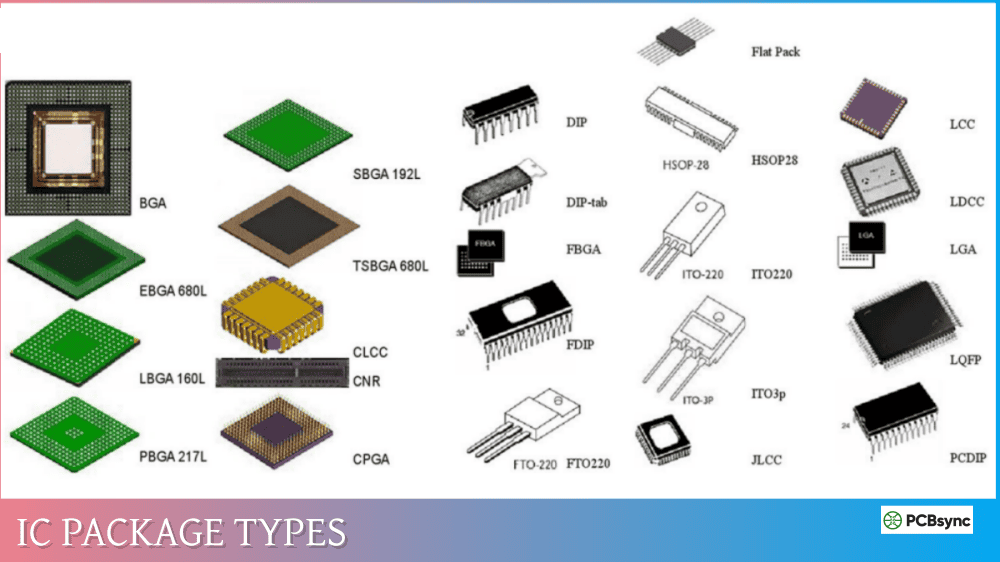
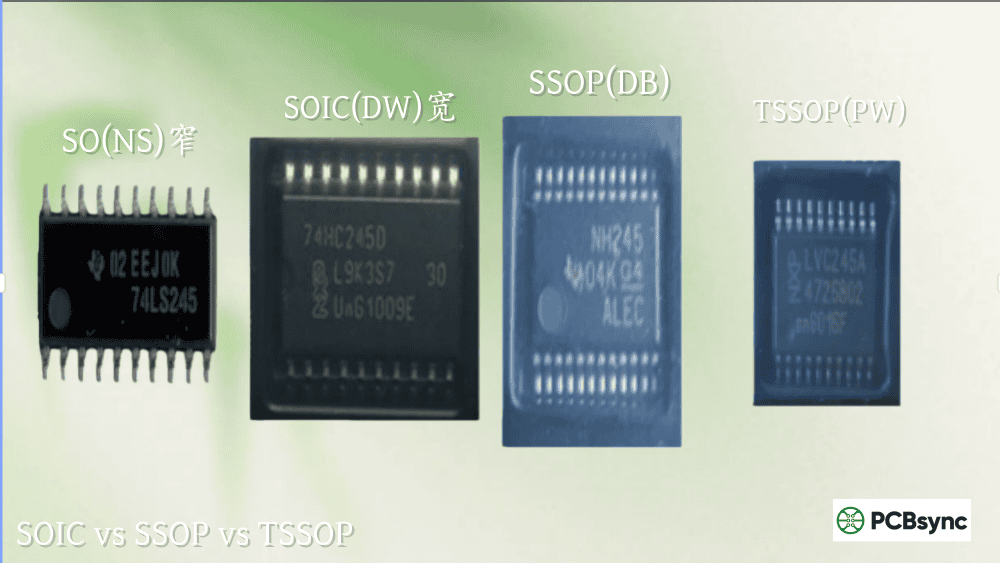
Package type: QFN packages offer good RF performance in compact footprints. Larger packages simplify thermal management but consume board space.
Useful Resources for RF IC Design
These references have proven valuable throughout my career.
Technical Documentation and Standards
IEEE 802.11 specifications for WiFi implementations
3GPP specifications for cellular RF requirements
Analog Devices Application Notes on RF Layout
Texas Instruments RF Design Reference Guides
Design Tools and Calculators
Keysight ADS for RF circuit simulation
Ansys HFSS for electromagnetic field solving
AppCAD (free from Broadcom) for quick calculations
RF transmission line calculators for impedance design
IEEE MTT-S International Microwave Symposium proceedings
Frequently Asked Questions About RF ICs
What is the difference between RF IC and MMIC?
MMIC (Monolithic Microwave Integrated Circuit) is essentially an RF IC designed for microwave frequencies, typically above 1 GHz. The term originated when these circuits were fabricated primarily on GaAs substrates. Today, MMIC often refers specifically to higher-frequency designs, while RF IC serves as the broader category encompassing all radio frequency integrated circuits regardless of operating frequency or process technology.
How do I calculate the noise figure of cascaded RF stages?
Use the Friis formula: NF_total = NF_1 + (NF_2-1)/G_1 + (NF_3-1)/(G_1×G_2), where NF values are in linear ratio (not dB) and G is linear gain. This shows why LNA performance dominates system noise figure, since subsequent stage contributions get divided by preceding gains. Convert dB values to linear ratios first, calculate, then convert back to dB if needed.
Why does my RF IC perform differently on my PCB than the evaluation board?
Evaluation boards use optimized layouts, often on low-loss substrates with carefully designed matching networks. Your board likely has different stackup, trace impedances, grounding, and parasitic elements. Start by matching the eval board layout as closely as possible, including component values and placement. Then use measurements to identify what needs adjustment for your specific implementation.
What causes RF IC sensitivity to decrease over temperature?
Several mechanisms contribute. Noise figure typically increases with temperature due to higher thermal noise and degraded transistor performance. Gain may vary, shifting operating points. Crystal oscillator frequency drift affects frequency accuracy. Most RF ICs specify performance across temperature ranges; check whether specifications apply at room temperature only or across the full range.
How do I choose between integrated RF transceivers and discrete implementations?
Integrated transceivers offer faster development, smaller size, lower component count, and typically lower cost in volume. They work well for standardized protocols where the IC manufacturer has optimized performance. Discrete implementations provide flexibility for custom protocols, allow optimization of individual parameters, and enable performance that exceeds integrated solutions for demanding applications. Consider your development timeline, production volume, and performance requirements when deciding.
Conclusion
RF IC technology continues advancing rapidly, driven by demands for higher frequencies, greater integration, and lower power consumption. The 5G rollout and expanding IoT ecosystem ensure continued innovation in this space.
For PCB designers, success with RF ICs requires respecting the physics of high-frequency signals. Treat every trace as a transmission line, maintain solid ground planes, minimize parasitic elements, and verify performance with measurements rather than assumptions.
The fundamentals covered in this radio frequency IC guide provide a foundation for working with RF technology. Each project brings unique challenges, but understanding these core concepts helps you recognize problems quickly and implement effective solutions.
This article provides technical guidance for RF IC design and implementation. Always consult manufacturer datasheets and application notes for specific component requirements.
Inquire: Call 0086-755-23203480, or reach out via the form below/your sales contact to discuss our design, manufacturing, and assembly capabilities.
Quote: Email your PCB files to Sales@pcbsync.com (Preferred for large files) or submit online. We will contact you promptly. Please ensure your email is correct.
Notes: For PCB fabrication, we require PCB design file in Gerber RS-274X format (most preferred), *.PCB/DDB (Protel, inform your program version) format or *.BRD (Eagle) format. For PCB assembly, we require PCB design file in above mentioned format, drilling file and BOM. Click to download BOM template To avoid file missing, please include all files into one folder and compress it into .zip or .rar format.