Inquire: Call 0086-755-23203480, or reach out via the form below/your sales contact to discuss our design, manufacturing, and assembly capabilities.
Quote: Email your PCB files to Sales@pcbsync.com (Preferred for large files) or submit online. We will contact you promptly. Please ensure your email is correct.
Notes: For PCB fabrication, we require PCB design file in Gerber RS-274X format (most preferred), *.PCB/DDB (Protel, inform your program version) format or *.BRD (Eagle) format. For PCB assembly, we require PCB design file in above mentioned format, drilling file and BOM. Click to download BOM template To avoid file missing, please include all files into one folder and compress it into .zip or .rar format.
If you’ve ever wondered how your smartphone converts your voice into a digital signal, or how your car’s sensors communicate with onboard computers, you’re looking at mixed-signal integrated circuits at work. After spending years designing PCBs that incorporate these chips, I can tell you that understanding mixed-signal ICs is one of the most valuable skills any hardware engineer can develop.
Mixed-signal integrated circuits combine analog and digital circuitry on a single semiconductor die. They serve as the critical bridge between the continuous signals of the real world and the discrete binary language that digital processors understand. Without them, modern electronics simply wouldn’t function the way we’ve come to expect.
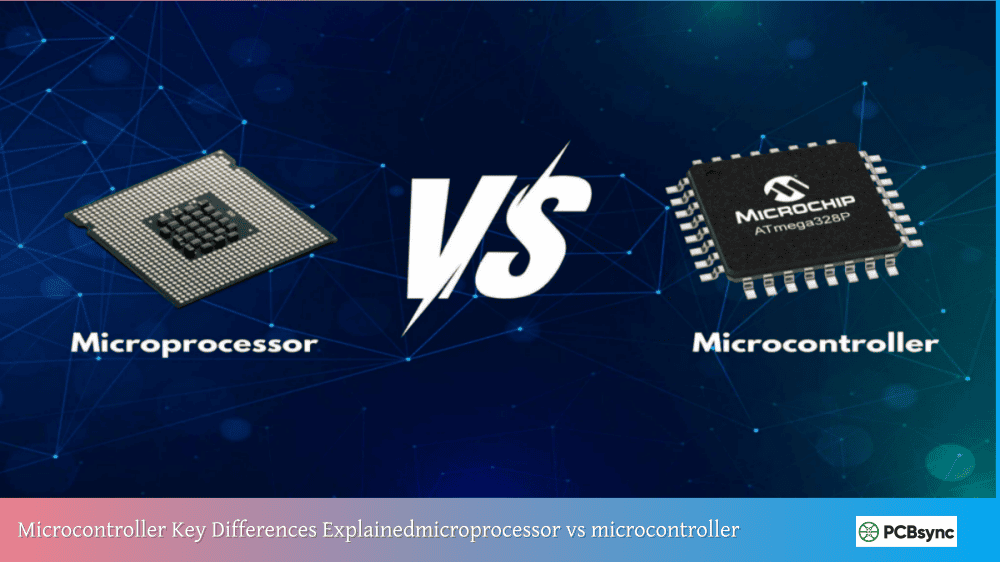
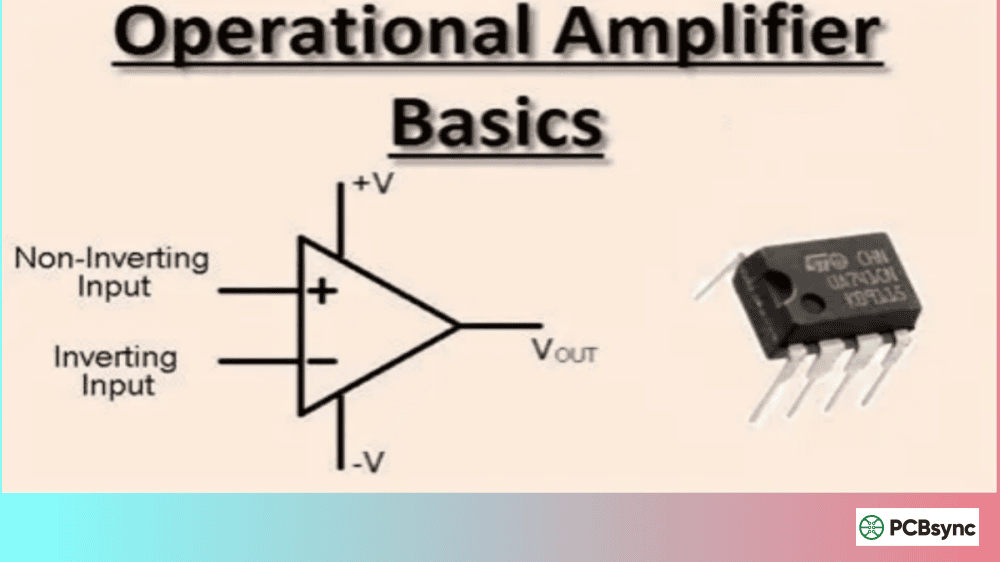
A mixed-signal IC is fundamentally different from pure analog or digital chips. While an operational amplifier deals exclusively with continuous signals and a microprocessor handles only discrete binary data, mixed-signal integrated circuits process both simultaneously on the same piece of silicon.
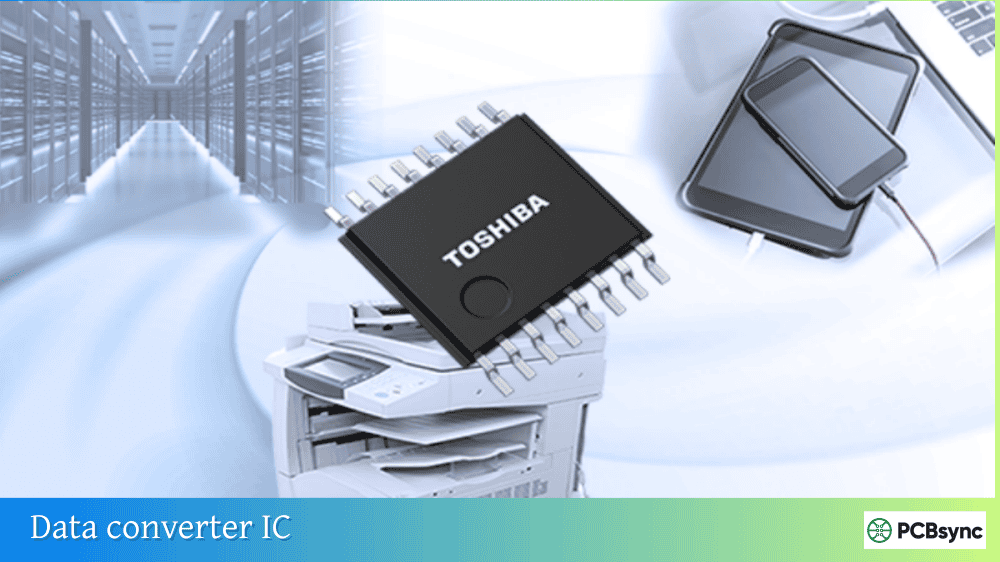
The most recognizable examples are analog-to-digital converters (ADCs) and digital-to-analog converters (DACs). These components sit at the heart of nearly every electronic device that interacts with the physical world. When you speak into your phone, an ADC converts the analog audio waveform into digital data. When that digital music file plays through your speakers, a DAC performs the reverse conversion.
Beyond simple converters, mixed signal IC technology encompasses phase-locked loops (PLLs), power management integrated circuits (PMICs), radio frequency front-ends, and complete system-on-chip (SoC) solutions. Modern smartphones contain dozens of mixed-signal functions integrated across multiple chips.
The Fundamental Challenge of Mixed-Signal Design
Here’s what makes mixed-signal ICs tricky from a design standpoint: analog circuits hate noise, and digital circuits generate enormous amounts of it. Every time a digital transistor switches state, it creates current spikes that propagate through the power supply and substrate. Sensitive analog circuitry picking up this noise can experience degraded performance or complete malfunction.
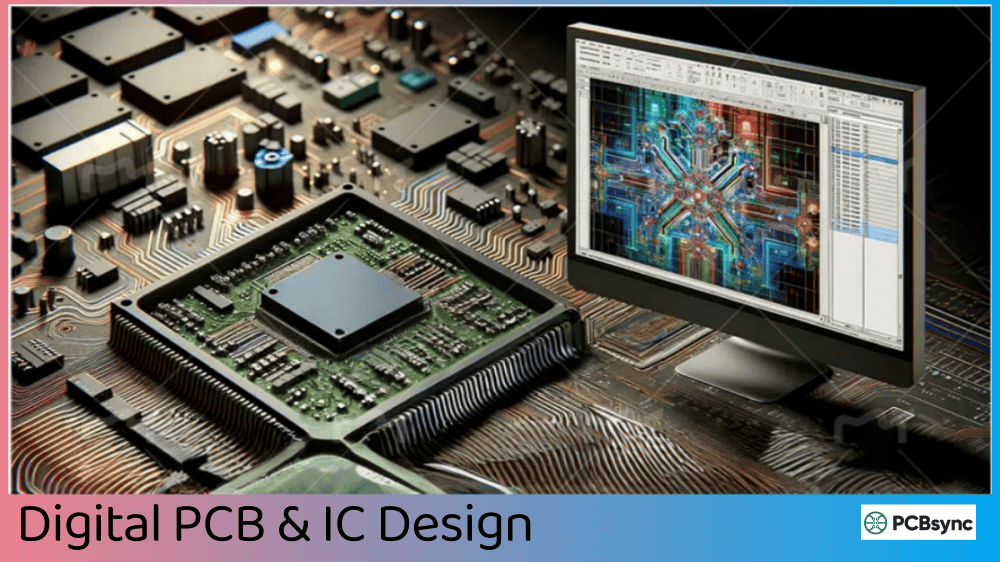
This challenge manifests at both the IC design level and the PCB layout level. Chip designers use techniques like triple-well isolation, guard rings, and careful floorplanning to minimize substrate coupling. As PCB engineers, we inherit this challenge and must implement proper grounding schemes, component placement strategies, and routing practices to maintain signal integrity.
Core Components of Mixed-Signal Integrated Circuits
Understanding the building blocks helps when selecting and implementing these devices in your designs.
Analog-to-Digital Converters (ADCs)
ADCs translate continuous analog voltages into discrete digital codes. Several architectures exist, each with trade-offs between speed, resolution, power consumption, and cost:
ADC Architecture
Resolution Range
Sample Rate
Power
Best Application
Flash
4-8 bits
>1 GSPS
High
High-speed oscilloscopes, radar
SAR (Successive Approximation)
8-20 bits
1 kSPS – 10 MSPS
Low-Medium
Data acquisition, industrial control
Delta-Sigma
16-32 bits
10 SPS – 10 MSPS
Medium
Audio, precision measurement
Pipeline
8-16 bits
10 MSPS – 500 MSPS
Medium-High
Communications, video
For most industrial and consumer applications, SAR and Delta-Sigma converters dominate. SAR converters offer an excellent balance of speed, resolution, and power consumption. Delta-Sigma types excel when you need exceptional resolution and can tolerate lower sample rates.
Digital-to-Analog Converters (DACs)
DACs perform the inverse operation, converting digital codes into analog output voltages or currents. Key specifications include resolution (bit depth), settling time, glitch energy, and linearity.
Modern DACs in mixed-signal integrated circuits achieve impressive specifications. Audio DACs routinely deliver 24-bit resolution with dynamic range exceeding 120 dB. High-speed video DACs operate at gigahertz sample rates while maintaining adequate linearity for demanding applications.
Phase-Locked Loops (PLLs)
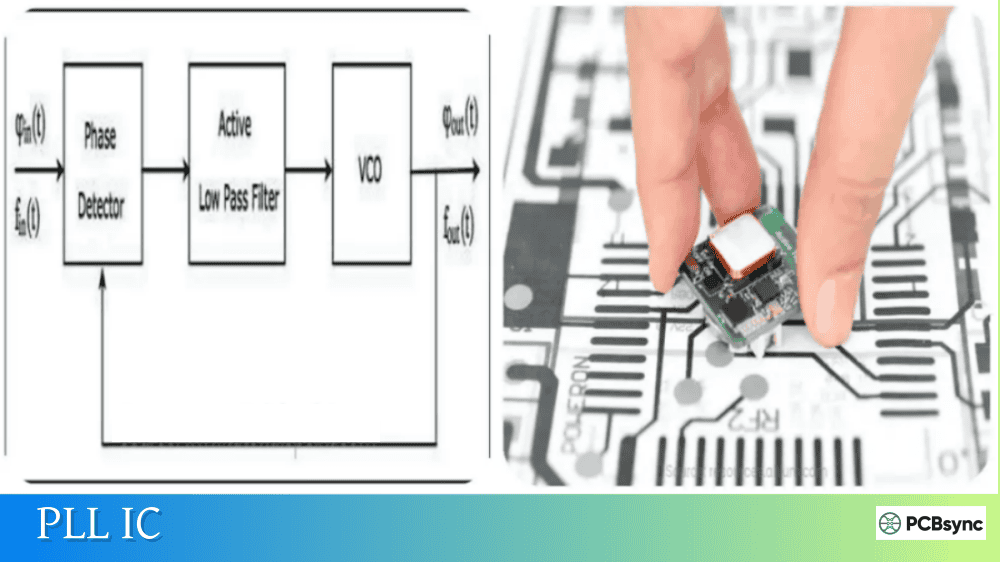
PLLs generate stable clock signals and perform frequency synthesis. In mixed-signal designs, PLLs provide the timing references that synchronize digital logic while also serving analog functions like clock recovery in communication systems.
A typical PLL contains a phase detector, loop filter, voltage-controlled oscillator (VCO), and frequency divider. The mix of analog components (VCO, loop filter) with digital elements (dividers, phase detector logic) makes PLLs quintessential mixed-signal circuits.
Power Management ICs (PMICs)
Power management represents a massive category within mixed-signal design. PMICs integrate multiple voltage regulators, battery chargers, power sequencers, and monitoring functions onto single chips. They combine analog voltage regulation with digital control loops and communication interfaces.
Mixed Signal IC Applications Across Industries
The versatility of mixed-signal technology has made it indispensable across virtually every electronics sector.
Consumer Electronics Applications
Consumer electronics represents the largest market segment for mixed-signal integrated circuits, accounting for approximately 35% of total demand. Smartphones alone contain numerous mixed-signal functions:
Audio codecs for voice calls and media playback
Touchscreen controllers with capacitive sensing
Camera image signal processors
Power management ICs
RF transceivers for cellular, WiFi, and Bluetooth
Sensor interfaces for accelerometers, gyroscopes, and magnetometers
Smart home devices, wearables, and gaming systems similarly depend on mixed-signal technology. The push for longer battery life and smaller form factors continues driving integration levels higher.
Automotive Mixed-Signal IC Applications
The automotive sector shows the fastest growth rate for mixed-signal IC adoption, projected at nearly 9% annually through 2032. Modern vehicles contain hundreds of sensors that require analog-to-digital conversion and processing.
Automotive System
Mixed-Signal Functions
Key Requirements
ADAS (Advanced Driver Assistance)
Radar, LiDAR, camera interfaces
High speed, low latency
Battery Management Systems
Cell monitoring, balancing
High precision, safety
Infotainment
Audio processing, display drivers
High fidelity, integration
Powertrain Control
Sensor interfaces, motor drives
Temperature tolerance, reliability
Body Electronics
Lighting, climate, access control
Cost efficiency, integration
Electric vehicles (EVs) particularly demand sophisticated mixed-signal solutions for battery management, motor control, and charging systems. Autonomous driving features require high-speed sensor fusion that mixed-signal SoCs enable.
Industrial Automation and Control
Factory automation relies heavily on mixed-signal integrated circuits for process control, motor drives, and instrumentation. Programmable logic controllers (PLCs) use mixed-signal front-ends to interface with thousands of sensors and actuators.
Industrial IoT (IIoT) deployments multiply the need for mixed-signal sensor nodes that can digitize physical measurements and communicate wirelessly. Edge computing applications increasingly process sensor data locally, requiring integrated solutions that combine analog front-ends with digital processing capability.
Medical Device Applications
Medical electronics demands the highest precision and reliability from mixed-signal circuits. Patient monitoring equipment, diagnostic imaging systems, and therapeutic devices all rely on accurate signal acquisition and conversion.
Wearable medical devices present particular challenges, requiring ultra-low power consumption while maintaining measurement accuracy. Recent advances have produced mixed-signal ICs specifically optimized for continuous glucose monitors, ECG patches, and pulse oximeters.
Telecommunications and 5G Infrastructure
The rollout of 5G networks has created enormous demand for high-performance mixed-signal integrated circuits. Base station equipment requires wideband ADCs and DACs operating at gigasample rates with excellent spurious-free dynamic range.
Massive MIMO antenna arrays in 5G systems multiply the number of mixed-signal channels required. Each antenna element needs its own transmit and receive chain, driving requirements for highly integrated, multi-channel solutions.
PCB Design Considerations for Mixed-Signal ICs
This is where theory meets practice. Getting mixed-signal designs to work properly on a PCB requires attention to several critical areas.
Component Placement and Floorplanning
Before placing a single component, you need a solid floorplan that separates analog and digital sections. I typically start by identifying the data conversion boundary, where ADCs and DACs sit between analog and digital domains.
Place analog circuits in one region of the board and digital circuits in another. The ADC or DAC should straddle this boundary, positioned so its analog input or output side faces the analog section and its digital interface faces the digital section.
Keep these principles in mind:
Group related components together to minimize trace lengths
Position noisy digital components (microcontrollers, FPGAs, clock generators) away from sensitive analog circuits
Place bypass capacitors as close as physically possible to IC power pins
Consider thermal management for power-hungry components
Grounding Strategies for Mixed-Signal Circuits
Grounding in mixed-signal designs generates more debate than almost any other topic. The traditional approach splits ground planes into separate analog and digital regions, connecting them at a single point near the ADC or DAC.
However, current thinking often favors a unified ground plane for most applications. A solid, continuous ground plane provides the lowest impedance return path for high-frequency signals. Split grounds can actually create problems when high-speed digital signals must cross the gap, creating large return current loops that radiate EMI.
The best approach depends on your specific design:
Design Scenario
Recommended Ground Strategy
Single ADC/DAC with low digital current
Solid unified ground plane
High-power digital switching
Consider split planes with single-point connection
RF sections present
Isolated RF ground with careful connection strategy
Multiple power domains
Partition by power domain rather than signal type
Whatever strategy you choose, track every signal’s return current path. High-frequency signals return through the path of least inductance, which follows directly underneath the signal trace when a solid plane exists.
Signal Routing Best Practices
Route analog and digital signals in their respective areas. Never run digital traces through the analog section, and vice versa. When signals must cross the analog-digital boundary (which happens at the converter interface), route them perpendicular to minimize coupling.
For sensitive analog signals:
Use differential routing where possible
Maintain adequate spacing from digital traces
Avoid running parallel to clock lines
Keep traces short and direct
For high-speed digital signals:
Control impedance for signals above 50 MHz edge rates
Match trace lengths for differential pairs and buses
Provide adequate ground return paths
Use series termination resistors to control reflections
Power Distribution for Mixed-Signal Systems
Mixed-signal integrated circuits often require multiple supply voltages with different noise requirements. Analog sections typically need very clean, well-filtered supplies, while digital sections can tolerate more ripple.
Design your power distribution network (PDN) to provide low-impedance power delivery across all frequencies of interest. This usually means a combination of bulk electrolytic capacitors, medium-value ceramics, and small high-frequency bypass capacitors distributed throughout the board.
Consider using separate voltage regulators for analog and digital supplies, even if they’re nominally the same voltage. This prevents digital switching noise from coupling into analog circuits through the power supply. Many mixed-signal ICs provide separate analog and digital power pins specifically to enable this isolation.
Mixed-Signal IC Testing and Verification
Testing mixed-signal integrated circuits presents unique challenges because both analog performance and digital functionality must be verified. Unlike purely digital circuits where testing can be largely automated, mixed-signal testing often requires specialized equipment and carefully crafted test procedures.
Key Parameters to Verify
For ADCs and DACs, these specifications matter most:
Signal-to-Noise Ratio (SNR): Measures the ratio of signal power to noise power
Spurious-Free Dynamic Range (SFDR): Indicates the ratio of signal to the largest spurious component
Total Harmonic Distortion (THD): Quantifies nonlinear distortion
Integral Nonlinearity (INL): Shows deviation from ideal transfer function
Differential Nonlinearity (DNL): Indicates uniformity of step sizes
Practical Testing Approaches
At the PCB level, you need clean signal sources and precision measurement equipment. A few recommendations from experience:
Use high-quality signal generators with low phase noise for clock inputs
Ensure test equipment grounds don’t create ground loops
Allow adequate warm-up time for precision measurements
Characterize across temperature when relevant to your application
Many mixed-signal IC manufacturers provide evaluation boards that demonstrate proper implementation. These can serve as reference designs and comparison benchmarks for your custom PCB.
Major Mixed-Signal IC Manufacturers and Their Specializations
The mixed-signal IC market features several dominant players, each with particular strengths:
Manufacturer
Key Strengths
Notable Product Lines
Texas Instruments
Broad portfolio, precision data converters
ADS family ADCs, DAC38xx DACs
Analog Devices
High-performance converters, RF solutions
AD9xxx high-speed converters
Maxim Integrated (now part of ADI)
Power management, interface ICs
MAX family PMICs
NXP Semiconductors
Automotive, secure connectivity
S32 automotive processors
Infineon Technologies
Power, automotive, security
AURIX microcontrollers
STMicroelectronics
Broad portfolio, MEMS sensors
STM32 microcontrollers
Microchip Technology
Microcontrollers, analog
PIC/AVR MCUs with integrated ADCs
Renesas Electronics
Automotive, industrial
RA family MCUs
These companies also provide extensive application notes, reference designs, and technical support. When starting a new mixed-signal project, their documentation can save significant development time.
For programmable logic solutions including Altera FPGA devices, mixed-signal capabilities can be implemented using integrated ADC blocks or external converter ICs interfaced to the FPGA fabric.
The mixed-signal IC landscape continues evolving rapidly, driven by new applications and advancing process technology.
Integration and System-on-Chip Evolution
The trend toward higher integration shows no signs of slowing. Mixed-signal SoCs now combine analog front-ends, digital processors, memory, and wireless connectivity on single chips. This reduces system cost, board space, and power consumption while improving performance through reduced parasitic effects.
However, integration brings challenges. Cramming analog circuits onto the same die as dense digital logic requires careful design to manage noise coupling. Advanced process nodes that benefit digital density often compromise analog performance due to reduced supply voltage headroom and lower transistor gain.
Artificial Intelligence at the Edge
Edge AI applications demand mixed-signal solutions that can acquire sensor data and perform inference with minimal power consumption. New architectures combine analog compute-in-memory techniques with digital processing to achieve dramatic efficiency improvements for machine learning workloads.
Advanced Packaging Technologies
Chiplet-based designs are emerging as an alternative to monolithic integration. By combining separately optimized analog and digital dies in advanced packages, designers can use the best process technology for each function. This approach is gaining traction in automotive, AI, and IoT applications.
Sustainability Considerations
Environmental regulations and customer expectations increasingly require semiconductor companies to document and minimize the carbon footprint of their products. Foundries now provide node-level emissions data, and IC vendors are publishing product carbon footprints to support OEM sourcing decisions.
Useful Resources for Mixed-Signal IC Design
Continuing education proves essential in this rapidly evolving field. Here are resources worth bookmarking:
Technical Documentation and Application Notes
Texas Instruments Precision Labs: Free online courses covering ADCs, DACs, amplifiers, and power management
Analog Devices Technical Articles: In-depth application guidance from industry experts
IEEE Xplore: Academic papers on cutting-edge mixed-signal research
Design Tools and Calculators
TI’s WEBENCH Design Center: Automated power supply and analog circuit design
Analog Devices’ LTspice: Free SPICE simulator with extensive component library
ADI’s Precision Studio: Data converter analysis and filter design tools
Industry Standards and Specifications
JEDEC: Standards for semiconductor packaging and testing
AEC-Q100: Automotive qualification requirements for integrated circuits
SiliconExpert: Component lifecycle and compliance data
Frequently Asked Questions About Mixed-Signal ICs
What is the difference between analog, digital, and mixed-signal ICs?
Analog ICs process continuous signals that can take any value within a range. Examples include operational amplifiers and voltage references. Digital ICs process discrete binary signals representing logical 1s and 0s, such as microprocessors and memory chips. Mixed-signal integrated circuits combine both types of circuitry on a single chip, enabling them to interface between the analog real world and digital processing systems. The most common examples are ADCs and DACs, which perform the fundamental conversion between analog and digital domains.
Why are mixed-signal ICs more difficult to design than purely digital circuits?
Mixed-signal design complexity stems from the conflicting requirements of analog and digital circuits. Digital circuits switch rapidly between voltage states, generating significant noise through the power supply and substrate. Analog circuits require quiet operating environments to maintain accuracy and linearity. Designers must carefully isolate these domains while maintaining necessary connections between them. Additionally, analog circuit design cannot be automated to the same degree as digital design, requiring more manual optimization and expertise. Process variations also affect analog circuits more significantly than digital logic.
How do I choose between split and unified ground planes for my mixed-signal PCB?
For most designs with single ADCs or DACs and moderate digital current, a unified solid ground plane provides the best performance. It ensures low-impedance return paths for all signals and avoids the potential antenna effects of split planes. Consider split grounds primarily when you have high-power digital switching that would overwhelm sensitive analog circuits, or when isolation requirements mandate physical separation. If you do split grounds, connect them at a single point near the data converter, and never route high-speed signals across the split. The key principle is tracking every signal’s return current path and ensuring it stays contained.
What specifications matter most when selecting an ADC for my application?
The critical specifications depend on your application requirements. For precision measurement applications, focus on resolution (bits), INL, DNL, and low-frequency noise specifications. For high-speed applications like communications or video, prioritize sample rate, SFDR, and SNR at your frequency of interest. Power consumption matters for battery-powered devices, while temperature range and reliability specifications dominate in automotive and industrial applications. Also consider the digital interface (SPI, I2C, parallel) and whether it matches your processor’s capabilities. Don’t over-specify; a 24-bit ADC provides no benefit if system noise limits effective resolution to 16 bits.
What is the future outlook for the mixed-signal IC market?
The mixed-signal IC market shows strong growth projections, expected to exceed $200 billion by 2032 with a compound annual growth rate around 5-6%. Key drivers include 5G infrastructure deployment, electric vehicle adoption, IoT proliferation, and continued demand for consumer electronics. The automotive segment shows particularly strong growth due to ADAS, electrification, and autonomous driving development. Emerging applications in edge AI, wearable medical devices, and industrial automation continue expanding the addressable market. Technological trends include higher integration levels, advanced packaging approaches like chiplets, and increased focus on power efficiency and sustainability.
Inquire: Call 0086-755-23203480, or reach out via the form below/your sales contact to discuss our design, manufacturing, and assembly capabilities.
Quote: Email your PCB files to Sales@pcbsync.com (Preferred for large files) or submit online. We will contact you promptly. Please ensure your email is correct.
Notes: For PCB fabrication, we require PCB design file in Gerber RS-274X format (most preferred), *.PCB/DDB (Protel, inform your program version) format or *.BRD (Eagle) format. For PCB assembly, we require PCB design file in above mentioned format, drilling file and BOM. Click to download BOM template To avoid file missing, please include all files into one folder and compress it into .zip or .rar format.