Inquire: Call 0086-755-23203480, or reach out via the form below/your sales contact to discuss our design, manufacturing, and assembly capabilities.
Quote: Email your PCB files to Sales@pcbsync.com (Preferred for large files) or submit online. We will contact you promptly. Please ensure your email is correct.
Notes: For PCB fabrication, we require PCB design file in Gerber RS-274X format (most preferred), *.PCB/DDB (Protel, inform your program version) format or *.BRD (Eagle) format. For PCB assembly, we require PCB design file in above mentioned format, drilling file and BOM. Click to download BOM template To avoid file missing, please include all files into one folder and compress it into .zip or .rar format.
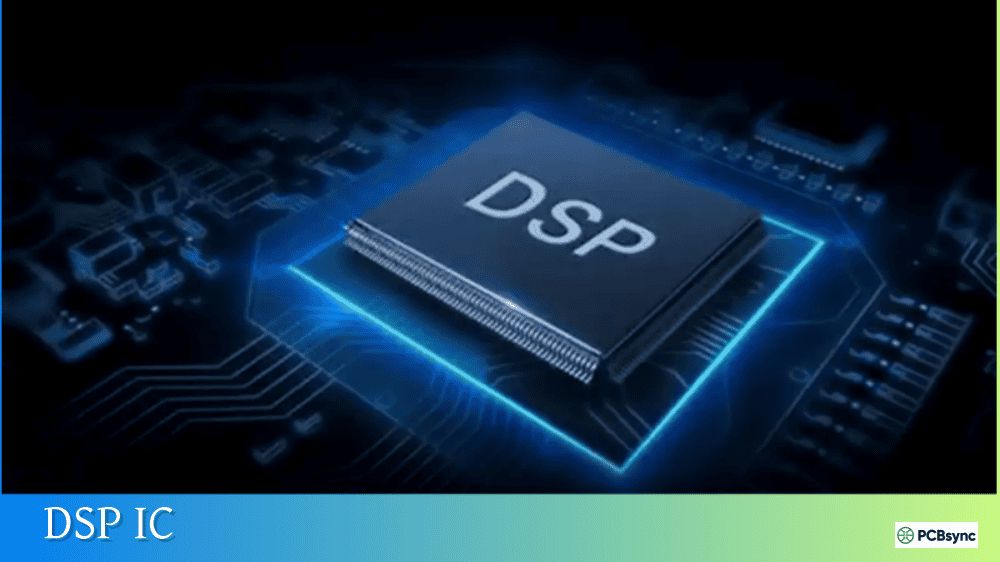
DSP IC beginner’s guide: Digital signal processor explained with architecture, applications, and selection tips. Learn about TI, Analog Devices, and more
When I first encountered a DSP IC in a medical imaging project, I was struck by how different it was from the general-purpose microcontrollers I’d been using. The chip processed ultrasound signals in real-time with a speed and efficiency that would have been impossible with a standard processor. That experience taught me why digital signal processor explained as a concept matters so much to modern electronics design.
This guide covers everything beginners need to know about DSP integrated circuits—from fundamental concepts to practical selection criteria and real-world applications.
What is a Digital Signal Processor? DSP Fundamentals Explained
A digital signal processor is a specialized microprocessor with architecture optimized specifically for performing mathematical operations on digital signals at high speed. Unlike general-purpose CPUs designed for varied computing tasks, DSP ICs are engineered to excel at the repetitive calculations required for signal processing—particularly the multiply-accumulate (MAC) operations fundamental to filtering, transformation, and analysis algorithms.
To understand digital signal processor explained in practical terms, consider what happens when you speak into your smartphone. Your voice (an analog signal) gets converted to digital data by an analog-to-digital converter (ADC). The DSP IC then processes this digital data—compressing it for transmission, filtering out background noise, and enhancing clarity. Finally, a digital-to-analog converter (DAC) turns it back into sound for the listener.
Core DSP Architecture Components
Every DSP IC contains these essential building blocks:
The key architectural difference from general-purpose processors is the Harvard architecture used in most DSPs. This design features separate memory buses for program and data, allowing simultaneous access to both. When your algorithm needs to fetch an instruction and two data operands in the same clock cycle, Harvard architecture delivers—something impossible with traditional von Neumann designs.
Fixed-Point vs Floating-Point DSP
Understanding this distinction is crucial when selecting a DSP IC for your project:
Fixed-Point DSPs use integer arithmetic with an implied decimal point position. They’re faster, cheaper, and more power-efficient, making them ideal for cost-sensitive consumer products. However, they require careful attention to scaling and overflow prevention.
Floating-Point DSPs handle numbers with variable decimal positions, offering greater dynamic range and easier programming. They’re preferred for applications requiring high precision—scientific instruments, professional audio, and complex control systems—but cost more and consume additional power.
Characteristic
Fixed-Point DSP
Floating-Point DSP
Precision
16-32 bits typical
32-64 bits typical
Dynamic Range
Limited
Wide
Programming Effort
Higher (scaling required)
Lower
Power Consumption
Lower
Higher
Cost
Lower
Higher
Best Applications
Consumer audio, telecommunications
Scientific, professional audio
Why Use DSP ICs Instead of General-Purpose Processors?
When evaluating whether your design needs a dedicated DSP IC, consider these compelling advantages:
Real-Time Processing Capability
DSP algorithms must complete all calculations on one signal sample before the next sample arrives. For audio at 48 kHz sampling, that’s just 20.8 microseconds per sample. General-purpose processors struggle with this constraint due to unpredictable instruction execution times, cache misses, and operating system interrupts.
DSP ICs are designed specifically for deterministic execution. When you need guaranteed real-time performance, a dedicated DSP provides confidence that general-purpose processors cannot match.
Specialized Instruction Sets
DSP instruction sets include operations optimized for signal processing algorithms:
Single-cycle MAC: Multiply-accumulate in one clock cycle (fundamental to FIR filters)
Saturating arithmetic: Prevents wraparound on overflow
These specialized instructions can deliver 10-100x performance improvements over equivalent operations on general-purpose processors.
Power Efficiency
For battery-powered devices, power consumption determines battery life. A DSP IC performing continuous audio processing might consume 10-50mW, while a general-purpose processor doing equivalent work could require 500mW or more. This efficiency stems from the DSP’s specialized architecture—it does exactly what’s needed without the overhead of general-purpose flexibility.
Common DSP IC Applications
Digital signal processor explained through applications helps illustrate where these chips excel:
Audio and Speech Processing
Audio represents the most visible DSP application domain. Applications include:
Application
DSP Functions
Example Products
Noise Cancellation
Adaptive filtering, echo cancellation
Headphones, speakerphones
Audio Effects
EQ, compression, reverb, delay
Guitar pedals, mixing consoles
Speech Recognition
Feature extraction, pattern matching
Voice assistants, automotive
Audio Compression
MP3, AAC encoding/decoding
Media players, streaming
Hearing Aids
Amplification, feedback suppression
Medical devices
Telecommunications
The telecom industry drove early DSP development and remains a major application area:
Modems: Modulation, demodulation, equalization
Cellular Basebands: Channel encoding, OFDM, MIMO processing
VoIP: Echo cancellation, packet loss concealment
5G Infrastructure: Beamforming, massive MIMO processing
Image and Video Processing
Visual media processing demands enormous computational throughput:
The DSP market is dominated by several major vendors, each with distinct product families:
Texas Instruments TMS320 Series
TI pioneered commercial DSPs with the TMS32010 in 1983 and remains the market leader. Their portfolio spans:
Series
Type
Target Applications
C2000
Fixed-point
Motor control, power conversion
C5000
Fixed-point, low power
Portable audio, telecommunications
C6000
High-performance
Video, imaging, multicore processing
C7000
AI-enhanced
Machine learning inference
TI’s Code Composer Studio IDE and extensive documentation make their DSPs accessible for beginners.
Analog Devices SHARC and Blackfin
Analog Devices focuses on audio and industrial applications:
Family
Characteristics
Best For
SHARC
Floating-point, high precision
Professional audio, instrumentation
Blackfin
Mixed signal, low power
Portable devices, automotive
SigmaDSP
Audio-specific, graphical programming
Consumer audio products
The SigmaDSP family deserves special mention—SigmaStudio software allows graphical algorithm design without traditional programming, ideal for audio engineers without extensive coding experience.
Qualcomm Hexagon
Integrated into Snapdragon mobile processors, Hexagon DSPs handle:
Camera image processing
Audio effects
Voice recognition
Sensor fusion
Other Notable Vendors
Manufacturer
Key Products
Focus Area
NXP
i.MX RT crossover
Industrial, automotive
Microchip
dsPIC33
Embedded control
STMicroelectronics
STM32F4 (DSP extensions)
General embedded
Cirrus Logic
Audio codecs
Consumer audio
Selecting the Right DSP IC for Your Project
Choosing the appropriate DSP IC requires balancing multiple factors:
Performance Requirements
Start by analyzing your algorithm’s computational demands:
Sample rate: How many samples per second must be processed?
Algorithm complexity: How many operations per sample?
Latency tolerance: What delay is acceptable?
For example, a 256-tap FIR filter at 48 kHz requires 256 MACs × 48,000 samples/second = 12.3 million MACs per second (MMACS). Your DSP must exceed this capacity with margin for other tasks.
Key DSP Algorithms Every Beginner Should Understand
Before diving into hardware selection, understanding fundamental DSP algorithms helps you appreciate why these specialized processors exist.
Finite Impulse Response (FIR) Filters
FIR filters are workhorses of signal processing. They convolve input signals with a set of coefficients (taps), producing filtered output. A 128-tap FIR filter requires 128 multiply-accumulate operations per output sample—exactly the operation DSPs optimize for.
Fast Fourier Transform (FFT)
The FFT converts time-domain signals to frequency-domain representations, revealing the spectral content of signals. This transformation is essential for spectrum analysis, frequency-domain filtering, and audio visualization. FFT algorithms benefit enormously from DSP features like bit-reversed addressing and hardware loop counters.
Infinite Impulse Response (IIR) Filters
IIR filters achieve sharper frequency responses with fewer coefficients than FIR filters but require careful implementation to ensure stability. DSPs handle the recursive calculations efficiently while managing numerical precision concerns.
Adaptive Filters
Used in noise cancellation and echo cancellation, adaptive filters adjust their coefficients in real-time based on signal characteristics. The Least Mean Squares (LMS) algorithm is the most common implementation, requiring continuous MAC operations that DSPs execute efficiently.
Useful Resources for DSP Learning
Manufacturer Documentation
Resource
URL
Content
TI DSP Resources
ti.com/processors/digital-signal-processors
Datasheets, app notes, training
Analog Devices DSP
analog.com/processors
Technical articles, reference designs
DSP Guide (free book)
dspguide.com
Complete DSP textbook online
Development Tools
Tool
Type
Access
Code Composer Studio
TI IDE
Free download
SigmaStudio
Analog Devices audio DSP
Free download
MATLAB
Algorithm simulation
Paid (student discounts)
GNU Octave
MATLAB alternative
Free/open source
Audacity
Audio analysis
Free/open source
Educational Resources
Resource
Description
Coursera DSP courses
University-level DSP theory
MIT OpenCourseWare
Free signal processing lectures
DSPRelated.com
Community forum and articles
The Scientist and Engineer’s Guide to DSP
Free online textbook
Frequently Asked Questions
What is the difference between DSP and microcontroller?
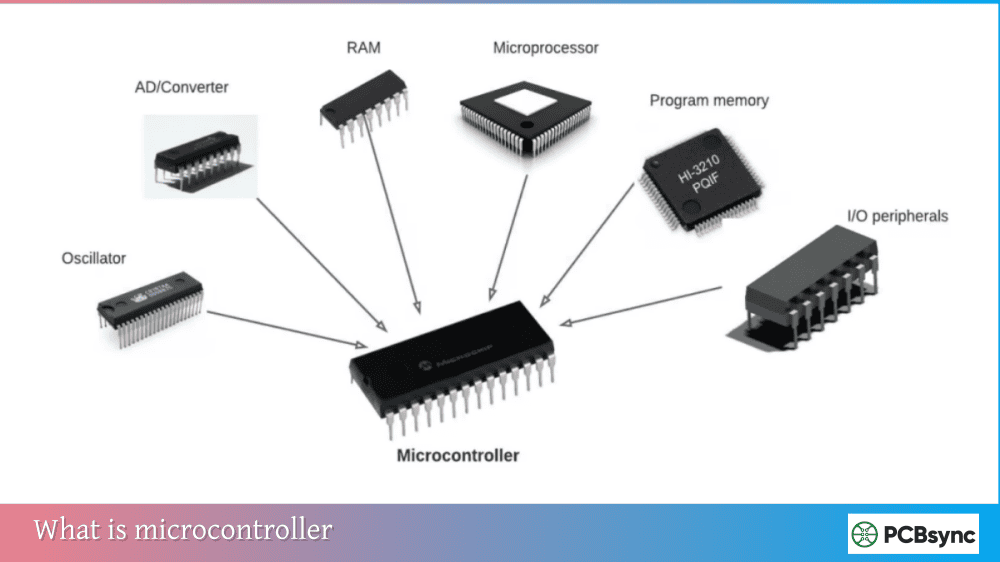
A DSP IC is optimized for high-speed mathematical operations on continuous data streams, featuring specialized instructions like single-cycle multiply-accumulate and hardware support for circular buffers. Microcontrollers are designed for general-purpose control tasks with diverse peripherals but slower arithmetic performance. Many modern MCUs include DSP extensions (like ARM Cortex-M4F), blurring this distinction, but dedicated DSPs still outperform MCUs for intensive signal processing. Choose a DSP when real-time signal processing is your primary requirement; choose an MCU when you need diverse I/O and moderate computational needs.
How do I know if my application needs a DSP?
Your application likely needs a dedicated DSP IC if it involves continuous real-time processing of signals (audio, video, sensor data) with strict latency requirements. Calculate your computational needs: multiply samples per second by operations per sample. If this exceeds what a general-purpose processor can deliver within power and cost constraints, a DSP is appropriate. Common indicators include audio effects processing, telecommunications modulation/demodulation, radar signal processing, or real-time control loops faster than 10 kHz.
Can I program DSPs in C or do I need assembly language?
Modern DSP development primarily uses C and C++, with compilers optimized to generate efficient DSP code from high-level languages. Most vendors provide optimized libraries for common functions (FFT, filters, matrix operations) that deliver near-assembly performance. Assembly programming is still used for the most performance-critical inner loops or when squeezing maximum performance from limited hardware, but beginners can accomplish substantial projects entirely in C. Start with C, profile your code, and only drop to assembly for verified bottlenecks.
What is the typical cost range for DSP ICs?
DSP IC prices span from under $2 for basic fixed-point parts suitable for simple audio applications to over $100 for high-performance multicore floating-point processors used in professional equipment. Mid-range audio DSPs typically cost $5-20 in volume. Development costs include evaluation boards ($50-500), and potentially IDE licenses (though many are now free). For beginners, budget around $100-200 for a development kit that includes everything needed to start learning and prototyping.
How do DSP ICs compare to FPGAs for signal processing?
DSPs offer easier programming (C/C++ vs. HDL), lower development costs, and faster time-to-market for most signal processing applications. FPGAs provide superior parallelism and can implement custom datapaths impossible in fixed DSP architectures, making them preferred for the highest-performance or most unusual requirements. Many designs combine both: FPGAs for high-speed front-end processing and DSPs for algorithm flexibility. Beginners should start with DSPs due to the gentler learning curve, considering FPGAs for future projects requiring capabilities beyond DSP limits.
Conclusion
Understanding digital signal processor explained concepts opens doors to applications across consumer electronics, telecommunications, medical devices, and industrial systems. The DSP IC remains essential for real-time signal processing despite advances in general-purpose processors—its specialized architecture delivers performance and efficiency that generic solutions cannot match.
For beginners, the path forward is clear: start with vendor development kits featuring excellent documentation and example code. Texas Instruments and Analog Devices both provide outstanding resources for learning. Begin with simple audio projects where you can hear the results of your algorithms, then progress to more complex applications as your understanding grows.
The DSP field continues evolving, with AI-enhanced processors, heterogeneous multicore architectures, and increasingly powerful integrated solutions. Mastering DSP fundamentals now positions you to leverage these advancing technologies in future designs. Whether you’re building audio equipment, telecommunications systems, or embedded control applications, DSP expertise adds valuable capability to your engineering toolkit.
Inquire: Call 0086-755-23203480, or reach out via the form below/your sales contact to discuss our design, manufacturing, and assembly capabilities.
Quote: Email your PCB files to Sales@pcbsync.com (Preferred for large files) or submit online. We will contact you promptly. Please ensure your email is correct.
Notes: For PCB fabrication, we require PCB design file in Gerber RS-274X format (most preferred), *.PCB/DDB (Protel, inform your program version) format or *.BRD (Eagle) format. For PCB assembly, we require PCB design file in above mentioned format, drilling file and BOM. Click to download BOM template To avoid file missing, please include all files into one folder and compress it into .zip or .rar format.