Inquire: Call 0086-755-23203480, or reach out via the form below/your sales contact to discuss our design, manufacturing, and assembly capabilities.
Quote: Email your PCB files to Sales@pcbsync.com (Preferred for large files) or submit online. We will contact you promptly. Please ensure your email is correct.
Notes: For PCB fabrication, we require PCB design file in Gerber RS-274X format (most preferred), *.PCB/DDB (Protel, inform your program version) format or *.BRD (Eagle) format. For PCB assembly, we require PCB design file in above mentioned format, drilling file and BOM. Click to download BOM template To avoid file missing, please include all files into one folder and compress it into .zip or .rar format.
If you’ve been designing circuits for any length of time, you’ve probably encountered a situation where you need to determine whether one voltage is higher or lower than another. Maybe you’re monitoring battery levels, detecting zero crossings in AC signals, or building an analog-to-digital converter. This is exactly where a comparator IC earns its keep.
I’ve used these chips in dozens of designs over the years—from simple light-detection circuits to complex motor control systems. In this guide, I’ll walk you through everything you need to know about voltage comparators: how they work, the different types available, and where they’re most useful in real-world applications.
A comparator IC is an analog integrated circuit designed to compare two input voltages and produce a digital output indicating which voltage is larger. Think of it as a decision-making circuit—it answers a simple yes/no question: “Is voltage A greater than voltage B?”
The basic operation follows this logic:
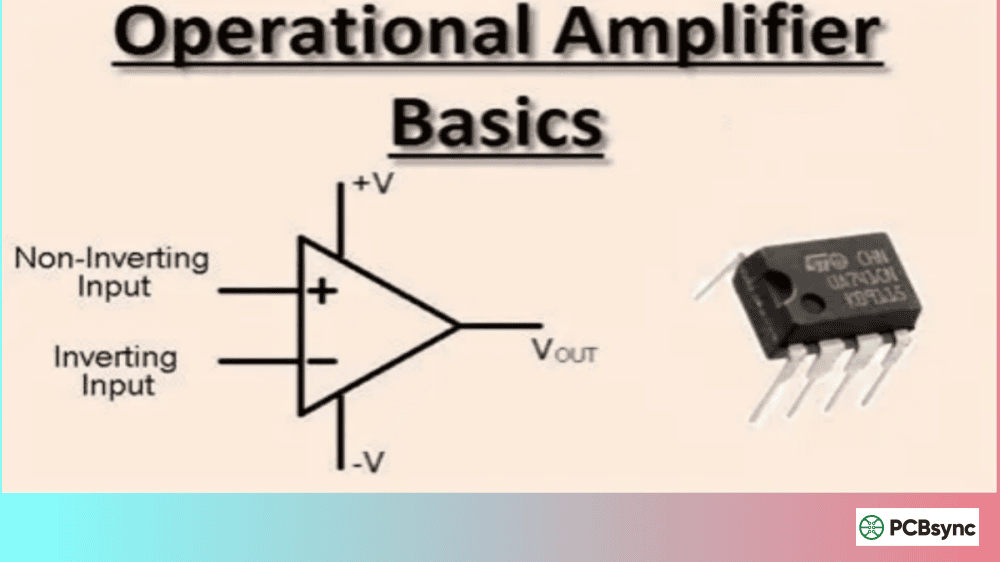
When the non-inverting input (+) is higher than the inverting input (-), the output goes HIGH
When the inverting input (-) is higher than the non-inverting input (+), the output goes LOW
Mathematically, this relationship can be expressed as:
If V+ > V- → Vout = VOH (High output)
If V+ < V- → Vout = VOL (Low output)
Unlike operational amplifiers that operate in a linear region with negative feedback, comparators are designed to work without feedback, switching rapidly between their saturation states. This makes them function essentially as 1-bit analog-to-digital converters.
Voltage Comparator Explained: How It Works
The Internal Structure
Inside a comparator IC, you’ll find a high-gain differential amplifier followed by an output stage. The differential amplifier has extremely high open-loop gain—often exceeding 100,000. This means even a tiny voltage difference between the inputs (just a few millivolts) is enough to drive the output to one of its saturation limits.
The Working Principle
When you apply two different voltages to the comparator inputs, here’s what happens:
The differential input stage amplifies the voltage difference between V+ and V-
Due to the extremely high gain, even microvolts of difference produce maximum output swing
The output stage drives the result to either the positive rail (HIGH) or ground/negative rail (LOW)
The transition region—where the output is neither fully HIGH nor fully LOW—is extremely narrow, typically just a few millivolts wide. This sharp switching characteristic is what makes comparators so useful for converting analog signals to digital levels.
Reference Voltage Configuration
In most practical applications, one input receives a fixed reference voltage while the other receives the signal being monitored. The reference voltage can be set using:
A simple resistive voltage divider
A precision voltage reference IC (like TL431)
A zener diode network
An integrated on-chip reference (available in some comparators like MAX9025)
When the monitored signal crosses this reference threshold, the comparator output changes state—giving you a clean digital signal that indicates whether your measured voltage is above or below the setpoint.
Types of Comparator ICs
Comparators come in several configurations, each suited to different applications. Here’s a breakdown of the main categories:
Based on Number of Channels
Type
Description
Common ICs
Typical Applications
Single
One comparator per package
LM311, TLV3201, MAX961
Simple threshold detection
Dual
Two independent comparators
LM393, LM2903, TLV7011
Window comparators, dual-threshold systems
Quad
Four independent comparators
LM339, LM2901, MAX9144
Multi-channel monitoring, LED bar graphs
Based on Output Configuration
Open-Collector/Open-Drain Output:
Requires external pull-up resistor
Can interface with different voltage logic levels
Multiple outputs can be wire-OR connected
Examples: LM339, LM393, LM311
Push-Pull Output:
No external pull-up needed
Faster rise and fall times
Can source and sink current equally well
Examples: TLV3201, LMV7219, MAX999
Based on Speed
Speed Category
Propagation Delay
Examples
Use Cases
General Purpose
300ns – 1.3µs
LM339, LM393
Slow-changing signals, battery monitoring
High Speed
10ns – 100ns
LT1016, MAX961
Data communication, clock recovery
Ultra-High Speed
<10ns
AD8611, LMV7219
Flash ADCs, high-frequency zero-crossing
Based on Special Features
Comparators with Built-in Reference: Some ICs integrate a precision voltage reference, eliminating the need for external components. Examples include:
MAX9025 (1.236V reference)
TLV3012 (1.24V reference)
LT6700 (400mV reference)
Comparators with Internal Hysteresis: These devices include built-in positive feedback to prevent oscillation around the threshold. Examples: LMV7219 (internal 1.3mV hysteresis), MCP6541, TLV3201.
Window Comparators: Dedicated ICs with two comparators configured to detect when a voltage falls within a specified range. Example: TLV6710 for monitoring supply rails.
Common Comparator IC Models
Let me share some details on the most popular comparator ICs you’ll encounter in the field:
LM339 Quad Comparator
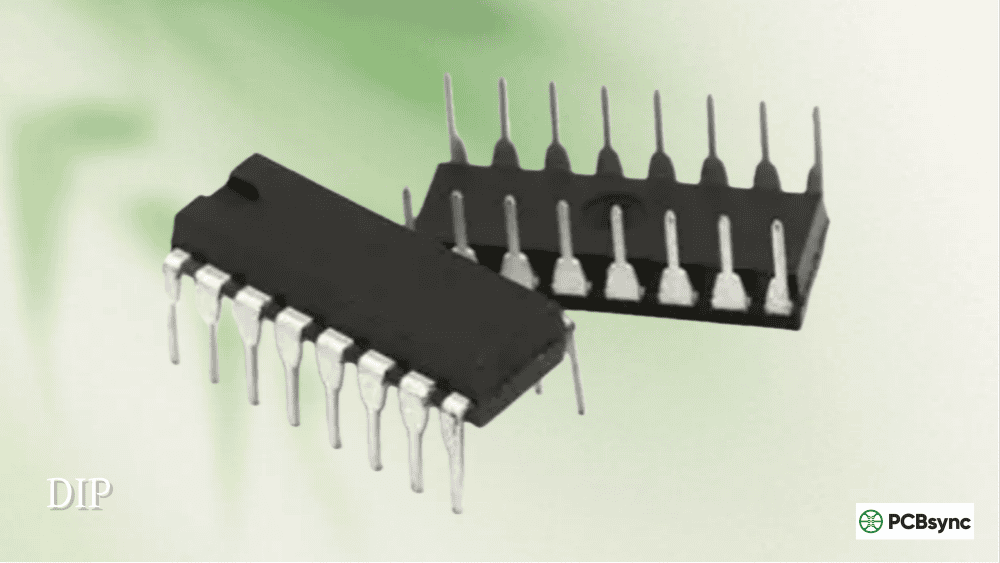
The LM339 is probably the most widely used comparator IC. It packs four independent comparators in a 14-pin DIP or SOIC package.
Key Specifications:
Supply voltage: 2V to 36V (single supply) or ±1V to ±18V (dual supply)
The LM339 is excellent for multi-channel monitoring applications like LED voltmeters, power supply supervisors, and sensor interfaces. Just remember that you’ll need pull-up resistors on those open-collector outputs.
LM393 Dual Comparator
The LM393 is essentially half an LM339—two comparators in an 8-pin package. It’s the go-to choice when you need just one or two comparison channels.
Key Specifications:
Supply voltage: 2V to 36V
Low power consumption: 0.4mA typical
Input offset voltage: 2mV typical
Open-collector output (20mA capability)
Wide operating temperature range: -40°C to +85°C
You’ll find the LM393 on countless Arduino sensor modules—IR obstacle detectors, sound sensors, and light sensors all commonly use this chip.
LM311 Single Comparator
The LM311 stands out because its output transistor has both collector AND emitter accessible. This gives you more flexibility in output configurations.
Key Specifications:
Supply voltage: ±15V maximum
Response time: 200ns typical
Strobe input for output control
Both TTL and MOS compatible outputs
High-Speed Options
For applications where nanosecond-level response matters:
IC
Propagation Delay
Key Feature
AD8611
4ns
Latch function, complementary outputs
LMV7219
7ns
Rail-to-rail push-pull output
MAX999
4.5ns
CMOS/TTL compatible
TLV3501
4.5ns
Rail-to-rail input, low power
Comparator IC vs Op-Amp: Understanding the Difference
One question I get asked frequently: “Can I just use an op-amp as a comparator?” Technically yes, but it’s usually a bad idea. Here’s why:
Parameter
Dedicated Comparator
Op-Amp as Comparator
Propagation Delay
ns to µs
µs to tens of µs
Recovery from Saturation
Fast (designed for it)
Slow (internal compensation)
Output Type
Logic-compatible (open-drain/push-pull)
Analog (may not reach rails)
Internal Hysteresis
Often built-in
None (must add externally)
Input Protection
Typically robust
Input diodes may conduct
Op-amps are designed to operate in linear mode with negative feedback. When driven into saturation (as they would be in comparator mode), they have lengthy recovery times because of internal compensation capacitors. This leads to propagation delays that can be tens of microseconds—fine for slow signals, problematic for fast ones.
That said, for slow, non-critical applications where you already have a spare op-amp channel in your design, using it as a comparator can work. Just add external hysteresis and don’t expect fast switching.
Key Parameters for Selecting a Comparator IC
When choosing a comparator for your design, pay attention to these specifications:
Input Offset Voltage (VOS)
This is the small voltage difference between inputs required to make the output switch. Lower is better for precision applications. Typical values:
Standard comparators: 2-5mV
Precision comparators: <1mV
Chopper-stabilized: <100µV
Propagation Delay
The time from when the input crosses the threshold to when the output changes state. This depends on:
Always check the datasheet conditions—propagation delay is typically specified at a specific overdrive voltage (often 5mV or 100mV).
Input Common-Mode Range
The range of input voltages the comparator can handle while still operating correctly. Rail-to-rail input comparators can accept inputs from the negative supply up to (or very close to) the positive supply.
Hysteresis
Built-in hysteresis prevents output chatter when the input hovers near the threshold. If your comparator doesn’t have internal hysteresis, you’ll need to add it externally with a positive feedback resistor network.
Output Configuration
Open-drain: Needs pull-up resistor, flexible voltage interfacing
Push-pull: Faster edges, no external components needed
Complementary: Provides both Q and Q-bar outputs
Practical Applications of Comparator ICs
Zero-Crossing Detector
A zero-crossing detector identifies when an AC signal passes through zero volts. This is essential for:
Phase control in dimmer circuits
Power factor correction
Synchronizing with AC mains
The circuit is simple: connect one input to ground (0V reference) and apply the AC signal to the other input through appropriate attenuation. The output produces a pulse every time the AC waveform crosses zero.
Voltage Level Detection (Battery Monitor)
For monitoring battery voltage, use a voltage divider to scale the battery voltage into the comparator’s input range, then compare against a reference:
Battery voltage → Voltage divider → Comparator + input
Reference IC → Comparator – input
When the battery drops below the threshold, the comparator output changes state, triggering a low-battery indicator.
Window Comparator
A window comparator uses two comparators to detect whether a voltage falls within a specified range. The circuit outputs HIGH only when the monitored voltage is between the upper and lower thresholds.
This is useful for:
Power supply monitoring (detecting over-voltage AND under-voltage)
Temperature controllers
Go/no-go testing in production
Analog-to-Digital Conversion
Flash ADCs use arrays of comparators to convert analog signals directly to digital. An 8-bit flash ADC requires 255 comparators, each with its threshold set by a resistor ladder. All comparators switch simultaneously, giving extremely fast conversion times.
Oscillator Circuits
Comparators can generate oscillations when configured with positive feedback and an RC timing network. This creates a relaxation oscillator or astable multivibrator useful for:
Clock generation
Timer circuits
Frequency-to-voltage conversion
Sensor Interface Circuits
Comparators excel at converting analog sensor outputs to digital signals:
Application
Sensor
Function
Light detection
Photoresistor/LDR
Dark/bright threshold
Temperature alarm
Thermistor
Over-temperature trigger
Proximity sensing
IR LED/photodiode
Object detection
Speed measurement
Hall effect sensor
Pulse generation
Design Tips and Best Practices
After years of working with these devices, here are my recommendations:
Add Hysteresis for Noisy Signals
If your input signal has any noise, add hysteresis to prevent multiple output transitions. A typical hysteresis network uses positive feedback:
Output → Feedback resistor → Non-inverting input
Start with 5-10mV of hysteresis and adjust based on your noise levels.
Use Bypass Capacitors
Place 100nF ceramic capacitors close to the power pins. Comparators switch fast and can generate noise—good bypassing keeps your power rails clean.
Keep Input Traces Short
The high-impedance inputs are susceptible to noise pickup. Keep traces short and consider using guard traces for sensitive applications.
Match Source Impedances
For best accuracy, keep the source impedances driving both inputs similar. This minimizes errors from input bias current.
Respect Input Common-Mode Limits
Operating outside the specified common-mode range causes unpredictable behavior. For rail-to-rail inputs, check the specific device limits—”rail-to-rail” doesn’t always mean all the way to both rails.
Open-Collector Pull-Up Selection
For open-collector outputs, the pull-up resistor value affects switching speed:
Lower resistance = faster rise time but higher power consumption
Higher resistance = slower rise time but lower power
Typical starting point: 4.7kΩ to 10kΩ for TTL/CMOS interfacing
For complex programmable logic implementations and custom ASIC development, Altera FPGA solutions offer flexible alternatives when standard comparator ICs don’t meet your requirements.
Frequently Asked Questions
What is the main function of a comparator IC?
A comparator IC compares two analog input voltages and produces a digital output (HIGH or LOW) indicating which input voltage is larger. When the non-inverting input voltage exceeds the inverting input voltage, the output goes HIGH. When the inverting input is higher, the output goes LOW. This makes comparators essential for converting analog signals to digital levels, detecting voltage thresholds, and interfacing sensors with microcontrollers.
Can I use an LM393 instead of an LM339?
Yes, but with limitations. The LM393 is a dual comparator (2 channels) while the LM339 is a quad comparator (4 channels). They have similar electrical characteristics and are pin-compatible for the comparator functions they share. If your circuit needs only one or two comparator channels, the LM393 in an 8-pin package is often more practical. For three or four channels, use the LM339.
Why do comparator outputs oscillate near the threshold voltage?
Output oscillation occurs when the input signal hovers near the switching threshold and contains noise. Even millivolts of noise can cause multiple transitions because comparators have extremely high gain. The solution is adding hysteresis—a technique that creates two different threshold levels for rising and falling signals. This creates a “dead band” that prevents switching until the input moves significantly away from the threshold.
What is the difference between open-collector and push-pull comparator outputs?
Open-collector outputs have an internal transistor that can only pull the output LOW (to ground). For a HIGH output, you need an external pull-up resistor to the positive supply. This allows interfacing with different voltage levels and wire-OR connections of multiple outputs. Push-pull outputs have internal transistors that can both pull HIGH and pull LOW, providing faster switching without external components but fixed voltage levels.
How do I select the right pull-up resistor for an open-collector comparator?
The pull-up resistor value depends on the required switching speed and power consumption. Lower resistance means faster rise times but higher current draw when the output is LOW. A typical starting value is 4.7kΩ to 10kΩ for 3.3V or 5V systems. Calculate the current as I = VCC / R and ensure it doesn’t exceed the output sink current rating. For faster switching, use lower resistance values (1kΩ to 2.2kΩ) and account for the increased power dissipation.
Conclusion
The comparator IC might seem like a simple component, but understanding its operation opens up countless design possibilities. From basic threshold detection to complex ADC front-ends, these devices bridge the analog and digital worlds in ways that make modern electronics possible.
Key takeaways to remember:
Choose dedicated comparator ICs over op-amps for better speed and reliability
Always consider adding hysteresis for noisy environments
Match the comparator speed to your application requirements
Pay attention to output type (open-collector vs push-pull) and plan your interface accordingly
Whether you’re monitoring battery levels, detecting sensor thresholds, or building precision measurement systems, there’s a comparator IC suited to your needs. The LM393 and LM339 families cover most general-purpose applications, while high-speed options like the AD8611 handle demanding timing-critical designs.
Now that you understand how voltage comparators work, you’re equipped to select the right IC and implement reliable comparator circuits in your next project.
Inquire: Call 0086-755-23203480, or reach out via the form below/your sales contact to discuss our design, manufacturing, and assembly capabilities.
Quote: Email your PCB files to Sales@pcbsync.com (Preferred for large files) or submit online. We will contact you promptly. Please ensure your email is correct.
Notes: For PCB fabrication, we require PCB design file in Gerber RS-274X format (most preferred), *.PCB/DDB (Protel, inform your program version) format or *.BRD (Eagle) format. For PCB assembly, we require PCB design file in above mentioned format, drilling file and BOM. Click to download BOM template To avoid file missing, please include all files into one folder and compress it into .zip or .rar format.