Inquire: Call 0086-755-23203480, or reach out via the form below/your sales contact to discuss our design, manufacturing, and assembly capabilities.
Quote: Email your PCB files to Sales@pcbsync.com (Preferred for large files) or submit online. We will contact you promptly. Please ensure your email is correct.
Notes: For PCB fabrication, we require PCB design file in Gerber RS-274X format (most preferred), *.PCB/DDB (Protel, inform your program version) format or *.BRD (Eagle) format. For PCB assembly, we require PCB design file in above mentioned format, drilling file and BOM. Click to download BOM template To avoid file missing, please include all files into one folder and compress it into .zip or .rar format.
Every audio or video device I’ve worked on has relied on codec ICs to bridge the gap between the analog world we experience and the digital systems that process, store, and transmit media. From the smartphone recording your voice to the streaming box playing 4K video, these chips perform the essential conversion work that makes modern multimedia possible.
This guide breaks down how codec ICs function, what distinguishes audio codec IC designs from video implementations, and the practical considerations for integrating them into your projects. Whether you’re selecting a codec for a new design or debugging an existing audio path, understanding these fundamentals will save you considerable time and frustration.
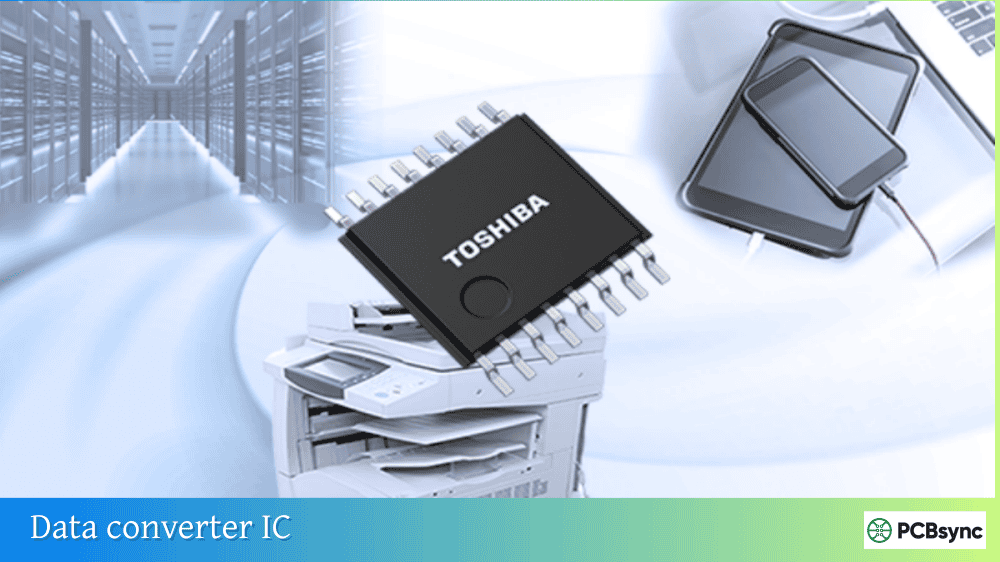
The term codec comes from “coder-decoder” or “compressor-decompressor.” A codec IC is an integrated circuit that converts signals between analog and digital formats, and in many cases, compresses or decompresses that data to reduce storage requirements or transmission bandwidth.
In the embedded hardware world, a codec IC typically combines an analog-to-digital converter (ADC) and a digital-to-analog converter (DAC) in one package. The ADC side captures analog signals like sound waves from a microphone, converting them into digital data streams. The DAC side reverses this process, reconstructing analog signals for output through speakers or displays.
Hardware codecs differ from software codecs in important ways. A dedicated audio codec IC performs conversions in specialized analog circuitry optimized for signal quality and low power consumption. Software codecs running on general-purpose processors offer flexibility but typically consume more power and may introduce latency that hardware implementations avoid.
How Codec ICs Process Signals
The basic signal flow through a codec IC follows a predictable pattern. For audio recording, an analog signal enters the ADC section where it gets sampled at regular intervals. Each sample captures the signal’s amplitude, which gets quantized into a digital value with precision determined by the bit depth (typically 16 or 24 bits for audio).
Modern audio codec ICs use delta-sigma modulation rather than simple sampling. A delta-sigma ADC oversamples the input at rates like 64x the target sample rate, generating a high-speed 1-bit stream. Digital decimation filters then convert this stream into the final multi-bit output at the desired sample rate. This architecture pushes quantization noise outside the audible frequency range, delivering exceptional signal-to-noise ratios.
For playback, the DAC section receives digital audio data and reconstructs the analog waveform. Modern delta-sigma DACs convert multi-bit samples into pulse-density modulated streams at very high rates. When filtered, this produces smooth output signals with noise pushed well outside audible frequencies.
Audio Codec IC Architecture and Specifications
When evaluating an audio codec IC for your design, several key specifications determine whether it meets your requirements.
Critical Audio Codec Specifications
Parameter
Description
Typical Range
Bit Depth
Resolution of digital samples
16-bit, 24-bit, 32-bit
Sample Rate
Samples captured per second
8 kHz to 192 kHz
Dynamic Range (DNR)
Ratio of maximum signal to noise floor
90 dB to 120 dB
THD+N
Total Harmonic Distortion plus Noise
-80 dB to -110 dB
Signal-to-Noise Ratio (SNR)
Ratio of signal power to noise power
90 dB to 120 dB
Power Consumption
Current draw in active/standby modes
µA to mA
Channel Count
Number of ADC/DAC channels
Stereo to 8+ channels
Bit depth determines the amplitude resolution. A 16-bit codec provides 65,536 discrete levels, while 24-bit offers over 16 million. Higher bit depths extend dynamic range but increase data rates and processing requirements.
Sample rate must exceed twice the highest frequency you need to capture (Nyquist theorem). CD-quality audio uses 44.1 kHz for content up to 20 kHz. Professional and high-resolution audio systems commonly use 48 kHz, 96 kHz, or even 192 kHz sample rates.
Dynamic range indicates the span from the loudest signal the codec can handle without clipping to the noise floor. High-quality audio codecs achieve 110 dB or better, exceeding what most listeners can perceive.
Common Audio Codec Interfaces
Audio codec ICs communicate with host processors through standardized digital interfaces:
I²S (Inter-IC Sound): The most common interface for audio data, using separate clock, word select, and data lines. I²S supports stereo audio with clean separation between left and right channels.
TDM (Time Division Multiplexing): Extends the basic I²S concept to support multiple channels on a single data line by allocating time slots to each channel. Essential for multi-channel surround sound applications.
SPI/I²C: Used for configuration and control registers rather than audio data. Most codecs require a separate control interface to set sample rates, enable features, and adjust parameters.
SLIMbus/SoundWire: Modern low-power interfaces developed for mobile applications. MIPI SoundWire, in particular, reduces pin count and power consumption in smartphones and tablets.
Types of Audio Codec ICs
Different applications call for different codec architectures. Understanding these categories helps narrow your selection.
Portable and Low-Power Audio Codecs
Designed for battery-powered devices, these codecs emphasize power efficiency without sacrificing audio quality. Features like automatic power-down modes, low quiescent current, and integrated headphone amplifiers minimize external component count and extend battery life.
Cirrus Logic’s CS42L42, for example, integrates MIPI SoundWire for reduced pin count and includes impedance sensing for automatic accessory detection. Such integration proves essential in space-constrained smartphone designs.
Multi-Channel Audio Codecs
Home theater receivers, automotive infotainment systems, and professional audio equipment require simultaneous handling of multiple audio channels. Multi-channel codecs like the CS42448 integrate six ADC channels and eight DAC channels, supporting surround sound formats with matched characteristics across all channels.
These devices often include auxiliary inputs for additional audio sources, mixing capabilities, and sophisticated routing options that simplify system design.
Professional and High-Fidelity Audio Codecs
Studio recording, broadcast, and audiophile applications demand the highest performance specifications. Professional-grade codecs deliver dynamic ranges exceeding 114 dB, support sample rates up to 192 kHz, and implement advanced filtering to minimize artifacts.
The Analog Devices AD1837 family exemplifies this category, offering 24-bit resolution at up to 96 kHz with eight DAC outputs and two ADC inputs for professional multichannel recording systems.
Voice and Telephony Codecs
Telecommunications applications prioritize different characteristics than music playback. Voice codecs implement compression algorithms like G.711, G.729, and CVSD that optimize bandwidth usage for speech frequencies while maintaining intelligibility.
Devices like the CML CMX7261 multi-transcoder support multiple voice coding standards and include analog front-ends suitable for radio and telephony applications.
Video Codec ICs and Processing
Video encoding and decoding presents far greater computational challenges than audio due to the massive data rates involved. A single frame of 4K video contains millions of pixels, and processing 60 frames per second requires extraordinary throughput.
Video Compression Standards
Modern video codecs implement sophisticated compression algorithms that exploit spatial and temporal redundancy in video streams:
Standard
Also Known As
Typical Use Cases
Compression Efficiency
H.264
AVC, MPEG-4 Part 10
Streaming, broadcast, surveillance
Baseline
H.265
HEVC
4K/8K streaming, broadcast
~50% better than H.264
AV1
—
Web streaming, royalty-free applications
~30% better than HEVC
VP9
—
YouTube, WebRTC
Similar to HEVC
H.264/AVC remains the most widely deployed video codec, supported by virtually all hardware from smartphones to set-top boxes. Its mature ecosystem and broad compatibility make it a safe choice for new designs.
H.265/HEVC doubles compression efficiency compared to H.264, enabling 4K streaming at practical bitrates. Hardware acceleration is now standard in most application processors and GPUs.
AV1 offers excellent compression without royalty requirements, driving adoption in web streaming. Hardware encode/decode support is expanding rapidly.
Video Codec Hardware Implementation
Unlike audio codecs that can be implemented in dedicated ICs, video codecs typically exist as:
IP Cores in SoCs: Application processors from vendors like Qualcomm, MediaTek, and Samsung integrate dedicated video codec units alongside CPU and GPU cores. These hard-IP blocks achieve the throughput needed for real-time encoding and decoding with minimal power consumption.
FPGA Implementations: For custom or specialized applications, video codec IP cores can be loaded into FPGAs. This approach offers flexibility for unusual resolutions, frame rates, or processing requirements. When your design incorporates an Altera FPGA, video codec IP cores provide hardware-accelerated encoding and decoding capability.
Dedicated Encoder/Decoder Chips: Some applications use standalone video codec ICs, typically combining an FPGA with preconfigured codec IP. These modules accept raw video input and output compressed streams, simplifying integration for designers without FPGA expertise.
GPU Acceleration: Modern GPUs include dedicated video encode (NVENC on NVIDIA, VCE on AMD) and decode engines separate from the shader cores. These can process 4K60 and even 8K video in real time.
PCB Design Considerations for Audio Codec ICs
Proper PCB layout proves critical for achieving the specifications promised in codec datasheets. Audio signals are extremely sensitive to noise, and careless layout can degrade performance dramatically.
Power Supply Design
Audio codec ICs typically require multiple supply rails with stringent noise requirements. Separate analog and digital supplies prevent switching noise from contaminating sensitive analog circuitry.
Key practices include:
Use dedicated LDO regulators for analog supplies to achieve low noise
Place bypass capacitors (typically 100nF ceramic plus 10µF bulk) as close as possible to each supply pin
Consider ferrite beads between digital and analog supply domains if sharing a common source
Ensure adequate decoupling at the reference voltage pins that establish the codec’s internal bias
Ground Plane Strategy
A solid, unbroken ground plane beneath the codec provides low-impedance return paths for both analog and digital signals. Avoid splitting the ground plane, as this can create unexpected return current paths that couple noise into analog circuits.
If your design requires separate analog and digital ground regions, connect them at a single point near the codec IC. This prevents ground loops while maintaining low impedance for each domain.
Signal Routing Guidelines
Route analog inputs and outputs away from digital signals, particularly high-speed clocks. When crossings are unavoidable, route perpendicular to minimize coupling.
Keep traces to microphone inputs and line outputs short and direct. Shield sensitive analog traces by routing ground on adjacent layers. For differential inputs and outputs, maintain symmetry in trace lengths and routing.
Clock Considerations
Audio codecs are extremely sensitive to clock jitter, which manifests as distortion and degraded dynamic range. The master clock should come from a dedicated, low-jitter oscillator positioned close to the codec.
Avoid routing the audio master clock through FPGAs or other large digital devices, as this typically introduces jitter from shared power and ground connections with unrelated digital signals.
Codec ICs serve essential roles across numerous application domains.
Consumer Electronics
Smartphones integrate sophisticated audio codecs supporting multiple microphones for noise cancellation, stereo speakers, and headphone outputs. Modern mobile codecs include always-on voice detection for wake-word recognition while consuming minimal power.
Smart speakers, wireless earbuds, and streaming devices all rely on codec ICs optimized for their specific requirements, whether that’s ultra-low power consumption, hi-fi playback quality, or voice capture performance.
Automotive Audio Systems
Automotive infotainment demands multi-channel codecs that handle navigation prompts, hands-free calling, media playback, and chimes simultaneously. These codecs must operate reliably across extreme temperature ranges and meet automotive quality standards.
Electric vehicles add new challenges as quiet drivetrains make any audio system noise more perceptible. Automotive codec designs emphasize exceptional signal-to-noise ratios and immunity to electromagnetic interference from power electronics.
Professional Audio and Broadcast
Recording studios, broadcast facilities, and live sound systems use professional-grade codecs with the highest fidelity specifications. Multi-channel interfaces support complex routing configurations, and robust clocking systems maintain sample-accurate synchronization across distributed equipment.
Industrial and Medical
Industrial voice communication systems, medical monitoring devices, and test equipment rely on codec ICs tailored to their specific requirements. Medical applications may require ultra-low power for wearable monitors, while industrial systems prioritize reliability in harsh environments.
Major Codec IC Manufacturers
Several semiconductor companies dominate the codec IC market:
When working with codec ICs, these resources prove invaluable:
Manufacturer Design Tools:
Texas Instruments PurePath Console for codec configuration
Cirrus Logic WISCE and SoundClear development tools
Analog Devices SigmaStudio for DSP-enabled codecs
Technical Documentation:
Application notes covering layout, clocking, and system integration
Reference designs with validated schematics and PCB layouts
Audio performance measurement guides
Component Databases:
DigiKey, Mouser: Parametric search and datasheets
Octopart: Cross-reference and availability data
Industry Standards:
AES (Audio Engineering Society) standards for professional audio
I²S specification from Philips/NXP
MIPI SoundWire specification
Frequently Asked Questions About Codec ICs
What is the difference between a codec IC and a standalone ADC or DAC?
A codec IC integrates both an ADC and DAC in a single package, often with additional features like amplifiers, mixers, filters, and control interfaces. Standalone ADCs and DACs handle only one conversion direction. For bidirectional audio applications like phones or recording devices, a codec IC reduces component count, simplifies layout, and ensures matched characteristics between record and playback paths. Standalone converters may offer higher performance for specialized single-direction applications.
How do I choose between different sample rates for my audio codec?
Sample rate selection depends on your application requirements and the audio bandwidth you need to capture. For voice communication, 8 kHz or 16 kHz suffices since speech contains little energy above 4 kHz. Music playback typically uses 44.1 kHz (CD standard) or 48 kHz (professional audio standard). High-resolution audio applications may use 96 kHz or 192 kHz, though the audible benefit beyond 48 kHz remains debated. Higher sample rates increase data throughput and power consumption, so choose the minimum rate that meets your quality requirements.
Why does my audio codec sound worse than the datasheet specifications suggest?
Several factors can degrade real-world performance below datasheet specifications. Poor PCB layout introduces noise coupling from digital circuits into analog paths. Inadequate power supply filtering allows supply noise to modulate the audio signal. Clock jitter from inappropriate oscillator selection or routing degrades dynamic range and adds distortion. Ground loops from improper grounding strategy create hum and noise. Review your layout against the codec manufacturer’s recommendations, verify power supply noise levels, and ensure your clock source meets jitter requirements.
What is the role of a DSP in modern audio codec ICs?
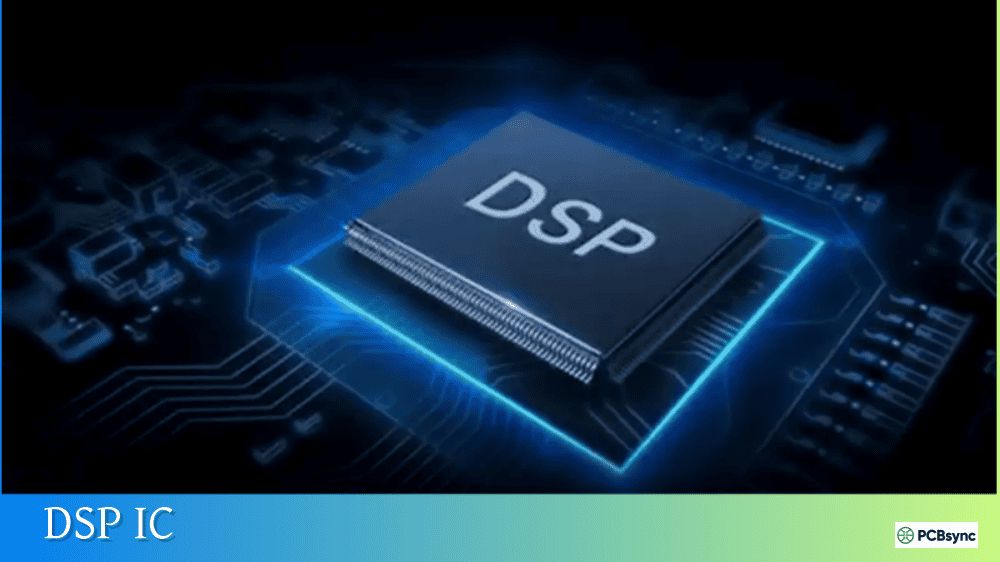
Many modern audio codec ICs integrate digital signal processing cores that perform functions beyond simple conversion. These DSPs can implement equalization, dynamic range compression, echo cancellation, noise suppression, and beam-forming for microphone arrays. Smart codecs use DSPs for always-on voice detection, consuming minimal power while listening for wake words. The DSP offloads these processing tasks from the main application processor, reducing system power consumption and latency while enabling sophisticated audio processing without software overhead.
How do video codec ICs differ from audio codec ICs?
Video codecs handle fundamentally different data volumes and processing requirements. While a stereo audio stream at 48 kHz/24-bit runs around 2.3 Mbps, uncompressed 4K video at 60 fps exceeds 10 Gbps. This massive data rate requires video codecs to implement complex compression algorithms that exploit spatial and temporal redundancy in video content. Hardware video codecs are typically integrated into application processors or implemented as IP cores in FPGAs rather than existing as standalone ICs like audio codecs. The computational intensity and memory bandwidth requirements of real-time video compression make dedicated hardware acceleration essential.
Inquire: Call 0086-755-23203480, or reach out via the form below/your sales contact to discuss our design, manufacturing, and assembly capabilities.
Quote: Email your PCB files to Sales@pcbsync.com (Preferred for large files) or submit online. We will contact you promptly. Please ensure your email is correct.
Notes: For PCB fabrication, we require PCB design file in Gerber RS-274X format (most preferred), *.PCB/DDB (Protel, inform your program version) format or *.BRD (Eagle) format. For PCB assembly, we require PCB design file in above mentioned format, drilling file and BOM. Click to download BOM template To avoid file missing, please include all files into one folder and compress it into .zip or .rar format.