Inquire: Call 0086-755-23203480, or reach out via the form below/your sales contact to discuss our design, manufacturing, and assembly capabilities.
Quote: Email your PCB files to Sales@pcbsync.com (Preferred for large files) or submit online. We will contact you promptly. Please ensure your email is correct.
Notes: For PCB fabrication, we require PCB design file in Gerber RS-274X format (most preferred), *.PCB/DDB (Protel, inform your program version) format or *.BRD (Eagle) format. For PCB assembly, we require PCB design file in above mentioned format, drilling file and BOM. Click to download BOM template To avoid file missing, please include all files into one folder and compress it into .zip or .rar format.
Switching PCB design tools is never a casual decision. After spending years building component libraries, perfecting design workflows, and accumulating dozens of legacy projects in OrCAD, migrating to a new platform feels daunting. But whether you’re chasing better productivity, unified design environments, or simply following your company’s tooling decisions, knowing how to convert OrCAD to Altium Designer properly makes all the difference between a smooth transition and weeks of frustration.
I’ve guided multiple engineering teams through this migration process. This guide covers everything from file preparation to post-import verification, including the gotchas that official documentation glosses over.
Why Engineers Migrate from OrCAD to Altium Designer
Before diving into the technical steps, understanding common migration motivations helps you prioritize what matters most during conversion.
Unified design environment: OrCAD users often work across multiple separate applications—Capture for schematics, Layout or PCB Editor for boards, and various utilities for outputs. Altium Designer consolidates schematic capture, PCB layout, simulation, and manufacturing outputs into a single interface with synchronized data.
Supply chain integration: Altium’s built-in Octopart integration and Altium 365 cloud features provide real-time component availability and pricing directly within the design environment—something OrCAD users typically handle through external tools.
Productivity improvements: Many engineers report significant time savings after migration. The routing engine, interactive design rule checking, and streamlined workflows contribute to faster design cycles.
Legacy project maintenance: You have years of OrCAD designs that need occasional updates or serve as starting points for new products. Rather than maintaining two toolsets indefinitely, importing legacy data into Altium makes sense.
Understanding OrCAD File Formats for Altium Import
The OrCAD ecosystem spans multiple products and file formats. Knowing which files you’re working with determines your import approach.
OrCAD File Format Reference Table
File Type
Extension
Description
Altium Import Method
OrCAD Capture Schematic
.DSN
Schematic design file containing multiple pages
OrCAD Import Wizard
OrCAD Layout PCB
.MAX
Legacy PCB layout format (discontinued)
OrCAD Import Wizard
OrCAD PCB Editor/Allegro
.BRD
Binary PCB format (OrCAD 16.x+)
Allegro Import Wizard
Allegro ASCII
.ALG
ASCII export of Allegro PCB
Allegro Import Wizard
Schematic Library
.OLB
OrCAD Capture symbol library
OrCAD Import Wizard
PCB Library (Layout)
.LLB
OrCAD Layout footprint library
OrCAD Import Wizard
PCB Library (Allegro)
.DRA
Allegro/PCB Editor footprint library
Allegro Import Wizard
CIS Configuration
.DBC
Component Information System database
OrCAD CIS Import Wizard
Critical distinction: OrCAD Layout (.MAX files) was discontinued and replaced with OrCAD PCB Editor, which uses Allegro’s .BRD format. If your PCB files are .BRD rather than .MAX, you need the Allegro importer, not the OrCAD importer.
Supported OrCAD Versions
Altium Designer’s Import Wizard supports:
OrCAD Product
Supported Versions
OrCAD Capture
Up to version 17.2
OrCAD Layout
Version 9.x (end-of-life 2009)
OrCAD PCB Editor (Allegro)
Versions 15.2 through 17.2
For best compatibility, use the most recent Altium Designer build. Altium continuously improves importer functionality, and older Altium versions may not recognize newer OrCAD file formats.
Preparing Your OrCAD Project for Migration
Proper preparation dramatically reduces post-import cleanup time. Complete these steps before launching the Import Wizard.
Pre-Migration Checklist
Clean up your design files:
Run DRC (Design Rule Check) in both Capture and your PCB tool
Resolve all errors—don’t import known problems
Remove any experimental or abandoned sections
Verify all footprint assignments in schematics
Verify net connectivity:
Check off-page connectors are properly named
Confirm hierarchical block ports match between sheets
Verify global power/ground net assignments
Document any intentional DRC violations
Organize your libraries:
Consolidate scattered library files where possible
Note which libraries contain project-specific vs. company-standard components
In Altium Designer, go to DXP → Extensions and Updates
Click Configure under the Installed tab
Verify OrCAD is checked under Importers/Exporters
If missing, enable it and restart Altium Designer
Step 2: Launch the Import Wizard
Go to File → Import Wizard
Select OrCAD Design and Libraries Files
Click Next
Step 3: Add your design files
Click Add to browse for your .DSN file
Optionally add .OLB library files if you want libraries converted separately
Click Next
Step 4: Configure import options
The wizard presents several configuration screens:
Reporting Options: Enable logging for errors, warnings, and events. Always enable these—the logs are invaluable for troubleshooting.
Schematic Options:
Auto-position parameters: Usually leave enabled; it repositions component parameters to match Altium conventions
Convert OrCAD Off-Page connectors as Altium Ports: Enable this if converting flat designs that should become hierarchical
Review options for handling junctions, parameters, and pin swapping
Step 5: Review output structure
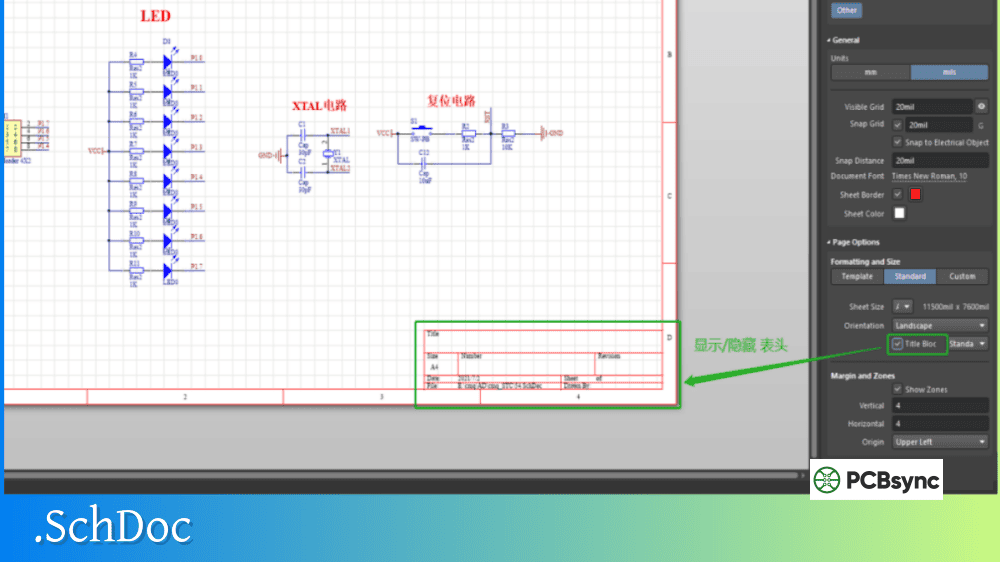
The wizard shows the proposed project structure. Each schematic page within your .DSN becomes a separate .SchDoc file. A .PrjPCB project file is automatically created to group them.
Verify the output directory and adjust if needed.
Step 6: Execute import
Click Next to begin conversion. Progress bars indicate status. When complete, click Finish.
The wizard automatically invokes extracta.exe to convert binary to ASCII
Follow the layer mapping and configuration steps
Complete the import
Scenario B: No Allegro installation available
If you don’t have Allegro/OrCAD PCB Editor on your Altium machine:
On a computer with OrCAD PCB Editor installed, open a command prompt
Navigate to your project directory
Run: extracta -s PCBName.brd -o PCBName.alg
Copy the resulting .ALG file to your Altium machine
Import the .ALG file using the Allegro Import Wizard
Alternative for batch conversion: Altium provides utility files (Allegro2Altium.bat and AllegroExportViews.txt) that automate the ASCII extraction process.
If you use OrCAD Capture CIS for component management:
Go to File → Import Wizard
Select OrCAD CIS Configuration File
Add your .DBC file
The wizard imports the database connection configuration
Configure Altium’s DbLib or SVNDbLib to connect to the same database
Note: The actual database remains external—the import only translates the configuration.
Layer Mapping Reference for OrCAD to Altium Conversion
Proper layer mapping prevents copper, silkscreen, and mechanical data from landing on wrong layers.
Standard Layer Mapping Table
OrCAD Layout Layer
OrCAD PCB Editor Layer
Altium Designer Layer
TOP
TOP
Top Layer
BOTTOM
BOTTOM
Bottom Layer
GND (internal)
GND
Internal Plane 1
PWR (internal)
VCC
Internal Plane 2
INNER1, INNER2
INNER1, INNER2
Mid Layer 1, 2
SST
SILKSCREEN_TOP
Top Overlay
SSB
SILKSCREEN_BOTTOM
Bottom Overlay
SMT
SOLDERMASK_TOP
Top Solder
SMB
SOLDERMASK_BOTTOM
Bottom Solder
SPT
PASTEMASK_TOP
Top Paste
SPB
PASTEMASK_BOTTOM
Bottom Paste
ASSEMBLY_TOP
ASSEMBLY_TOP
Mechanical 1
ASSEMBLY_BOTTOM
ASSEMBLY_BOTTOM
Mechanical 2
BOARD GEOMETRY
BOARD GEOMETRY
Keep-Out Layer
Custom layers require manual mapping decisions. Document your choices for consistency across multiple project imports.
Common Import Issues and Solutions
After importing hundreds of OrCAD projects, these problems appear most frequently.
“Unrecognized Project File Version” Error
Cause: OrCAD Capture 10.x and later use a different .DSN format than earlier versions.
Solution: Either upgrade Altium Designer to Summer 09 or later, or resave the .DSN file in OrCAD using the older format (File → Save As, check “Remove Pin Name and Number Movement”).
“Cadence Allegro extracta.exe has timed out”
Cause: The binary-to-ASCII conversion takes too long for large designs, or Allegro isn’t properly installed.
Solution:
Manually run extracta.exe from command line on a machine with Allegro installed
Import the resulting .ALG file instead of .BRD
Check that OrCAD PCB Editor environment variables are properly configured
Solution: After import, run Project → Component Links in Altium to verify and repair footprint associations. You may need to manually link components to correct footprints from your Altium libraries.
Net Connectivity Broken
Cause: OrCAD’s off-page connectors, hierarchical ports, and global nets use different connectivity models than Altium.
Solution: Enable Convert OrCAD Off-Page connectors as Altium Ports during import. After import, run ERC (Electrical Rules Check) and verify net assignments manually for critical signals.
Design Rules Not Imported
Cause: Design rule structures differ significantly between tools. Rules rarely transfer completely.
Solution: Plan to recreate design rules in Altium. Export your OrCAD rules as documentation, then configure equivalent rules in Altium’s Design → Rules dialog.
Post-Import Verification Checklist
Never trust an imported design without verification. Complete this checklist before proceeding with design work.
Frequently Asked Questions About OrCAD to Altium Conversion
Can I convert OrCAD files to Altium without an OrCAD installation?
For schematic files (.DSN) and legacy PCB files (.MAX), yes—Altium’s Import Wizard handles these directly without needing OrCAD installed. However, for modern OrCAD PCB Editor files (.BRD), you need access to Cadence’s extracta.exe utility to convert binary files to ASCII format. This utility only comes with Allegro/OrCAD PCB Editor installations. If you don’t have access, consider using Altium’s service bureau network or obtaining the .ALG ASCII export from someone who does have OrCAD installed.
Does converting OrCAD to Altium Designer delete my original files?
No. The Import Wizard creates new Altium-format files (.SchDoc, .PcbDoc, .PrjPCB) in the output directory you specify. Your original OrCAD files (.DSN, .MAX, .BRD, .OLB, .LLB) remain completely untouched. You can continue using them in OrCAD while also working with the converted versions in Altium.
Which OrCAD versions are supported for import?
Altium Designer supports OrCAD Capture up to version 17.2, OrCAD Layout version 9.x (discontinued in 2009), and OrCAD PCB Editor/Allegro versions 15.2 through 17.2. The .DSN file format changed in OrCAD Capture 10.x and again in 16.3, so older Altium versions may have compatibility issues with newer OrCAD files. Always use the latest Altium Designer build for best import compatibility.
Will my design rules transfer from OrCAD to Altium?
Design rules transfer partially at best. The rule structures between OrCAD and Altium differ significantly, so expect to recreate most rules manually. Critical rules like clearances, trace widths, and via specifications should be verified and reconfigured in Altium’s Design Rules dialog after import. Document your OrCAD rules beforehand to simplify recreation.
How do I handle OrCAD CIS database links after migration?
The OrCAD CIS importer translates the database connection configuration (.DBC file), not the database itself. After import, configure Altium’s database library features (DbLib or SVNDbLib) to connect to the same external database. The component parameters and supplier data remain in your database—you’re just changing how the design tool accesses that information. Some field mapping adjustments may be necessary.
Final Recommendations for Successful Migration
After years of helping teams convert OrCAD to Altium Designer, here’s my practical advice:
Start with a simple project: Don’t begin your migration journey with your most complex 16-layer design. Pick a straightforward 2-layer or 4-layer board to learn the import process and identify potential issues in a low-risk environment.
Import schematics and PCB separately, then combine: For complex projects, import the schematic design first, then import the PCB layout separately. Use Altium’s Project → Component Links to associate them. This gives you more control and makes troubleshooting easier.
Plan for library migration: Converting individual projects is only part of the story. Systematically migrating your OrCAD libraries to Altium format—or building new Altium libraries from scratch—is equally important for long-term productivity.
Budget time for learning: Even with successful file conversion, OrCAD and Altium workflows differ significantly. Allocate time for training and expect a learning curve as you adapt to Altium’s interface conventions, keyboard shortcuts, and design methodologies.
Keep backups: Before any migration work, back up your entire OrCAD project directory. While imports don’t modify source files, having clean backups provides peace of mind and recovery options if anything goes wrong.
The migration from OrCAD to Altium Designer is absolutely achievable with proper preparation. The Import Wizard handles most of the heavy lifting—your job is verifying results and bridging the inevitable gaps between two different design philosophies.
Inquire: Call 0086-755-23203480, or reach out via the form below/your sales contact to discuss our design, manufacturing, and assembly capabilities.
Quote: Email your PCB files to Sales@pcbsync.com (Preferred for large files) or submit online. We will contact you promptly. Please ensure your email is correct.
Notes: For PCB fabrication, we require PCB design file in Gerber RS-274X format (most preferred), *.PCB/DDB (Protel, inform your program version) format or *.BRD (Eagle) format. For PCB assembly, we require PCB design file in above mentioned format, drilling file and BOM. Click to download BOM template To avoid file missing, please include all files into one folder and compress it into .zip or .rar format.