Inquire: Call 0086-755-23203480, or reach out via the form below/your sales contact to discuss our design, manufacturing, and assembly capabilities.
Quote: Email your PCB files to Sales@pcbsync.com (Preferred for large files) or submit online. We will contact you promptly. Please ensure your email is correct.
Notes: For PCB fabrication, we require PCB design file in Gerber RS-274X format (most preferred), *.PCB/DDB (Protel, inform your program version) format or *.BRD (Eagle) format. For PCB assembly, we require PCB design file in above mentioned format, drilling file and BOM. Click to download BOM template To avoid file missing, please include all files into one folder and compress it into .zip or .rar format.
After two decades of working with military-grade electronics, I can say without hesitation that MIL-STD-883 is the single most important test standard for anyone involved in microcircuit qualification. Whether you’re designing radiation-hardened ICs for satellite systems or specifying components for ground-based defense electronics, understanding this standard is non-negotiable. Every wire bond pull test, every thermal shock cycle, every burn-in hour traces back to the requirements defined in MIL-STD-883.
This comprehensive guide breaks down the structure, test methods, compliance requirements, and practical applications of MIL-STD-883—everything you need to know to navigate this essential military specification.
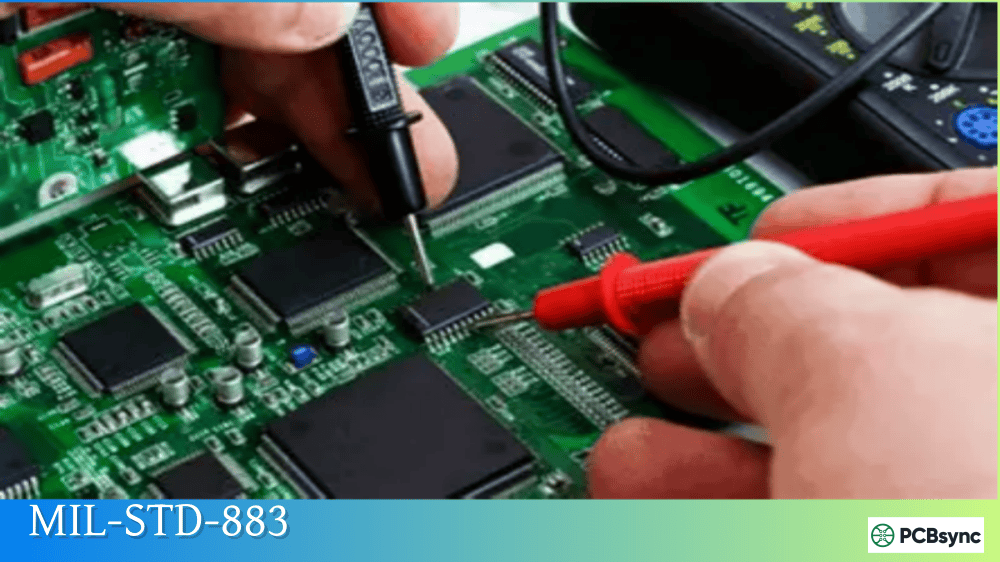
MIL-STD-883, officially titled “Test Method Standard: Microcircuits,” establishes uniform methods, controls, and procedures for testing microelectronic devices suitable for use within military and aerospace electronic systems. Issued by the Department of Defense, this standard serves as the definitive reference for qualifying microcircuits that must withstand the harsh conditions of military and space operations.
The standard encompasses basic environmental tests to determine resistance to deleterious effects of natural elements and conditions, mechanical and electrical tests, workmanship and training procedures, and such other controls and constraints as have been deemed necessary to ensure a uniform level of quality and reliability suitable for the intended applications.
For the purposes of MIL-STD-883, “devices” includes monolithic microcircuits, multichip modules, film and hybrid microcircuits, microcircuit arrays, and the elements from which these circuits and arrays are formed. The standard applies exclusively to microelectronic devices—it does not cover discrete semiconductors (which fall under MIL-STD-750) or passive components.
Primary Objectives of MIL-STD-883
The standard serves three fundamental objectives that drive its structure and application:
Objective
Description
Simulate Field Conditions
Specify laboratory test conditions that give results equivalent to actual service conditions in the field, ensuring reproducibility of test results
Standardize Test Methods
Consolidate all test methods of similar character from various joint-services and NASA specifications into a single document to conserve equipment, manhours, and testing facilities
Ensure Uniform Quality
Provide a consistent level of physical, electrical, and environmental testing, manufacturing controls, workmanship, and materials across all devices screened to the standard
Structure and Organization of MIL-STD-883
MIL-STD-883 is organized as a multipart test method standard, with test methods divided into five distinct series based on their classification. This modular organization provides flexibility in referencing and revising specific test methods without affecting the entire document.
MIL-STD-883 Document Parts
Part
Identification
Coverage
Method Numbers
Part 1
MIL-STD-883-1
Environmental Test Methods
1000-1999
Part 2
MIL-STD-883-2
Mechanical Test Methods
2000-2999
Part 3
MIL-STD-883-3
Electrical Test Methods (Digital)
3000-3999
Part 4
MIL-STD-883-4
Electrical Test Methods (Linear/Analog)
4000-4999
Part 5
MIL-STD-883-5
Test Procedures for High Reliability Applications
5000-5999
Test method revisions are numbered consecutively using a period separator. For example, test method 1010.8 represents the eighth revision of temperature cycling method 1010. This numbering system allows users to quickly identify when a specific test method was last updated.
MIL-STD-883 Environmental Test Methods (1000 Series)
The 1000 series establishes environmental test procedures that determine how microcircuits respond to the harsh conditions encountered in military and aerospace applications. These tests stress devices to reveal latent defects and verify survival under extreme environmental conditions.
Key Environmental Test Methods
Method
Title
Purpose
1001
Barometric Pressure (Altitude)
Simulate high-altitude/low-pressure operation
1004
Moisture Resistance
Evaluate resistance to high humidity and moisture
1005
Steady-State Life
Accelerated life testing under elevated temperature and bias
1008
Stabilization Bake
Remove moisture and condition devices before testing
1010
Temperature Cycling
Determine resistance to temperature extremes and cycling effects
1011
Thermal Shock
Evaluate response to sudden extreme temperature changes
Evaluate radiation hardness for space applications
1019
Ionizing Radiation (Total Dose)
Measure cumulative radiation damage tolerance
1020
Dose Rate Induced Latchup
Test susceptibility to single-event latchup
MIL-STD-883 Temperature Cycling (Method 1010)
Temperature cycling per Method 1010 determines the resistance of a microcircuit to extremes of high and low temperatures and the effects of alternating exposures. The test produces low-to-medium frequency mechanical stresses as materials with different thermal expansion coefficients expand and contract at different rates.
Condition
Temperature Range
Typical Application
Condition A
-55°C to +85°C
Commercial temperature range
Condition B
-55°C to +125°C
Military temperature range
Condition C
-65°C to +150°C
Extended military/space
Condition D
-65°C to +175°C
High-temperature applications
Condition E
-65°C to +200°C
Extreme environment
Transfer time between temperature extremes must not exceed one minute, and dwell time at each extreme must be sufficient for the load to reach the specified temperature. The number of cycles typically ranges from 10 for screening to 1000 or more for qualification testing.
MIL-STD-883 Thermal Shock (Method 1011)
Thermal shock differs from temperature cycling in the rate of temperature change. Method 1011 subjects devices to sudden exposure to extreme temperature changes, producing significantly higher mechanical stresses. This accelerated test method identifies failure modes resulting from rapid temperature transitions, such as those occurring during power cycling, hand soldering, or operation of high-power devices.
Both air-to-air and liquid-to-liquid thermal shock test configurations are supported, with liquid immersion providing more severe stress conditions due to faster heat transfer rates.
MIL-STD-883 Burn-In Test (Method 1015)
Burn-in exposes microcircuits to elevated temperature and electrical bias conditions to screen for and eliminate devices that could fail due to undetected defects or weaknesses. This process accelerates infant mortality failures, removing marginal devices before they reach the field.
Class Level
Burn-In Duration
Temperature
Class B (Military)
160 hours minimum
125°C
Class S (Space)
240 hours minimum
125°C
Dynamic burn-in with functional stimulus provides more effective screening than static burn-in because it exercises internal circuit nodes that might not be stressed under static bias alone.
MIL-STD-883 Mechanical Test Methods (2000 Series)
The 2000 series covers mechanical characterization tests that evaluate physical construction, assembly quality, and mechanical robustness of microcircuit packages and die attachments.
Key Mechanical Test Methods
Method
Title
Purpose
2001
Constant Acceleration
Determine structural integrity under centrifugal force
2002
Mechanical Shock
Evaluate shock resistance during handling and operation
2003
Solderability
Verify termination solderability for assembly
2004
Lead Integrity
Test lead strength and resistance to damage
2007
Vibration, Variable Frequency
Evaluate resonance and fatigue characteristics
2009
External Visual
Inspect external package condition and marking
2010
Internal Visual (Monolithic)
Pre-seal inspection of die and wire bonds
2011
Bond Strength (Wire Bond Pull)
Measure wire bond adhesion strength
2012
Radiography (X-Ray)
Non-destructive internal inspection
2017
Internal Visual (Hybrid)
Pre-seal inspection for hybrid microcircuits
2019
Die Shear Strength
Measure die attach adhesion strength
2020
PIND (Particle Impact Noise Detection)
Detect loose particles inside sealed packages
MIL-STD-883 Wire Bond Pull Test (Method 2011)
The destructive bond pull test per Method 2011 remains one of the most critical quality indicators for microcircuit assembly. This test measures the force required to break wire bonds, identifying weak bonds that could fail in service.
Wire Type
Diameter
Minimum Pull Strength (Class B)
Gold Wire
0.7 mil (17.8 μm)
1.5 grams
Gold Wire
1.0 mil (25.4 μm)
2.4 grams
Gold Wire
1.25 mil (31.8 μm)
3.0 grams
Aluminum Wire
1.0 mil (25.4 μm)
2.0 grams
Aluminum Wire
1.25 mil (31.8 μm)
3.0 grams
Failure mode analysis after bond pull testing provides critical feedback on the wire bonding process, distinguishing between ball lift, wedge lift, neck break, and mid-span break failures.
MIL-STD-883 Die Shear Test (Method 2019)
Die shear strength testing per Method 2019 determines the integrity of die attach materials and procedures. The test measures the force required to shear the die from its mounting substrate, with minimum strength requirements based on die area.
The die contact tool must apply force gradually against an edge of the die that forms approximately a 90° angle with the substrate. For rectangular die, force is applied perpendicular to the longer side. The minimum shear strength is typically specified as a function of die area, with common requirements ranging from 2.5 kg/mm² to 6.0 kg/mm² depending on die attach method and application class.
MIL-STD-883 Electrical Test Methods (3000 and 4000 Series)
The 3000 series covers electrical characterization tests for digital microcircuits, while the 4000 series addresses linear (analog) devices. These methods verify that devices meet their specified electrical parameters under various operating conditions.
These electrical tests are performed across the full military temperature range (-55°C to +125°C for Class B devices) at minimum, typical, and maximum supply voltage conditions to characterize worst-case performance.
MIL-STD-883 High Reliability Test Procedures (5000 Series)
The 5000 series contains the most critical procedures for qualifying and screening high-reliability microcircuits. These methods define complete test flows rather than individual test procedures.
Key 5000 Series Methods
Method
Title
Application
5004
Screening Procedures
100% device screening requirements
5005
Qualification and QCI Procedures
Lot qualification and conformance inspection
5007
Wafer Lot Acceptance
Wafer-level screening before assembly
5008
Test Procedures for Hybrids
Special requirements for hybrid microcircuits
5009
Destructive Physical Analysis (DPA)
Sample destructive inspection
5010
Custom Monolithic Procedures
ASIC-specific requirements
MIL-STD-883 Method 5004: Screening Procedures
Method 5004 defines the 100% screening tests that every device in a production lot must pass before shipment. The screening flow differs based on class level:
Test
Class B (Military)
Class S (Space)
Internal Visual
100%
100%
Stabilization Bake
24h @ 150°C
24h @ 150°C
Temperature Cycling
100 cycles
100 cycles
Constant Acceleration
20,000g min
30,000g min
PIND
100%
100% (2 runs)
Fine/Gross Leak
100%
100%
Burn-in
160h @ 125°C
240h @ 125°C
Final Electrical
100% at temp
100% at temp
External Visual
100%
100%
MIL-STD-883 Method 5005: Qualification and QCI
Method 5005 establishes qualification testing (to prove a device design and manufacturing process) and Quality Conformance Inspection (QCI) testing (to verify ongoing production quality). The method organizes tests into groups:
Group
Test Type
When Performed
Group A
Electrical (DC, AC, Functional)
Every inspection lot
Group B
Mechanical (Bond pull, Die shear)
Every inspection lot
Group C
Die-related (Life test, ESD)
Every wafer lot
Group D
Package-related (Physical dimensions, Lead integrity)
Periodic
Group E
Radiation Hardness (If required)
Per RHA requirements
The Percent Defective Allowable (PDA) limits define maximum failure rates at each screening step. Exceeding PDA limits typically results in lot rejection, though dispositioning options may be available for specific failure modes.
MIL-STD-883 Compliance Requirements
Understanding compliance requirements is essential because claiming MIL-STD-883 compliance without meeting all applicable requirements can result in serious contractual and legal consequences.
Full Compliance vs. Stand-Alone Reference
Compliance Type
Requirements
Marking
Full Compliance (1.2.1)
All provisions of MIL-PRF-38535 Appendix A
/883B or /883S suffix
Stand-Alone Reference
Only specifically referenced method(s)
No /883 marking allowed
Non-Compliant
Processed with deviations
Cannot claim MIL-STD-883
When any manufacturer, contractor, or OEM requires or claims a non-JAN part compliant with MIL-STD-883, all provisions of Appendix A of MIL-PRF-38535 must be met. Manufacturers are subject to Government compliance validation audits on a drop-in basis with minimum notice.
Compliance with only test methods 5004, 5005, or 5010 on a stand-alone basis does not constitute MIL-STD-883 compliance—such reference requires compliance to all provisions of section 1.2.1.
Class Levels and Device Classes
Class Designation
Application
Temperature Range
Class B
High-reliability military
-55°C to +125°C
Class S
Space applications
-55°C to +125°C
Class Q
QML standard product
-55°C to +125°C
Class V
QML space-level product
-55°C to +125°C
Class M
Military SMD product
-55°C to +125°C
Class H
Military hybrid
-55°C to +125°C
Class K
Space-level hybrid
-55°C to +125°C
Class level B requirements apply to Classes Q, H, and M products, while Class level S requirements apply to Classes V and K products.
Relationship Between MIL-STD-883 and MIL-PRF-38535
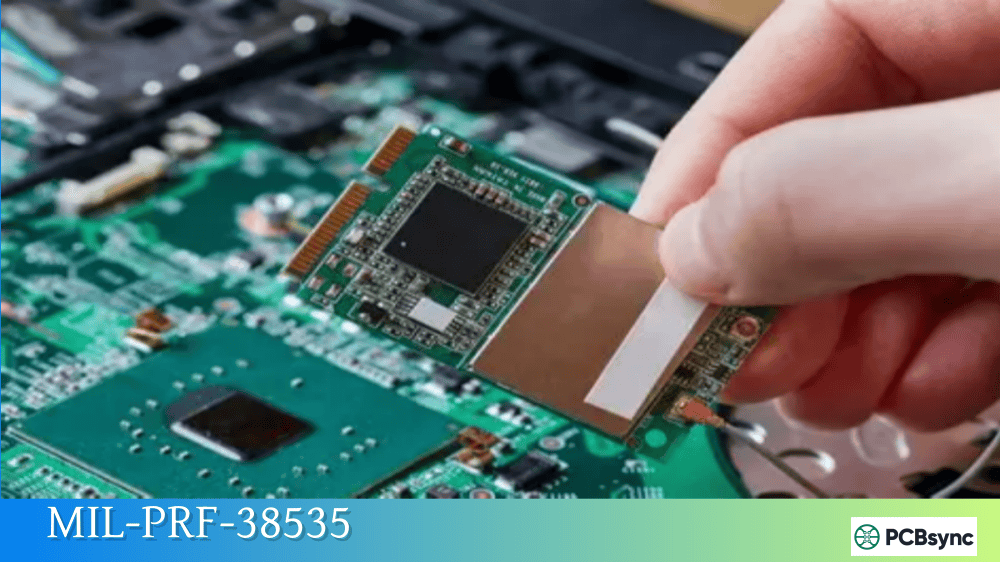
MIL-STD-883 defines test methods, while MIL-PRF-38535 defines the performance and quality assurance requirements for microcircuit manufacturing. The two specifications work together:
Specification
Function
Key Content
MIL-STD-883
Test Method Standard
How to perform tests
MIL-PRF-38535
Performance Specification
What requirements must be met
QML-38535
Qualified Manufacturers List
Who can manufacture QML parts
Manufacturers seeking to produce MIL-STD-883 compliant parts must:
Achieve QML certification per MIL-PRF-38535
Establish a certified quality management program
Use certified facilities and processes
Perform all screening and QCI testing per MIL-STD-883
Maintain traceability to wafer lot level
Current Revision and Document History
MIL-STD-883 has been revised numerous times since its initial release to incorporate technological advances, lessons learned, and alignment with commercial standards.
Revision History
Revision
Date
Key Changes
MIL-STD-883L
September 16, 2019
Current baseline, split into multipart format
MIL-STD-883K
December 2016
Updated ESD and radiation test methods
MIL-STD-883J
February 2013
Revised screening and QCI procedures
MIL-STD-883H
February 2010
Updated internal visual criteria
MIL-STD-883G
February 2006
Added plastic package requirements
MIL-STD-883F
June 2004
Enhanced test method details
MIL-STD-883E
December 1996
Major restructure
The current revision (MIL-STD-883L) reorganized the standard into separate parts for each test method series, simplifying updates and reducing document size for users who only need specific test methods.
Useful Resources for MIL-STD-883
For engineers and quality professionals needing access to MIL-STD-883 and related documents:
The current MIL-STD-883L and its component parts can be downloaded free of charge from the DLA Land and Maritime website. The standard is split into multiple PDF files:
std883.pdf – Base standard
std883-1.pdf – Environmental test methods (1000 series)
std883-2.pdf – Mechanical test methods (2000 series)
std883-3.pdf – Digital electrical tests (3000 series)
std883-4.pdf – Analog electrical tests (4000 series)
std883-5.pdf – High reliability procedures (5000 series)
Practical Application of MIL-STD-883
For engineers specifying or testing military-grade microcircuits, understanding when and how to apply MIL-STD-883 requirements is critical.
When to Invoke MIL-STD-883
Application
Requirement Level
Typical Approach
Space/Launch Vehicle
Class S/V
Full 5004/5005 flow, radiation testing
Military Aircraft
Class B/Q
Full 5004/5005 flow
Ground Military Systems
Class B/Q
Full or tailored screening
High-Reliability Commercial
Reference specific methods
Stand-alone test method reference
COTS with Upscreening
Reference specific methods
Selected tests only
Laboratory Suitability Requirements
Prior to processing any microcircuit intended for military or space applications, the testing facility must be audited by DLA Land and Maritime and hold laboratory suitability certification for the applicable test methods. This ensures that test equipment, procedures, and personnel meet the standards required for valid MIL-STD-883 testing.
Facilities performing MIL-STD-883 testing must maintain calibrated equipment traceable to national standards, trained and certified operators, controlled environments (particularly for internal visual inspection in Class 100 cleanrooms), and documented procedures aligned with each test method’s requirements.
Frequently Asked Questions About MIL-STD-883
What is the difference between MIL-STD-883 and MIL-PRF-38535?
MIL-STD-883 is a test method standard that defines how to perform specific tests on microcircuits—temperature cycling procedures, wire bond pull test techniques, burn-in conditions, and so on. MIL-PRF-38535 is a performance specification that defines what requirements a microcircuit and its manufacturer must meet, including quality management system requirements, qualification requirements, and screening requirements. MIL-PRF-38535 invokes MIL-STD-883 test methods to verify compliance with its performance requirements. You cannot claim MIL-STD-883 compliance without also meeting MIL-PRF-38535 Appendix A requirements.
Can I claim MIL-STD-883 compliance if I only perform some of the tests?
No. Claiming MIL-STD-883 compliance (marking parts with /883B or /883S) requires meeting all provisions of section 1.2.1, which invokes all applicable requirements of MIL-PRF-38535 Appendix A. If you only perform specific test methods on a stand-alone basis, you can reference those specific methods (e.g., “tested per MIL-STD-883 Method 2011”), but the parts cannot be marked or claimed as MIL-STD-883 compliant. Using the /883 marking without meeting all requirements is a serious violation that can result in contract termination and other penalties.
What is the current version of MIL-STD-883?
The current baseline is MIL-STD-883L, dated September 16, 2019. However, MIL-STD-883L restructured the document into a multipart format, so the individual test method parts (MIL-STD-883-1 through MIL-STD-883-5) may have more recent revision dates as they are updated independently. Always check the DLA Land and Maritime website for the most current version of each part, as individual test methods are revised as needed without requiring a full standard revision.
What is the difference between Class B and Class S screening?
Class B (military grade) and Class S (space grade) both require 100% screening, but Class S imposes more stringent requirements. Key differences include: Class S requires 240 hours of burn-in versus 160 hours for Class B; Class S requires 30,000g minimum constant acceleration versus 20,000g for Class B; Class S requires two PIND (Particle Impact Noise Detection) runs versus one for Class B; and Class S typically requires additional radiation hardness testing. Class S also has tighter PDA (Percent Defective Allowable) limits and more extensive qualification requirements.
Does MIL-STD-883 apply to commercial off-the-shelf (COTS) parts?
MIL-STD-883 was designed for military and aerospace microcircuits manufactured on QML-certified production lines. However, specific MIL-STD-883 test methods can be referenced for upscreening COTS parts—a process where commercial parts undergo additional testing to evaluate their suitability for higher-reliability applications. This approach references specific test methods on a stand-alone basis and does not result in MIL-STD-883 compliant parts. Upscreened COTS parts cannot be marked with /883 designations and should be documented as having been tested to referenced MIL-STD-883 methods with specific conditions noted.
Conclusion
MIL-STD-883 remains the cornerstone of microelectronics qualification for military and aerospace applications. Its comprehensive test methods—spanning environmental stress testing, mechanical characterization, electrical verification, and high-reliability screening procedures—provide the framework that ensures microcircuits can survive the demanding conditions of defense and space systems.
For engineers entering the defense electronics field, mastering MIL-STD-883 is essential. The standard’s test methods appear in virtually every military microcircuit specification, from Standard Microcircuit Drawings to vendor qualification requirements. Understanding not just what tests are required but why they’re required and how they relate to real-world failure modes separates competent engineers from those who merely check boxes.
The transition to performance-based specifications under MIL-PRF-38535 and the QML program has added complexity, but the fundamental test methods defined in MIL-STD-883 remain unchanged. Whether you’re qualifying a new ASIC design, evaluating a supplier’s screening process, or investigating a field failure, the test methods and acceptance criteria defined in MIL-STD-883 provide the technical foundation for ensuring microcircuit quality and reliability.
As technology continues to evolve—with smaller geometries, higher densities, and new packaging technologies—MIL-STD-883 continues to be updated to address emerging challenges while maintaining the rigorous quality standards that military and space applications demand.
Inquire: Call 0086-755-23203480, or reach out via the form below/your sales contact to discuss our design, manufacturing, and assembly capabilities.
Quote: Email your PCB files to Sales@pcbsync.com (Preferred for large files) or submit online. We will contact you promptly. Please ensure your email is correct.
Notes: For PCB fabrication, we require PCB design file in Gerber RS-274X format (most preferred), *.PCB/DDB (Protel, inform your program version) format or *.BRD (Eagle) format. For PCB assembly, we require PCB design file in above mentioned format, drilling file and BOM. Click to download BOM template To avoid file missing, please include all files into one folder and compress it into .zip or .rar format.