Inquire: Call 0086-755-23203480, or reach out via the form below/your sales contact to discuss our design, manufacturing, and assembly capabilities.
Quote: Email your PCB files to Sales@pcbsync.com (Preferred for large files) or submit online. We will contact you promptly. Please ensure your email is correct.
Notes: For PCB fabrication, we require PCB design file in Gerber RS-274X format (most preferred), *.PCB/DDB (Protel, inform your program version) format or *.BRD (Eagle) format. For PCB assembly, we require PCB design file in above mentioned format, drilling file and BOM. Click to download BOM template To avoid file missing, please include all files into one folder and compress it into .zip or .rar format.
Spending nearly two decades qualifying discrete semiconductors for military and space applications, I’ve run countless tests according to MIL-STD-750. From power MOSFETs destined for satellite power systems to radiation-hardened rectifiers for missile guidance, this standard provides the test methods that prove a discrete semiconductor can survive the rigors of military and aerospace environments. If MIL-STD-883 is the bible for microcircuits, then MIL-STD-750 is its counterpart for discrete semiconductors.
This guide provides an in-depth look at MIL-STD-750—its structure, test methods, relationship with MIL-PRF-19500, and how it ensures the reliability of transistors, diodes, and other discrete devices in critical applications.
MIL-STD-750, officially titled “Test Methods for Semiconductor Devices,” establishes uniform methods and procedures for testing semiconductor devices suitable for use within military and aerospace electronic systems. The standard covers basic environmental, physical, and electrical tests to determine resistance to deleterious effects of natural elements and conditions surrounding military and space operations.
For the purpose of MIL-STD-750, the term “devices” includes transistors, diodes, voltage regulators, rectifiers, tunnel diodes, thyristors (controlled rectifiers), and other related discrete semiconductor parts. The standard is intended to apply only to semiconductor devices—it does not cover integrated circuits or microcircuits, which fall under MIL-STD-883.
Core Objectives of MIL-STD-750
The test methods and procedures in MIL-STD-750 serve three fundamental purposes:
Objective
Description
Simulate Field Conditions
Specify laboratory conditions that produce test results equivalent to actual service conditions in the field, ensuring reproducibility
Standardize Test Methods
Consolidate test methods from various joint-services semiconductor device specifications into one standard, conserving equipment and testing resources
Universal Application
Apply environmental, physical, and electrical test methods to all semiconductor devices, including those not covered by approved military specification sheets
The standard acknowledges that laboratory tests cannot perfectly replicate every operational environment. The test methods represent conditions that give results equivalent to field service, but the only true test for a specific application is actual service operation at that location.
Structure and Organization of MIL-STD-750
MIL-STD-750 is organized as a multipart test method standard, with test methods divided into five distinct series. This modular structure provides flexibility in referencing and revising specific test methods without affecting the entire document.
Test method revisions are numbered consecutively using a period separator. For example, test method 1001.2 represents the second revision of method 1001. This allows individual test methods to be updated without changing the overall standard revision.
When referencing MIL-STD-750 in specifications or procurement documents, the basic standard designation should be used rather than individual part numbers. Existing documents referencing MIL-STD-750 do not need revision to reference the multipart format.
MIL-STD-750 Environmental Test Methods (1000 Series)
The 1000 series establishes uniform test methods for environmental testing of semiconductor devices, determining resistance to natural elements and conditions encountered in military operations.
Key Environmental Test Methods
Method
Title
Purpose
1001
Barometric Pressure (Reduced)
Simulate high-altitude low-pressure operation
1011
Thermal Shock
Evaluate resistance to sudden temperature changes
1015
Steady-State Photocurrent Irradiation
Test radiation response under electron beam
1016
Insulation Resistance
Measure resistance of insulating materials
1017
Neutron Irradiation
Evaluate neutron radiation effects
1018
Internal Gas Analysis
Analyze gases inside sealed packages
1019
Steady-State Total Dose Irradiation
Test cumulative radiation damage
1020
ESD Sensitivity Classification
Determine electrostatic discharge sensitivity
1021
Moisture Resistance
Evaluate resistance to high humidity
1022
Resistance to Solvents
Test compatibility with cleaning solvents
1026
Steady-State Operation Life
Accelerated life testing under bias and temperature
1031
High-Temperature Life (Non-Operating)
Storage life at elevated temperature
1037
Intermittent Operation Life
Life testing with power cycling
1038
Burn-In (Diodes, Rectifiers, Zeners)
Screen for early failures
1039
Burn-In (Transistors)
Screen transistors for infant mortality
1040
Burn-In (Thyristors)
Screen controlled rectifiers for defects
1041
Salt Atmosphere (Corrosion)
Evaluate corrosion resistance
1042
Burn-In for Power MOSFETs/IGBTs
Screen power devices for early failures
1046
Salt Spray (Corrosion)
Accelerated corrosion testing
1051
Temperature Cycling
Determine resistance to temperature extremes
1056
Thermal Shock (Diodes)
Evaluate seal effectiveness
MIL-STD-750 Burn-In Test Methods
Burn-in testing screens out devices with manufacturing defects that would cause early field failures. MIL-STD-750 provides separate burn-in methods for different device types:
Method
Device Type
Typical Conditions
1038
Diodes, Rectifiers, Zeners
Power burn-in at elevated junction temperature
1039
Transistors
Active bias at rated junction temperature
1040
Thyristors
Controlled rectifier power cycling
1042
Power MOSFETs, IGBTs
Gate stress and power dissipation
Burn-in conditions typically require achieving a specified junction temperature (often 125°C or higher) for a defined duration, with the goal of accelerating any latent defects to the point of failure before devices ship to customers.
MIL-STD-750 Mechanical Test Methods (2000 Series)
The 2000 series covers mechanical characterization tests that evaluate physical construction, package integrity, and mechanical robustness of semiconductor devices.
Key Mechanical Test Methods
Method
Title
Purpose
2005
Axial Lead Tensile Test
Verify lead strength under tension
2006
Constant Acceleration
Determine structural integrity under centrifugal force
2016
Die Attach Integrity
Evaluate die-to-header bond quality
2026
Solderability
Verify termination solderability for assembly
2031
Soldering Heat
Test resistance to soldering thermal stress
2036
Terminal Strength
Evaluate lead and terminal strength
2037
Bond Strength
Measure wire bond adhesion
2046
Vibration Fatigue
Test fatigue resistance under vibration
2051
Vibration Noise
Detect noise under vibration
2052
PIND (Particle Impact Noise Detection)
Detect loose particles inside packages
2056
Vibration, Variable Frequency
Evaluate resonance and fatigue
2057
Vibration, Variable Frequency (Monitored)
Vibration with electrical monitoring
2066
Physical Dimensions
Verify package dimensions
2068
External Visual (Glass-Encased Diodes)
Inspect external package condition
2069
Pre-Cap Visual (Power MOSFETs)
Pre-seal internal inspection
2071
Visual and Mechanical Examination
General visual inspection
2072
Internal Visual Transistor (Pre-Cap)
Pre-seal transistor inspection
2073
Visual Inspection for Die
Semiconductor die inspection
2074
Internal Visual (Discrete Diodes)
Pre-seal diode inspection
2076
Radiography (X-Ray)
Non-destructive internal inspection
Constant Acceleration (Method 2006)
Constant acceleration testing subjects devices to centrifugal force (typically 20,000g or 30,000g) to detect structural and mechanical weaknesses not necessarily detected by other tests. This test identifies problems with die attach, wire bonds, and internal package integrity by subjecting all internal components to sustained high-g forces in multiple orientations.
PIND Testing (Method 2052)
Particle Impact Noise Detection identifies loose particles inside sealed semiconductor packages. Internal contamination—loose bond wires, solder balls, or foreign debris—can cause intermittent failures or permanent damage when particles migrate and create shorts. PIND testing applies controlled shock pulses while monitoring for characteristic acoustic signatures of particle impact.
The 4000 series provides electrical characterization test methods for diodes, microwave diodes, thyristors (controlled rectifiers), and tunnel diodes.
Diode Test Method Categories
Series
Device Type
Coverage
4000-4099
Standard Diodes
Forward voltage, reverse current, breakdown
4100-4199
Microwave Diodes
High-frequency characteristics
4200-4299
Thyristors
SCR parameters, gate characteristics
4300-4399
Tunnel Diodes
Peak current, valley current, negative resistance
Key Diode Electrical Tests
Method
Title
Key Parameters
4001
Conditions for Diode Static Parameters
Standard measurement conditions
4011
Capacitance
Junction capacitance (Cj)
4016
Forward Voltage
VF at rated current
4021
Reverse Current Leakage
IR at rated voltage
4026
Breakdown Voltage (Diodes)
VBR, avalanche characteristics
4031
Breakdown Voltage (Voltage Regulators/Zeners)
VZ at rated current
4041
Forward Recovery Voltage and Time
Turn-on characteristics
4051
Reverse Recovery Characteristics
trr, Qrr
4056
Rectification Efficiency
η measurement
4066
Surge Current
IFSM capability
4071
Thermal Impedance (Diodes)
ZθJC, RθJC
4081
Thermal Impedance (Bridge Rectifier)
Multi-die thermal measurement
4106
VSWR
Microwave diode matching
4126
Conversion Loss
Mixer diode performance
4201
Blocking Current (Thyristors)
IDRM, IRRM
4206
Holding Current
IH measurement
4211
Gate Trigger Current
IGT measurement
4301
Peak Current (Tunnel Diodes)
IP measurement
4306
Valley Current (Tunnel Diodes)
IV measurement
MIL-STD-750 High Reliability Space Applications (5000 Series)
The 5000 series contains specialized test methods for semiconductor devices intended for high-reliability space applications, addressing the unique requirements of satellite, spacecraft, and launch vehicle electronics.
5000 Series Test Methods
Method
Title
Purpose
5001
Wafer Lot Acceptance
Wafer-level screening requirements
5003
Screening Procedures
100% device screening flow
5004
Quality Conformance Inspection
Lot-level qualification testing
5005
Qualification Procedures
Device type qualification
5010
Single Event Effects Testing
SEE, SEGR, SEB characterization
These methods define the complete flow from wafer acceptance through final qualification, ensuring devices meet the stringent requirements for space flight applications.
MIL-STD-750 and MIL-PRF-19500 Relationship
MIL-STD-750 defines test methods, while MIL-PRF-19500 establishes the performance and quality assurance requirements for discrete semiconductors. Understanding their relationship is essential for qualifying and procuring military-grade discrete devices.
Specification Framework
Specification
Function
Content
MIL-STD-750
Test Method Standard
How to perform tests
MIL-PRF-19500
Performance Specification
What requirements must be met
MIL-PRF-19500/xxx
Specification Sheets
Device-specific requirements
QML-19500
Qualified Manufacturers List
Who can manufacture JAN parts
JAN Quality Levels
MIL-PRF-19500 defines four quality levels for encapsulated semiconductor devices, each with progressively more stringent screening and testing requirements:
Quality Level
Designation
Application
Screening Level
JAN
Standard Military
General military applications
Basic screening
JANTX
Extended Testing
Higher reliability military
Enhanced screening
JANTXV
V-Level Testing
Critical military applications
Comprehensive screening
JANS
Space Level
Spaceflight applications
Most rigorous screening
For unencapsulated (die) products, two levels are available:
Quality Level
Designation
Application
JANHC
High-Reliability Die
Known good die
JANKC
Space-Level Die
Die for space applications
Radiation Hardness Assurance (RHA) Levels
For JANTXV and JANS devices requiring radiation hardness, eight RHA levels are designated by letters following the quality level:
RHA Level
Designation
Total Dose Rating
M
Minimal
3 krad(Si)
D
Low
10 krad(Si)
P
Moderate Low
30 krad(Si)
L
Moderate
50 krad(Si)
R
Moderate High
100 krad(Si)
F
High
300 krad(Si)
G
Very High
500 krad(Si)
H
Extreme
1 Mrad(Si)
MIL-STD-750 vs. MIL-STD-883 Comparison
Engineers often need to understand when to apply each standard:
Aspect
MIL-STD-750
MIL-STD-883
Device Coverage
Discrete semiconductors
Microcircuits (ICs)
Device Types
Transistors, diodes, rectifiers, thyristors
Monolithic ICs, hybrids, multichip modules
Performance Spec
MIL-PRF-19500
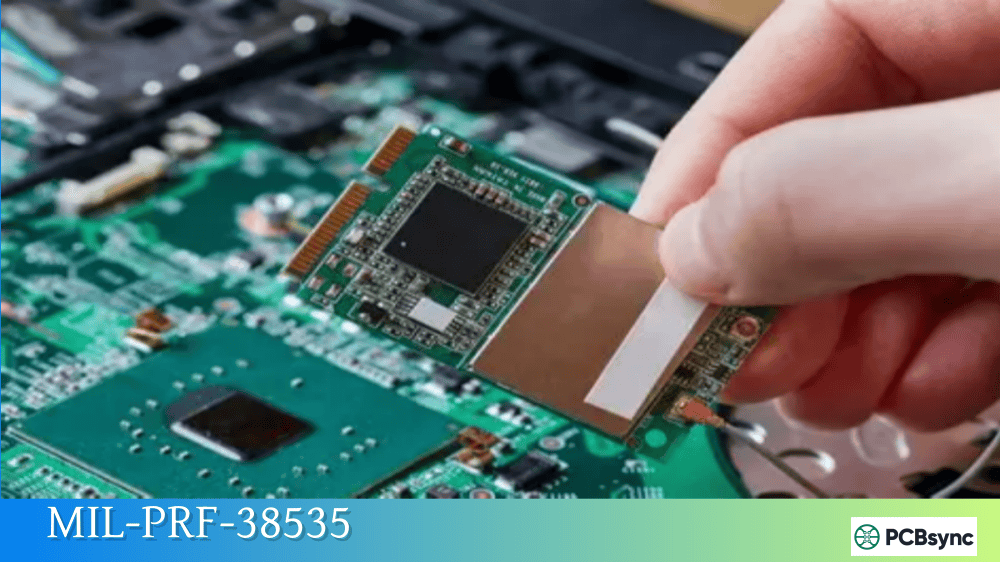
MIL-PRF-38535
Qualification List
QML-19500
QML-38535
Quality Levels
JAN, JANTX, JANTXV, JANS
Class B, Class S, Class Q, Class V
Burn-In Methods
1038/1039/1040/1042
1015
The two standards share similar philosophies and many analogous test methods, but each is tailored to the specific characteristics and failure modes of its device category.
Laboratory Suitability Requirements
Prior to processing any semiconductor devices intended for military or space applications, the testing facility must be audited by DLA Land and Maritime, Sourcing and Qualification Division, and be granted written laboratory suitability status for each test method employed.
Processing devices at any facility without laboratory suitability status for the applicable test methods renders those devices non-compliant with MIL-STD-750. This requirement ensures testing is performed by qualified personnel using properly calibrated equipment and documented procedures.
Calibration Requirements
MIL-STD-750 mandates calibration and certification procedures in accordance with MIL-STD-45662 for plant standards and instruments used to measure or control production processes. Key calibration requirements include:
Calibrating instrument accuracy at least 4× greater than the item being calibrated
Traceability to National Institute of Standards and Technology (NIST)
Correlation samples for measurements not directly traceable to NIST
Useful Resources for MIL-STD-750
For engineers and quality professionals needing access to MIL-STD-750 and related documents:
What is the difference between MIL-STD-750 and MIL-STD-883?
MIL-STD-750 covers test methods for discrete semiconductor devices including transistors, diodes, rectifiers, thyristors, and tunnel diodes. MIL-STD-883 covers test methods for microcircuits including monolithic integrated circuits, hybrid microcircuits, and multichip modules. While both standards share similar test philosophies and have analogous environmental and mechanical tests, each is tailored to the specific characteristics of its device category. Discrete semiconductors are qualified under MIL-PRF-19500 using MIL-STD-750 test methods, while microcircuits are qualified under MIL-PRF-38535 using MIL-STD-883 test methods.
What do JAN, JANTX, JANTXV, and JANS quality levels mean?
These are quality level designations defined in MIL-PRF-19500 for discrete semiconductors tested per MIL-STD-750. JAN (Joint Army-Navy) is the basic military quality level. JANTX adds extended testing beyond JAN requirements. JANTXV adds visual inspection enhancements and more extensive screening. JANS is the highest level, intended for space flight applications, with the most comprehensive screening, inspection, and lot traceability requirements. Each successive level adds more stringent screening and testing, with JANS requiring complete 100% screening including burn-in, PIND, and additional inspection steps.
How does MIL-STD-750 relate to MIL-PRF-19500?
MIL-STD-750 defines how to perform tests, while MIL-PRF-19500 defines what requirements semiconductor devices must meet. MIL-PRF-19500 is the general specification for discrete semiconductors, and it invokes MIL-STD-750 test methods to verify device performance and quality. The individual MIL-PRF-19500 specification sheets (slash sheets) specify which MIL-STD-750 test methods apply to each device type and define the acceptance criteria. All testing of JAN devices must be performed at facilities with MIL-STD-750 laboratory suitability granted by the Qualifying Activity.
What is laboratory suitability and why does it matter?
Laboratory suitability is official certification that a testing facility has been audited by DLA Land and Maritime and approved to perform specific MIL-STD-750 test methods. Processing semiconductor devices at any facility without laboratory suitability for the applicable test methods makes those devices non-compliant. This requirement ensures that testing is performed by qualified personnel using properly calibrated equipment with documented procedures, providing confidence that test results are accurate and repeatable. Without laboratory suitability, test data cannot be used to support JAN device qualification or screening.
Which MIL-STD-750 test methods are destructive?
MIL-STD-750 classifies tests as either destructive or non-destructive. Destructive tests include die attach integrity, bond strength, certain thermal tests, and radiography (in some configurations). Non-destructive tests include most electrical parameter measurements, PIND, external visual inspection, and some thermal characterization methods. When the junction temperature exceeds the device maximum rated junction temperature during any test, that test is generally considered destructive except under transient surge conditions or approved accelerated screening. The classification matters for determining which devices can proceed through subsequent screening steps after testing.
Conclusion
MIL-STD-750 provides the comprehensive test method framework that enables qualification and screening of discrete semiconductors for military and aerospace applications. From the environmental stress tests that simulate deployment conditions to the electrical characterization tests that verify device performance, this standard ensures that transistors, diodes, and other discrete devices can withstand the demanding requirements of defense and space systems.
The relationship between MIL-STD-750 and MIL-PRF-19500 mirrors that of MIL-STD-883 and MIL-PRF-38535 for microcircuits—one defines the test methods, the other defines the requirements. Together with the quality level system (JAN through JANS), this framework provides a complete qualification pathway for discrete semiconductors used in applications where failure is not an option.
For engineers working with military-grade discrete semiconductors, familiarity with MIL-STD-750 is essential. Whether specifying burn-in conditions for power MOSFETs, reviewing thermal impedance data for rectifiers, or evaluating radiation hardness test results, the test methods defined in this standard provide the technical foundation for ensuring device reliability in the most demanding applications.
Inquire: Call 0086-755-23203480, or reach out via the form below/your sales contact to discuss our design, manufacturing, and assembly capabilities.
Quote: Email your PCB files to Sales@pcbsync.com (Preferred for large files) or submit online. We will contact you promptly. Please ensure your email is correct.
Notes: For PCB fabrication, we require PCB design file in Gerber RS-274X format (most preferred), *.PCB/DDB (Protel, inform your program version) format or *.BRD (Eagle) format. For PCB assembly, we require PCB design file in above mentioned format, drilling file and BOM. Click to download BOM template To avoid file missing, please include all files into one folder and compress it into .zip or .rar format.