Inquire: Call 0086-755-23203480, or reach out via the form below/your sales contact to discuss our design, manufacturing, and assembly capabilities.
Quote: Email your PCB files to Sales@pcbsync.com (Preferred for large files) or submit online. We will contact you promptly. Please ensure your email is correct.
Notes: For PCB fabrication, we require PCB design file in Gerber RS-274X format (most preferred), *.PCB/DDB (Protel, inform your program version) format or *.BRD (Eagle) format. For PCB assembly, we require PCB design file in above mentioned format, drilling file and BOM. Click to download BOM template To avoid file missing, please include all files into one folder and compress it into .zip or .rar format.
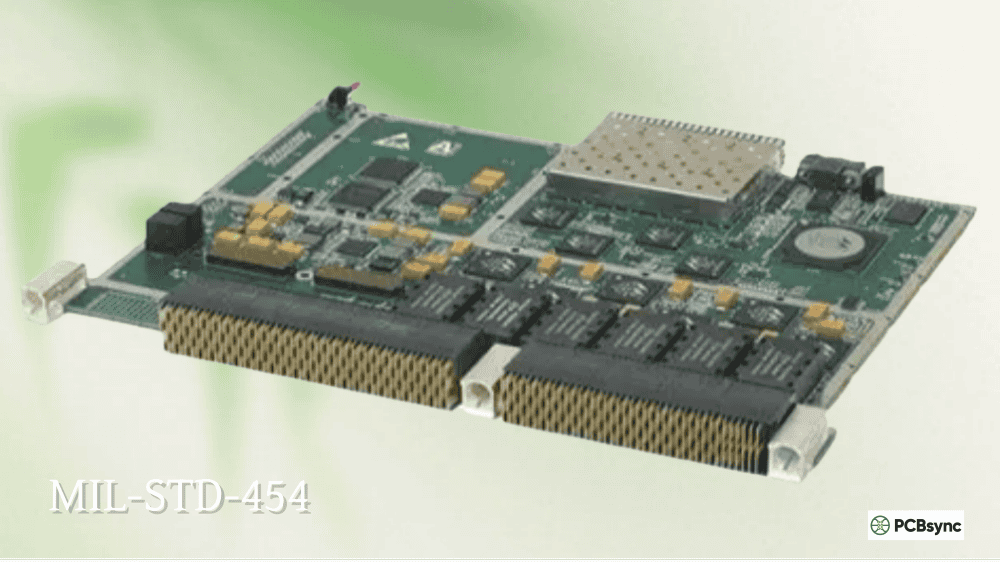
Having designed military electronics for defense contractors over the past 18 years, I’ve referenced MIL-STD-454 more times than I can count. This standard served as the foundational document that shaped how an entire generation of engineers approached electronic equipment design for the Department of Defense. While it has since transitioned to handbook status, understanding MIL-STD-454 remains essential for anyone working with legacy military systems or learning the fundamentals of military electronics design.
This guide provides a comprehensive overview of MIL-STD-454—its purpose, key requirements, current status, and how it continues to influence defense electronics design through its successor document, MIL-HDBK-454.
MIL-STD-454, officially titled “Standard General Requirements for Electronic Equipment,” was a military standard that established common design and construction requirements for electronic equipment procured by the Department of Defense. The standard served as the technical baseline for military electronic equipment design for decades, consolidating fundamental requirements from eleven separate general electronic specifications into a single, comprehensive reference document.
The genius of MIL-STD-454 was its consolidation approach. Rather than forcing contractors to navigate multiple specifications covering safety, materials, workmanship, and component selection, the standard brought everything together under one cover. This single-document approach afforded contractors the opportunity to focus their efforts efficiently, resulting in substantial cost savings for the Government.
MIL-STD-454 was developed and regularly updated through the cooperative efforts of Government and industry. Individual requirements were reviewed and updated or validated at least once every eighteen months, ensuring the standard remained current with evolving technology and best practices.
Scope and Applications of MIL-STD-454
The standard applied to a broad range of military electronic equipment across all service branches and platforms:
The definitions within MIL-STD-454 distinguished between application environments: “airborne” referred to aircraft and missile systems operating within Earth’s atmosphere; “space” covered spacecraft and systems designed for operation near or beyond the upper atmosphere; and “aerospace” encompassed both categories.
History and Evolution of MIL-STD-454
MIL-STD-454 went through numerous revisions during its active life, with each revision refining requirements based on lessons learned and technological advances.
Revision
Date
Key Notes
MIL-STD-454B
Early revisions
Established baseline requirements
MIL-STD-454H
Mid-1980s
Widely referenced revision
MIL-STD-454J
April 30, 1984
Major update to requirements
MIL-STD-454L
September 20, 1988
Refined safety and material requirements
MIL-STD-454M
1991
Superseded by Revision N
MIL-STD-454N
June 30, 1992
Final revision before transition
Transition to MIL-HDBK-454
In 1995, as part of the DoD’s military specification reform initiative, MIL-STD-454N was superseded by MIL-HDBK-454. The transition from “STD” (standard) to “HDBK” (handbook) designation was significant: it changed the document from mandatory requirements to guidance that contractors could reference but were not required to follow.
The transition notice made this explicit: “This handbook is for guidance only. This handbook cannot be cited as a requirement. If it is, the contractor does not have to comply.”
Despite this change in status, MIL-HDBK-454 retained all the technical content from MIL-STD-454 and continues to serve as the technical baseline for military electronic equipment design. The current revision is MIL-HDBK-454C, which provides updated guidelines incorporating lessons learned and current best practices.
Key Requirements Covered in MIL-STD-454
MIL-STD-454 organized its requirements into numbered sections, each addressing a specific aspect of electronic equipment design. These requirements covered the full spectrum of design considerations from safety to materials to workmanship.
Safety was the first and most critical requirement in MIL-STD-454. The standard established comprehensive criteria for protecting personnel during installation, operation, maintenance, and repair of electronic equipment.
Personnel Protection Guidelines
Hazard Category
Protection Requirement
Electrical Shock
Protection from voltages capable of causing injury
High Voltage (>500V)
Complete enclosure with non-bypassable interlocks
Temperature
Control panels ≤60°C at 25°C ambient
X-Radiation
Exposure limits per regulatory requirements
RF Radiation
Compliance with IEEE/ANSI C95.1 exposure levels
Mechanical
Guards for moving parts, sharp edges eliminated
Key Safety Design Principles
Fail-Safe Design: All military electronic equipment was required to incorporate fail-safe features ensuring personnel safety during all phases of equipment life. A fail-safe design ensured that any failure mode would result in a non-hazardous condition.
Interlocks: Equipment was required to include automatic switches (interlocks) that removed power when access doors or covers were opened. For high-voltage assemblies exceeding 500 volts, interlocks could not be bypassable during normal operation.
Bonding and Grounding: Equipment installed in hazardous areas (explosive or fire hazard environments) required bonding in accordance with MIL-B-5087 for aerospace systems, MIL-STD-1310 for shipboard systems, and NFPA 70 for ground systems.
Safety Markings: Danger, warning, and caution signs were required to warn of specific hazards such as voltage, current, thermal, or physical hazards. These markings had to be as permanent as the expected equipment life.
MIL-STD-454 Materials and Component Requirements
The standard established stringent requirements for materials and components used in military electronic equipment, driven by reliability and safety concerns.
Prohibited and Restricted Materials
Material
Restriction
Reason
Mercury
Requires specific approval
Toxicity, contamination risk
Radioactive Materials
NRC compliance, approval required
Radiation hazard
Radium
Prohibited for self-luminosity
Radiation hazard
Glass Fibers
Prohibited as outer cable covering
Skin irritation risk
Carcinogenic Substances
Evaluation per 29 CFR 1910 required
Health hazard
Fungus-Resistant Materials
MIL-STD-454 required materials to be either inherently fungus-inert or treated to resist fungal growth. Materials were tested in accordance with MIL-STD-810, Method 508, and had to achieve Grade 0 or Grade 1 certification. This requirement was critical for equipment destined for tropical or high-humidity environments where fungal growth could degrade materials and cause equipment failure.
Flammability Requirements
All materials used in electronic equipment had to meet flammability requirements, ensuring they would not ignite or propagate flame under operational conditions. Materials also could not liberate gases that would create explosive atmospheres.
Requirement 9 addressed general workmanship standards—one of the most frequently invoked requirements in military contracts. Many procurement documents still reference “MIL-STD-454, Requirement 9” for workmanship standards.
Workmanship requirements covered:
Cleanliness during fabrication and assembly
Proper handling of components and materials
Surface preparation and finishing
Assembly techniques and practices
Inspection and quality verification
After fabrication, parts and assembled equipment had to be cleaned of all contaminants, flux residues, and foreign materials that could affect reliability or performance.
For PCB engineers, Requirement 17 provided the foundation for printed wiring board design and fabrication in military applications. The requirement referenced applicable specifications for:
The requirement also referenced IPC-D-322 for printed wiring board size guidelines using standard fabrication panel sizes, helping optimize manufacturing efficiency while meeting military requirements.
MIL-STD-454 and Related Military Specifications
MIL-STD-454 didn’t exist in isolation—it connected to a network of related military specifications and standards:
Related Specification
Coverage
DOD-E-8983
Electronic equipment for extended space environment
MIL-F-18870
Fire control equipment, Naval ship and shore
MIL-PRF-28800
Test equipment general specification
MIL-E-5400
Electronic equipment, airborne (superseded)
MIL-HDBK-505
Definitions of item levels and exchangeability
MIL-HDBK-1547
Electronic parts for space and launch vehicles
MIL-STD-1310
Shipboard bonding, grounding, and EMC
MIL-B-5087
Aerospace bonding and grounding
Understanding these relationships was essential for proper application of MIL-STD-454 requirements to specific programs.
Current Status: MIL-HDBK-454 Today
The successor document, MIL-HDBK-454, continues to evolve. The current revision is MIL-HDBK-454C, which maintains the same guideline structure but updates content to reflect current technology and lessons learned.
Revision
Date
Status
MIL-HDBK-454
April 28, 1995
Superseded MIL-STD-454N
MIL-HDBK-454A
November 3, 2000
Updated guidelines
MIL-HDBK-454B
April 15, 2007
Technical updates
MIL-HDBK-454C
Current
Active guidance document
While MIL-HDBK-454 cannot be cited as a mandatory requirement, many programs still invoke specific guidelines by reference. The handbook states that if referenced for guidance purposes, specifications should cite “MIL-HDBK-454 and the guideline number and clearly identify that it is for guidance only.”
Useful Resources for MIL-STD-454 and MIL-HDBK-454
For engineers and procurement professionals needing access to these documents, the following resources provide access:
The current MIL-HDBK-454B can be downloaded from official government sources including the DLA website and DTIC. For legacy MIL-STD-454 revisions, EverySpec maintains an archive of historical military specifications.
Practical Application for Today’s Engineers
Even though MIL-STD-454 has been superseded, its legacy persists in several important ways:
Legacy Program Support
Many active military programs were designed to MIL-STD-454 requirements and continue to reference the standard in their technical data packages. Engineers supporting these systems need to understand the original requirements.
Foundation for Best Practices
The guidelines established in MIL-STD-454 represent decades of lessons learned in military electronics design. Even when not contractually required, these guidelines provide valuable best practices for safety, reliability, and quality.
Reference in Current Contracts
Some procurement documents still reference specific MIL-STD-454 requirements (particularly Requirement 9 for workmanship). Understanding the original intent helps ensure compliance.
Transition to Commercial Standards
Many MIL-STD-454 requirements have been incorporated into or aligned with IPC and other industry standards. Understanding the military origin helps when transitioning between specification sets.
Frequently Asked Questions About MIL-STD-454
Is MIL-STD-454 still a valid requirement?
No, MIL-STD-454 was superseded by MIL-HDBK-454 in April 1995. The transition changed the document from a mandatory standard to a guidance handbook. However, legacy contracts may still reference MIL-STD-454, and its successor MIL-HDBK-454 remains a valuable technical reference. If a current contract incorrectly cites MIL-STD-454 as a requirement, the contractor is not obligated to comply with the cancelled standard, though they should work with the contracting officer to clarify requirements.
What is the difference between MIL-STD-454 and MIL-HDBK-454?
The primary difference is contractual status. MIL-STD-454 was a mandatory standard—when invoked in a contract, compliance was required. MIL-HDBK-454 is a guidance document that cannot be cited as a requirement. If someone cites MIL-HDBK-454 as a requirement, the contractor does not have to comply. The technical content is essentially the same, with MIL-HDBK-454 incorporating updates and lessons learned since the transition. The terminology also changed from “requirements” to “guidelines” throughout the document.
Which requirement number covers workmanship in MIL-STD-454?
Requirement 9 covers workmanship in MIL-STD-454 (and Guideline 9 in MIL-HDBK-454). This is one of the most commonly referenced requirements and addresses cleanliness, handling, assembly techniques, and general workmanship standards for electronic equipment. Many procurement documents still specify “workmanship per MIL-STD-454, Requirement 9” even though technically they should reference MIL-HDBK-454, Guideline 9 for guidance.
Does MIL-STD-454 apply to printed circuit boards?
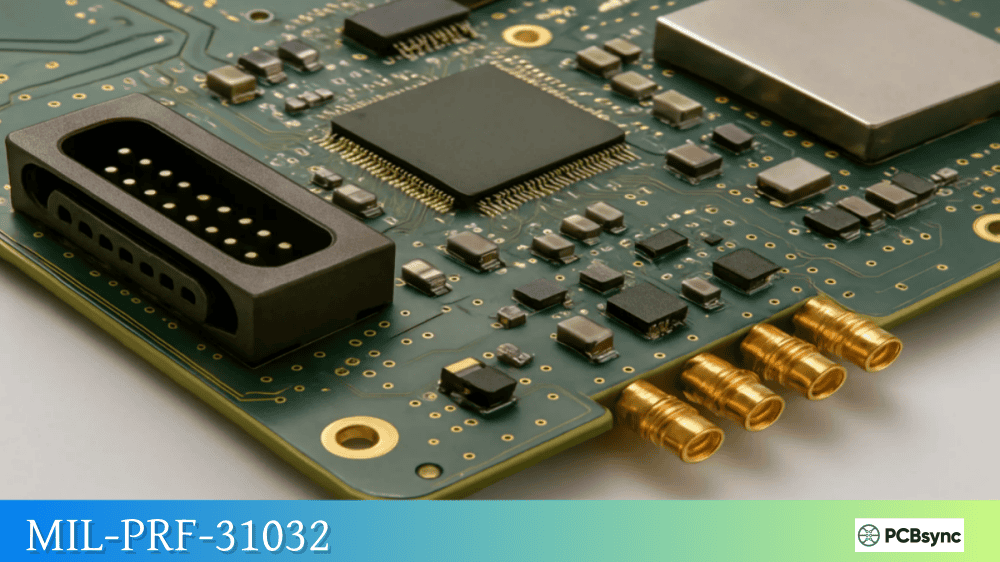
Yes, Requirement 17 of MIL-STD-454 (Guideline 17 in MIL-HDBK-454) specifically addresses printed wiring requirements. However, for detailed PCB requirements, other specifications like IPC-6012 (for rigid boards), MIL-PRF-31032 (military qualification), and IPC-A-600 (acceptability) provide more comprehensive coverage. MIL-STD-454 Requirement 17 primarily references these subordinate specifications and provides general guidelines for printed wiring in military electronic equipment.
Where can I download MIL-STD-454 or MIL-HDBK-454?
MIL-HDBK-454B is available for free download from several government sources including the Defense Acquisition University (DAU) website and DTIC. For legacy MIL-STD-454 revisions, EverySpec.com maintains an archive of historical military specifications. Commercial services like Document Center and IHS also offer access to these documents, often with additional search and notification features for subscribers.
Conclusion: The Enduring Legacy of MIL-STD-454
MIL-STD-454 represented a landmark achievement in standardization—consolidating the fundamental requirements for military electronic equipment into a single, comprehensive document. For decades, it served as the technical baseline that guided how contractors designed, built, and tested electronic equipment for the Department of Defense.
While the standard itself has transitioned to handbook status as MIL-HDBK-454, its influence persists. The safety design criteria, material requirements, workmanship standards, and component selection guidelines established in MIL-STD-454 continue to shape military electronics design. Engineers working on legacy systems must understand these requirements, and even those designing new systems benefit from the accumulated wisdom the document represents.
The transition from mandatory standard to guidance handbook reflects the DoD’s broader shift toward performance-based specifications and greater reliance on industry standards. However, MIL-HDBK-454 remains an invaluable reference—a compilation of best practices developed through decades of experience in designing electronic equipment that must perform reliably in the most demanding military environments.
For engineers entering the defense electronics field, understanding MIL-STD-454 and its successor provides essential context for how military electronic equipment requirements evolved and why certain practices became standard. That knowledge remains as valuable today as when the standard was first published.
Inquire: Call 0086-755-23203480, or reach out via the form below/your sales contact to discuss our design, manufacturing, and assembly capabilities.
Quote: Email your PCB files to Sales@pcbsync.com (Preferred for large files) or submit online. We will contact you promptly. Please ensure your email is correct.
Notes: For PCB fabrication, we require PCB design file in Gerber RS-274X format (most preferred), *.PCB/DDB (Protel, inform your program version) format or *.BRD (Eagle) format. For PCB assembly, we require PCB design file in above mentioned format, drilling file and BOM. Click to download BOM template To avoid file missing, please include all files into one folder and compress it into .zip or .rar format.