Inquire: Call 0086-755-23203480, or reach out via the form below/your sales contact to discuss our design, manufacturing, and assembly capabilities.
Quote: Email your PCB files to Sales@pcbsync.com (Preferred for large files) or submit online. We will contact you promptly. Please ensure your email is correct.
Notes: For PCB fabrication, we require PCB design file in Gerber RS-274X format (most preferred), *.PCB/DDB (Protel, inform your program version) format or *.BRD (Eagle) format. For PCB assembly, we require PCB design file in above mentioned format, drilling file and BOM. Click to download BOM template To avoid file missing, please include all files into one folder and compress it into .zip or .rar format.
Here’s something that puzzles me about our industry: yellow PCB offers trace visibility that rivals green, yet it remains one of the most underutilized solder mask colors in circuit board manufacturing. After working with dozens of different board designs over the years, I’ve come to appreciate what yellow solder mask brings to the table—and understand why it hasn’t achieved mainstream adoption despite its technical merits.
If you’re considering yellow for your next project, this guide breaks down everything you need to know: the genuine advantages, the real limitations, and the specific situations where a yellow PCB makes practical sense.
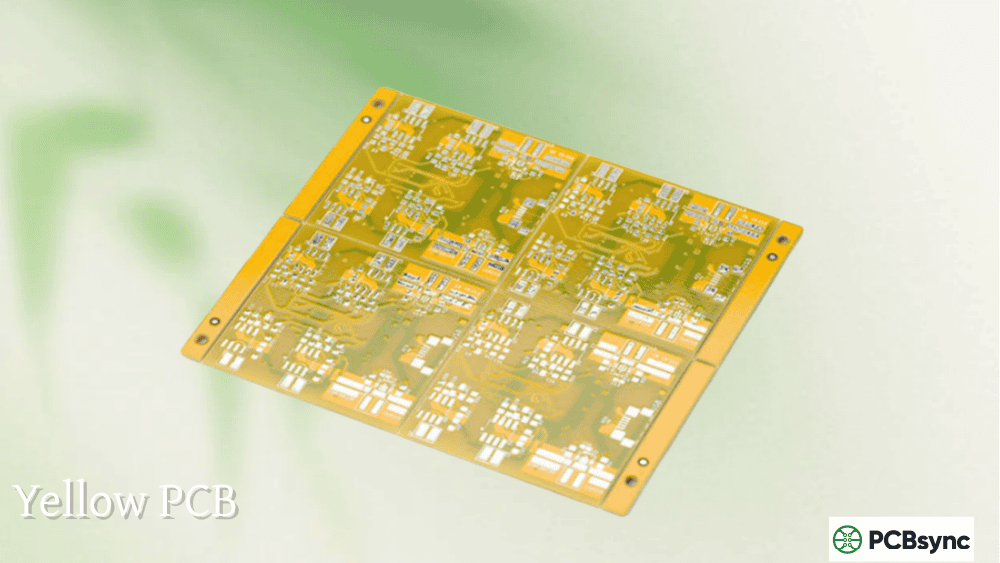
A yellow PCB is a printed circuit board that uses yellow-colored solder mask instead of the traditional green. The solder mask—that thin polymer coating protecting your copper traces from oxidation and preventing solder bridges during assembly—determines the board’s visible color. Yellow solder mask creates a distinctive warm, coppery appearance that sets these boards apart from standard green production.
The yellow coloration comes from specific pigments mixed into the liquid photo-imageable solder mask material before application. Most manufacturers achieve consistent yellow coloring using standardized formulations, though the exact shade can vary slightly between suppliers—ranging from bright golden yellow to darker amber tones.
Functionally, yellow solder mask performs identically to green. Your electrical characteristics, signal integrity, and board reliability remain unchanged regardless of color choice. The differences lie in visibility characteristics, aesthetic appeal, and some practical manufacturing considerations that can matter depending on your application.
Key Advantages of Yellow Solder Mask
Exceptional Trace Visibility and Contrast
This is where yellow PCB genuinely excels. The contrast between traces, planes, and empty spaces on a yellow board rivals what you get with green—and green has been optimized for visibility over decades. When you need to trace signal paths, debug routing issues, or showcase complex PCB artwork, yellow makes those copper features pop against the background.
Engineers who take pride in their routing often choose yellow specifically because it highlights their work. If you’ve spent hours optimizing a layout and want that effort visible, yellow solder mask delivers. The dark, coppery undertone creates natural shadows that define trace edges clearly.
Easy Maintenance and Cleaning
Yellow solder mask hides light-colored residues better than darker alternatives. Flux residue, fingerprints, and minor contamination that would stand out on black or blue boards blend more naturally against yellow. This makes post-assembly cleaning less critical for cosmetic appearance—though you should still clean properly for reliability reasons.
For prototypes that will be handled frequently during testing and development, yellow’s forgiving nature regarding surface marks and residue is a practical benefit worth considering.
Versatile Silkscreen Compatibility
Unlike some solder mask colors that work well with only one silkscreen option, yellow PCB pairs reasonably with both black and white silkscreen. Black silkscreen on yellow creates excellent contrast for reference designators and component outlines—many engineers consider this combination optimal for readability. White silkscreen also works, though with somewhat less contrast than the black option.
This flexibility gives you options depending on your aesthetic preferences and readability requirements for specific applications.
Heat Dissipation Properties
Yellow solder masks—particularly lighter shades—reflect more thermal radiation compared to darker colors like black or dark blue. While solder mask color isn’t a primary thermal management strategy, yellow boards may run slightly cooler in high-power applications where every degree matters. Some manufacturers specifically note yellow’s heat dissipation advantages for power electronics.
Unique Aesthetic Appeal
Let’s acknowledge the obvious: yellow PCBs look different. In a world dominated by green boards, yellow creates immediate visual distinction. For products where the PCB is visible—transparent enclosures, display pieces, or artistic electronics projects—yellow offers a warm, premium appearance that green can’t match.
Disadvantages and Limitations of Yellow PCB
Silkscreen Contrast Challenges
Here’s the primary technical limitation: white silkscreen on yellow doesn’t provide the same high contrast you get with white-on-green or white-on-blue combinations. The brightness levels are too similar, which can make small text and fine component markings harder to read, especially under suboptimal lighting.
The workaround—using black silkscreen instead—solves the contrast problem but requires you to specify this preference when ordering. Many manufacturers default to white silkscreen, so you’ll need to explicitly request black if you want optimal readability on yellow boards.
Visual Fatigue During Extended Inspection
Bright yellow can cause eye strain during prolonged visual inspection. Quality control technicians who spend hours examining boards may find yellow more fatiguing than the eye-friendly green that neurologists have identified as calming to the human visual system. For high-volume production with extensive manual inspection, this becomes a legitimate consideration.
AOI (Automated Optical Inspection) systems don’t have this problem, but manual inspection stations may need to account for it.
Limited Manufacturer Adoption
While yellow is available from most PCB fabricators, it’s not as universally optimized as green. Some manufacturers treat yellow as a specialty color, which can mean longer lead times or minimum order requirements. The materials and processes exist, but production volumes are lower, potentially affecting pricing and availability.
Perception Issues
Yellow isn’t a “professional” color in some industry contexts. While this is purely subjective, certain clients or applications may view yellow boards as less serious than traditional green or sleek black alternatives. For defense, medical, or conservative industrial applications, color choice can influence perception even when it doesn’t affect performance.
Yellow PCB vs Other Solder Mask Colors
Understanding how yellow compares to alternatives helps you make informed decisions:
Characteristic
Yellow PCB
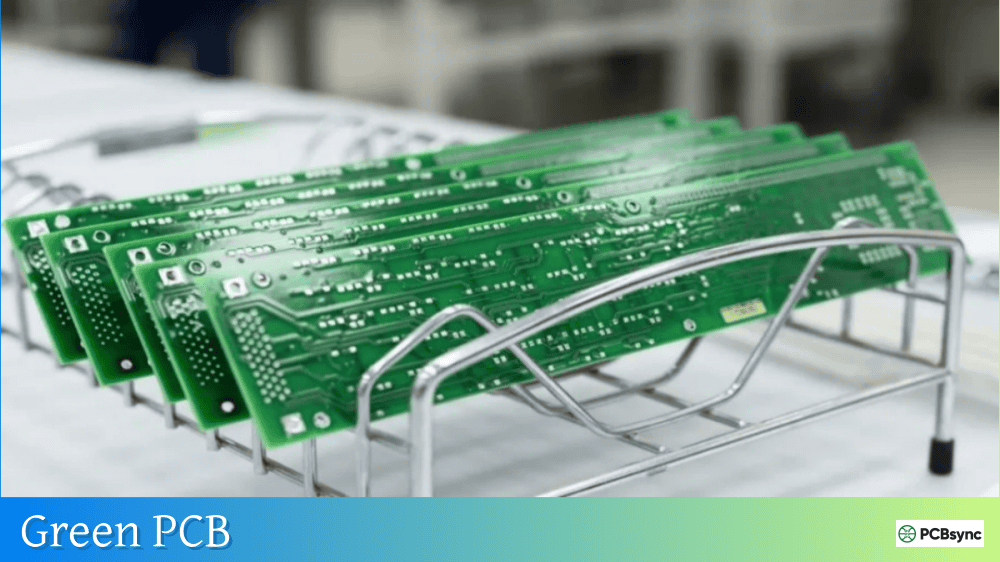
Green PCB
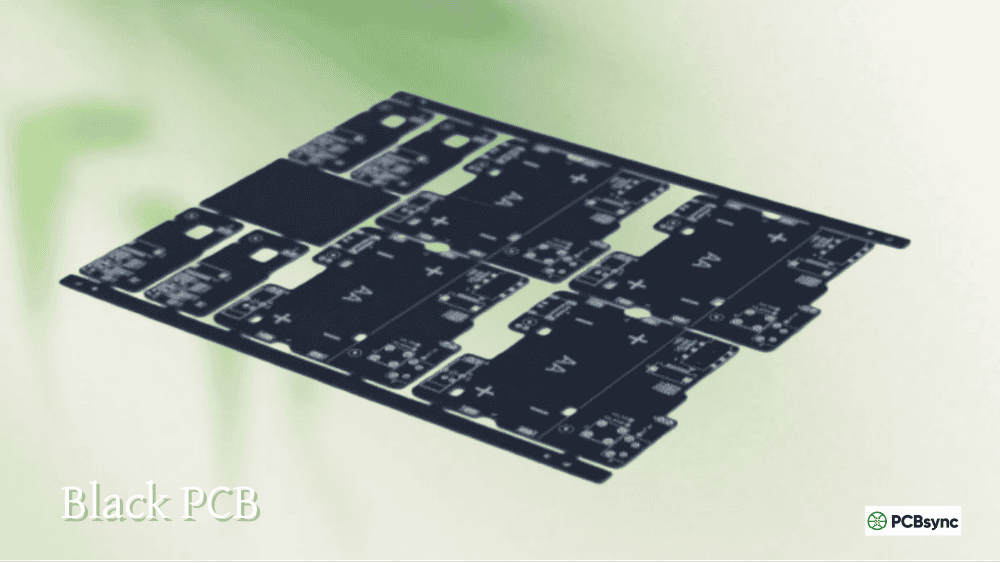
Black PCB
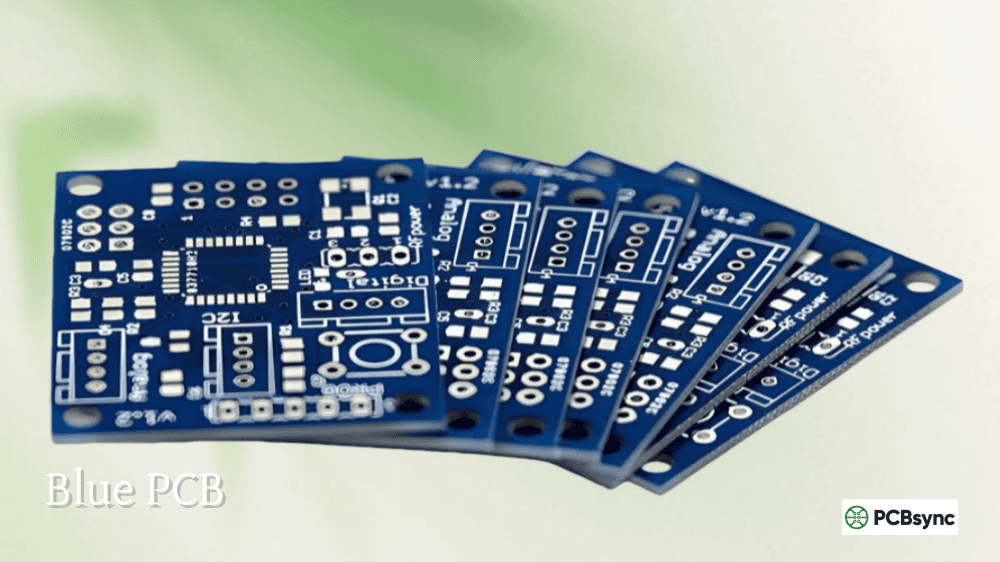
Blue PCB
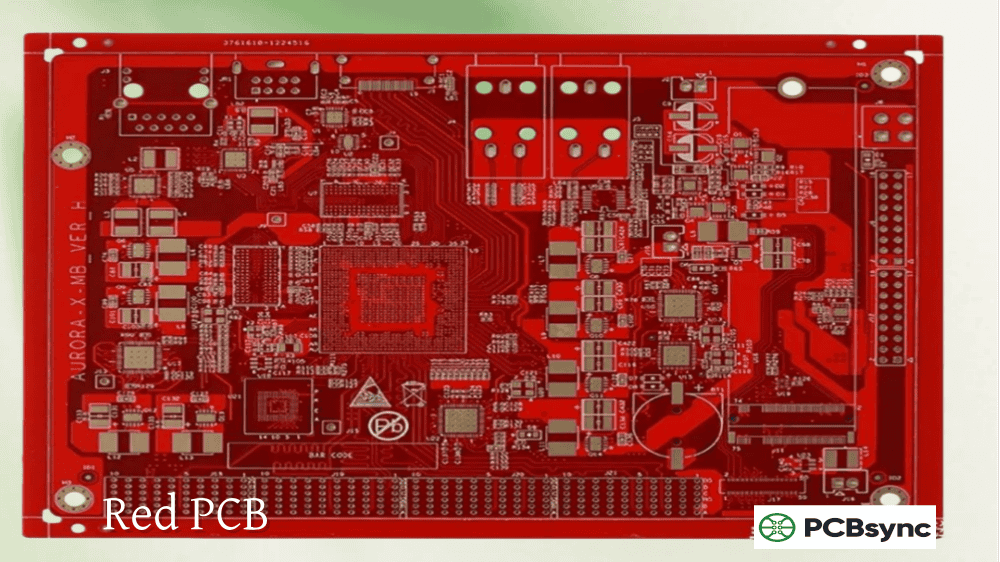
Red PCB
Trace Contrast
Excellent
Excellent
Very Poor
Moderate
Good
White Silkscreen Contrast
Moderate
Excellent
Excellent
Good
Good
Black Silkscreen Contrast
Excellent
Good
Poor
Moderate
Moderate
Cleaning Ease
Easy
Easy
Difficult
Moderate
Easy
Inspection Fatigue
Higher
Low
High
Moderate
Higher
AOI Compatibility
Good
Best
Challenging
Good
Good
Heat Reflection
Good
Moderate
Poor
Moderate
Moderate
Cost
Standard
Lowest
Standard
Standard
Standard
Availability
Good
Universal
Common
Common
Common
Yellow and green share similar technical performance for trace visibility, with green having the edge for overall inspection ergonomics and white silkscreen contrast. Yellow wins when you want to showcase routing or prefer black silkscreen aesthetics.
Best Applications for Yellow Circuit Boards
Prototype Development and Testing
Yellow PCBs work exceptionally well for prototyping, where engineers need to trace signals, verify connections, and debug designs. The high trace visibility accelerates troubleshooting, and the boards’ ability to hide minor handling marks means prototypes stay presentable through multiple testing cycles.
Educational and Training Boards
Circuit boards used for teaching electronics benefit from yellow’s excellent trace visibility. Students learning to read schematics and understand signal flow can more easily follow copper paths on yellow boards compared to lower-contrast alternatives. The visual clarity supports the learning process.
Artistic and Display Electronics
Projects where the PCB itself is part of the visual design—LED art installations, decorative electronics, maker projects with transparent enclosures—benefit from yellow’s distinctive warm appearance. The coppery tone adds aesthetic interest that standard green can’t provide.
Revision Identification
Using different solder mask colors to distinguish board revisions is a practical quality control technique. Yellow works well as a revision indicator, providing clear visual differentiation from green production boards. When multiple board versions exist simultaneously in development, color coding prevents costly assembly mistakes.
Low-Volume Specialty Production
For products where visual differentiation matters but volumes don’t justify custom colors, yellow offers a middle ground. It’s distinctive enough to stand out while remaining available through standard PCB fabrication channels without excessive premiums.
Manufacturing Specifications for Yellow PCB
When specifying yellow boards, ensure your manufacturer meets these technical requirements:
Parameter
Typical Specification
Solder Mask Thickness
0.8-1.2 mils (20-30 μm)
Minimum Dam Width
4-5 mils (0.1-0.127 mm)
Cure Temperature
150°C typical
Hardness
≥6H (pencil hardness)
Adhesion
Pass cross-hatch tape test
Dielectric Strength
≥500 V/mil
Flammability
UL94 V-0 rated
PCB Color Code
#F6A624 (approximate)
These specifications ensure your yellow solder mask meets standard performance requirements. Request material datasheets from your fabricator to verify their yellow mask formulation meets your application needs.
Silkscreen Options for Yellow PCB
Choosing the right silkscreen color significantly impacts readability:
Silkscreen Color
Contrast Level
Recommended Use
Black
Excellent
Best choice for maximum readability
White
Moderate
Acceptable, but less contrast than black
Red
Poor
Not recommended
Blue
Poor
Not recommended
Recommendation: Specify black silkscreen when ordering yellow PCBs. The contrast improvement over white is substantial and makes reference designators, component outlines, and polarity markings significantly easier to read during assembly and debugging.
When ordering yellow boards, be explicit about your requirements:
Specify black silkscreen unless you have specific reasons for white
Request color samples if shade consistency matters for your application
Confirm lead times since yellow may not be in continuous production
Verify finish compatibility for your chosen surface finish (HASL, ENIG, OSP, etc.)
Cost Expectations
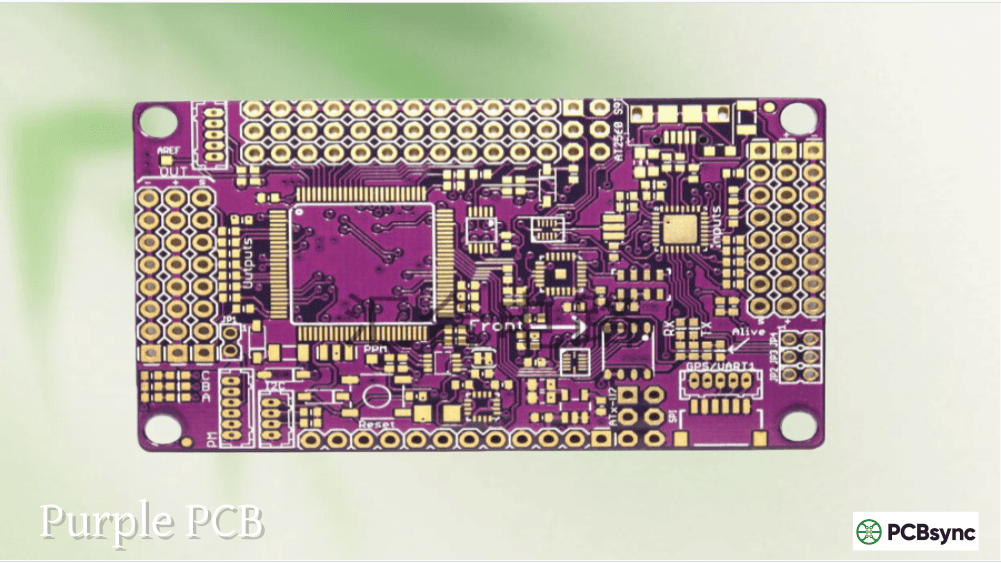
Yellow solder mask typically costs the same as other standard colors at most fabricators. Unlike purple or pink, yellow doesn’t usually carry a premium. However, if your manufacturer treats yellow as a specialty option, expect potentially longer lead times rather than higher prices.
Proper solder mask coverage without pinholes or thin spots
Correct registration between mask and copper features
Common Misconceptions About Yellow PCB
Misconception: Yellow PCBs perform differently electrically. Reality: Solder mask color has zero impact on electrical performance. Signal integrity, impedance, and current capacity depend on your stackup, trace geometry, and material properties—not pigment.
Misconception: Yellow is difficult to manufacture. Reality: Yellow uses the same manufacturing processes as other colors. It’s not more difficult—just less common, which can affect scheduling and availability.
Misconception: Yellow is only for hobbyists. Reality: While less common in production, yellow serves legitimate professional applications including prototyping, education, and specialty products where its visibility advantages matter.
Misconception: Yellow causes reliability problems. Reality: Properly formulated and cured yellow solder mask provides identical protection to green. Color doesn’t affect the mask’s fundamental protective properties.
Frequently Asked Questions About Yellow PCB
Does yellow solder mask affect PCB reliability?
No. Yellow solder mask, when properly manufactured and cured, provides the same protection as green or any other color. The polymer chemistry and protective properties are determined by the base formulation, not the pigment. Reliability depends on manufacturing quality, not color choice.
What silkscreen color should I use with yellow PCB?
Black silkscreen provides the best contrast and readability on yellow solder mask. While white silkscreen works, the contrast is noticeably lower, making small text and component markings harder to read. Specify black silkscreen when ordering yellow boards for optimal results.
Is yellow PCB more expensive than green?
Generally no. Most PCB fabricators price yellow the same as other standard solder mask colors. The cost difference, if any, is negligible. However, lead times may be slightly longer if your manufacturer batches non-green orders.
Why don’t more engineers use yellow solder mask?
Several factors contribute: habit (green is the default), silkscreen contrast limitations with white (the standard silkscreen color), and unfamiliarity with the option. Engineers who try yellow often appreciate its trace visibility, but the industry’s inertia keeps green dominant.
Can I use yellow PCB for high-frequency RF applications?
Yes. Solder mask color doesn’t affect RF performance. Your high-frequency characteristics depend on substrate material (FR-4, Rogers, etc.), controlled impedance design, and proper grounding—not the color of your solder mask.
IPC-2221: Generic Standard on Printed Board Design
PCB Fabrication Services Offering Yellow
JLCPCB: jlcpcb.com – Yellow available, no extra charge
PCBWay: pcbway.com – Multiple color options including yellow
Seeed Studio Fusion: seeedstudio.com – Color options available
PCB Calculators and Tools
Saturn PCB Design Toolkit: Trace width, via current, impedance calculations
EEWeb Online Calculators: Various PCB design calculations
Making Your Decision: Is Yellow PCB Right for Your Project?
Yellow solder mask makes sense when:
You need excellent trace visibility for debugging or display
Your design showcases complex, carefully optimized routing
You’re building prototypes that will be handled frequently
Visual differentiation from production boards matters
You prefer black silkscreen aesthetics
The board will be visible in the final product
Stick with green if:
You need optimal white silkscreen contrast
Extended manual inspection is part of your process
Conservative appearance matters for your market
You want the fastest possible lead times
Maximum AOI compatibility is required
Yellow PCB occupies an interesting position in the solder mask color spectrum. It offers technical visibility performance comparable to green while providing distinctive aesthetics that green can’t match. The silkscreen contrast limitation is real but solvable by specifying black instead of white.
For engineers willing to think beyond the green default, yellow deserves consideration—especially for prototyping, educational applications, and any project where trace visibility and visual appeal matter. The color won’t change your board’s electrical performance, but it might make your development process easier and your final product more visually distinctive.
Inquire: Call 0086-755-23203480, or reach out via the form below/your sales contact to discuss our design, manufacturing, and assembly capabilities.
Quote: Email your PCB files to Sales@pcbsync.com (Preferred for large files) or submit online. We will contact you promptly. Please ensure your email is correct.
Notes: For PCB fabrication, we require PCB design file in Gerber RS-274X format (most preferred), *.PCB/DDB (Protel, inform your program version) format or *.BRD (Eagle) format. For PCB assembly, we require PCB design file in above mentioned format, drilling file and BOM. Click to download BOM template To avoid file missing, please include all files into one folder and compress it into .zip or .rar format.