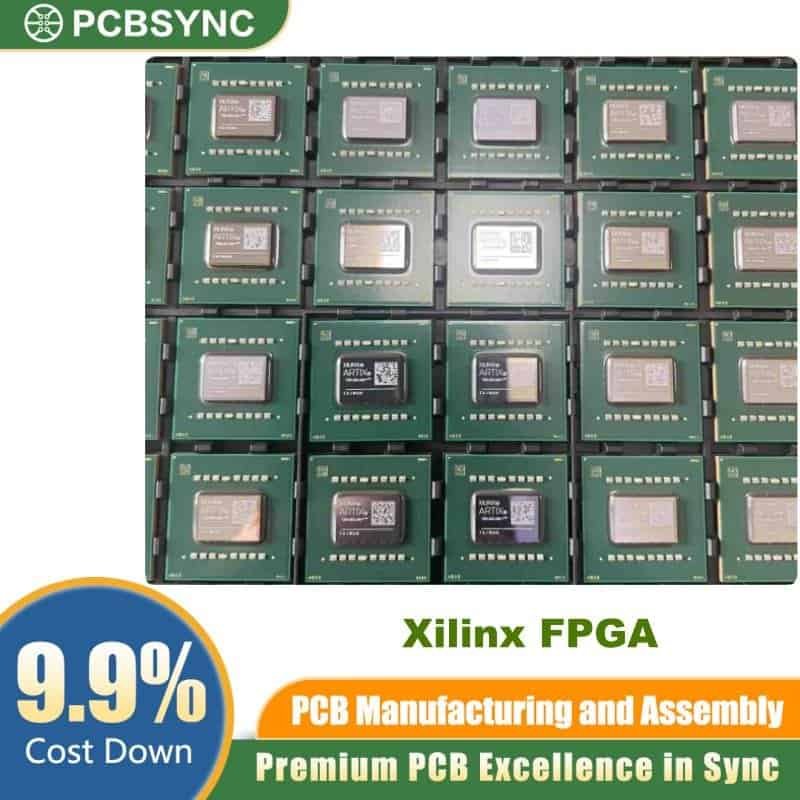
Overview of XC3042A-7PC84C FPGA Technology
The XC3042A-7PC84C represents a legacy yet reliable solution in the XC3000 Series Field Programmable Gate Arrays manufactured by AMD (formerly Xilinx). This FPGA device delivers proven performance for industrial control systems, embedded applications, and legacy equipment maintenance where 144 Configurable Logic Blocks and robust 5V operation are essential requirements.
As part of the renowned Xilinx FPGA product family, this programmable logic device continues to serve engineers maintaining critical systems and designing applications that require time-tested FPGA architecture.
Technical Specifications at a Glance
Core Performance Parameters
| Parameter |
Specification |
| Logic Gates |
3,000 gates (2000 usable gates) |
| Configurable Logic Blocks (CLBs) |
144 CLBs |
| I/O Pins |
74 I/O |
| Total RAM Bits |
30,784 bits |
| Maximum Frequency |
113MHz |
| Speed Grade |
-7 (5.1ns propagation delay) |
Package and Physical Characteristics
| Specification |
Details |
| Package Type |
84-LCC (J-Lead) |
| Supplier Package |
84-PLCC (29.31×29.31mm) |
| Mounting Type |
Surface Mount |
| Pin Count |
84 pins |
| Lead Material |
Tin/Lead (Sn85Pb15) |
Electrical Characteristics and Operating Conditions
Power Supply Requirements
| Parameter |
Min |
Typical |
Max |
Unit |
| Supply Voltage (Vcc) |
4.75V |
5.0V |
5.25V |
V |
| Operating Temperature (TJ) |
0°C |
– |
85°C |
°C |
| Technology |
CMOS |
CMOS |
CMOS |
– |
Temperature Grade Classification
The XC3042A-7PC84C operates within the commercial temperature range, making it suitable for indoor industrial applications, telecommunications equipment, and standard environmental conditions where temperature extremes are controlled.
Key Features and Architecture
Configurable Logic Block Architecture
The FPGA contains 144 configurable logic blocks arranged in a systematic array, each CLB providing:
- Two 4-input function generators
- Registered outputs with clock enable
- Direct and registered data paths
- Asynchronous and synchronous reset capabilities
Input/Output Block Capabilities
With 74 user-programmable I/O pins, the device offers:
- Programmable slew rate control
- TTL or CMOS compatible inputs
- Pull-up resistor options on unused pins
- Bidirectional capability on all user I/Os
- Direct input to CLB registers
Memory and Storage
The integrated memory architecture provides 30,784 total RAM bits distributed across:
- CLB flip-flops for sequential logic
- Distributed RAM capabilities within logic blocks
- Efficient small memory implementation
Application Areas and Use Cases
Industrial Control Systems
The XC3042A-7PC84C FPGA excels in industrial automation where:
- Legacy equipment requires maintenance
- Proven 5V logic levels ensure compatibility
- Moderate gate count meets control requirements
- Commercial temperature range suits factory environments
Telecommunications Equipment
Suitable for telecommunications applications including:
- Protocol conversion interfaces
- Signal processing modules
- Data buffering and routing
- Legacy system integration
Embedded Systems
Ideal for embedded control applications such as:
- Motor control interfaces
- Sensor data acquisition
- Real-time signal processing
- Custom logic implementation
Legacy System Maintenance
Critical for maintaining older equipment where:
- Original components are obsolete
- Drop-in replacements are required
- System redesign is not economically feasible
- Long-term availability concerns exist
Product Status and Availability
Current Product Status
| Status |
Details |
| Lifecycle Stage |
Obsolete |
| Replacement Recommendations |
Modern Xilinx 7 Series or Spartan FPGAs |
| Availability |
Limited through specialty distributors |
| Stock Type |
New Old Stock (NOS) primarily |
Compliance and Environmental Standards
| Standard |
Status |
| EU RoHS |
RoHS Compliant versions available |
| REACH |
Vendor documentation required |
| Lead-Free Option |
Limited; standard version contains lead |
Design Considerations and Integration
PCB Layout Requirements
When designing with the XC3042A-7PC84C:
- Use 84-pin PLCC socket or direct surface mount
- Provide adequate power supply decoupling (0.1µF ceramic near each Vcc pin)
- Maintain proper trace impedance for high-speed signals
- Follow manufacturer spacing recommendations for J-lead packages
Programming and Configuration
The device supports multiple configuration modes:
- Master Serial mode
- Slave Serial mode
- Master Parallel mode
- Slave Parallel mode
- Peripheral mode configuration
Thermal Management
Operating within commercial temperature range requires:
- Adequate airflow in enclosed systems
- Thermal calculations based on switching frequency
- Heat sink consideration for high utilization designs
- Temperature monitoring in critical applications
Comparison with Modern Alternatives
Migration Path to Current FPGAs
| Feature |
XC3042A-7PC84C |
Modern Equivalent (Spartan-7) |
| Gate Count |
3,000 |
12,800+ |
| I/O Standards |
5V TTL/CMOS |
Multi-standard (1.2V-3.3V) |
| Configuration |
SRAM-based |
Flash-based options |
| Power Consumption |
Higher (5V) |
Lower (core 1.0V) |
| Design Tools |
ISE (legacy) |
Vivado (current) |
When to Choose Legacy vs Modern
Choose XC3042A-7PC84C when:
- Maintaining existing designs
- 5V logic levels are required
- Drop-in replacement is critical
- Design tools are already established
Choose modern alternatives when:
- Starting new designs
- Lower power consumption is essential
- Advanced features are needed
- Long-term availability is critical
Datasheet and Technical Resources
Documentation Available
Engineers can access comprehensive technical documentation including:
- Complete datasheet with AC/DC specifications
- Switching characteristics and timing diagrams
- Package dimensional drawings
- Pin assignment tables
- Application notes for XC3000 series
Design Tool Support
The device is supported by:
- Xilinx ISE Design Suite (legacy versions)
- Third-party schematic capture tools
- FPGA programming utilities
- JTAG boundary scan testing
Purchasing Considerations
Pricing Structure
Typical pricing for the XC3042A-7PC84C varies based on:
- Order quantity (unit vs bulk)
- Stock availability and condition
- Distributor markup and handling
- Testing and quality assurance level
- Lead time requirements
Quality Assurance
When purchasing obsolete components:
- Verify component authenticity
- Request test reports and date codes
- Confirm proper storage conditions
- Evaluate warranty terms
- Consider counterfeit risk mitigation
Recommended Distributors
Look for authorized distributors with:
- ISO certification and quality systems
- Component testing capabilities
- Anti-counterfeit verification processes
- Clear return and replacement policies
- Technical support resources
Frequently Asked Questions
Is the XC3042A-7PC84C still in production?
No, this device is officially obsolete. Availability is limited to existing distributor stock and specialty component brokers focusing on legacy semiconductors.
What are suitable replacement options?
Modern Xilinx Spartan-7 or Artix-7 FPGAs offer superior performance, though direct pin compatibility may require board redesign. For exact replacements, consider sourcing from obsolete component specialists.
Can I program this FPGA with modern tools?
The XC3042A-7PC84C requires Xilinx ISE Design Suite (version 14.7 or earlier). Modern Vivado tools do not support this legacy architecture.
What configuration memory is required?
The device requires external configuration memory such as serial PROM or parallel EPROM, depending on the selected configuration mode. Configuration bitstream size is approximately 30Kb.
Are there temperature-extended versions?
The -7PC84C suffix indicates commercial grade operation. Industrial and military temperature grades were available in the XC3000 series but may be extremely difficult to source today.
Conclusion
The XC3042A-7PC84C Field Programmable Gate Array remains a relevant solution for legacy system maintenance and specific applications requiring proven 5V FPGA technology. While officially obsolete, understanding its capabilities, specifications, and application constraints enables engineers to make informed decisions about system maintenance, component sourcing, and potential migration strategies.
For new designs requiring programmable logic with similar gate counts, exploring modern Xilinx FPGA alternatives is strongly recommended to ensure long-term component availability, improved power efficiency, and access to current development tools and support resources.