Inquire: Call 0086-755-23203480, or reach out via the form below/your sales contact to discuss our design, manufacturing, and assembly capabilities.
Quote: Email your PCB files to Sales@pcbsync.com (Preferred for large files) or submit online. We will contact you promptly. Please ensure your email is correct.
Notes: For PCB fabrication, we require PCB design file in Gerber RS-274X format (most preferred), *.PCB/DDB (Protel, inform your program version) format or *.BRD (Eagle) format. For PCB assembly, we require PCB design file in above mentioned format, drilling file and BOM. Click to download BOM template To avoid file missing, please include all files into one folder and compress it into .zip or .rar format.
IPC-TA-723 Explained: SMT Technology Assessment & Best Practices
When I first started working with surface mount technology back in the day, finding consolidated information on SMT best practices was like hunting for gold. Technical papers were scattered across journals, conference proceedings, and manufacturer datasheets. That’s exactly the problem IPC-TA-723 was designed to solve. This handbook brings together 71 carefully selected articles covering everything you need to know about surface mount technology in one comprehensive reference.
In this guide, I’ll break down what IPC-TA-723 contains, why it remains a valuable reference for SMT professionals, and how you can apply its insights to improve your assembly processes.
IPC-TA-723, officially titled “Technology Assessment Handbook on Surface Mounting,” is a comprehensive compilation published by IPC (Association Connecting Electronics Industries) in 1991. Unlike typical IPC standards that define requirements and acceptance criteria, IPC-TA-723 functions as a curated knowledge base—a “best of” collection featuring 71 expert-selected articles covering all aspects of surface mount technology.
The handbook was assembled by a panel of industry experts who reviewed hundreds of technical papers and selected the most valuable content for practicing engineers. Beyond the 71 featured articles, IPC-TA-723 also provides bibliographic information on dozens of additional related publications, making it an excellent starting point for deeper research into specific SMT topics.
Document Details
Information
Standard Number
IPC-TA-723
Full Title
Technology Assessment Handbook on Surface Mounting
IPC-TA-723 organizes its content into eight major topic areas. Each section addresses a critical aspect of surface mount technology, from initial design decisions through production and quality assessment.
Design Considerations for SMT
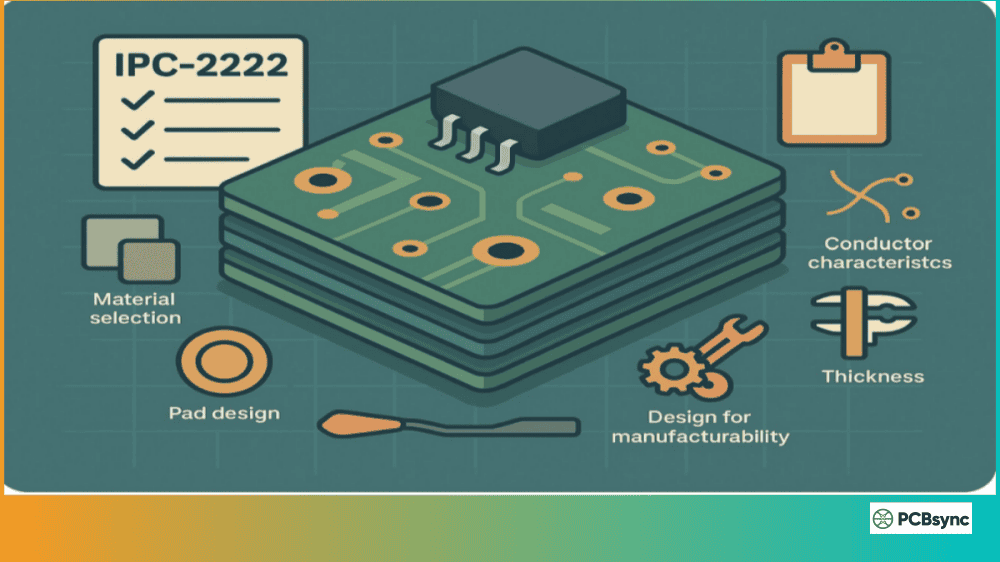
The design section covers fundamental principles that every PCB designer working with surface mount components needs to understand. Topics include land pattern design, component spacing requirements, thermal management considerations, and design for manufacturability principles.
Good SMT design starts with proper land patterns. The articles in this section explain how pad dimensions affect solder joint formation and reliability—knowledge that later became formalized in standards like IPC-7351. If you’re transitioning from through-hole to surface mount design, this section provides essential background on why SMT requires different design thinking.
Quality Assessments in Surface Mount Assembly
Quality assessment articles address inspection methods, defect classification, and acceptance criteria for surface mount assemblies. This section covers visual inspection techniques, automated optical inspection (AOI) principles, and X-ray inspection for hidden solder joints under components like BGAs.
Understanding what constitutes an acceptable solder joint versus a defect is fundamental to SMT quality control. The quality assessment content in IPC-TA-723 complements standards like IPC-A-610 by providing the technical background behind acceptance criteria.
SMT Reliability Engineering
Reliability content examines solder joint fatigue mechanisms, thermal cycling effects, and accelerated life testing methodologies. Surface mount solder joints face different stress patterns than through-hole joints, and understanding these failure mechanisms is critical for designing reliable products.
The articles cover coefficient of thermal expansion (CTE) mismatch between components and PCB substrates, solder joint crack propagation, and how design choices affect long-term reliability. This foundational knowledge supports the testing approaches later standardized in IPC-SM-785.
Process Considerations
Process-focused articles dive into the practical aspects of SMT manufacturing: solder paste printing, component placement, reflow soldering, and wave soldering for mixed-technology boards. Each process step has variables that affect final assembly quality.
Process Stage
Key Variables Covered
Solder Paste Printing
Stencil design, aperture sizing, print parameters
Component Placement
Machine accuracy, placement pressure, vision systems
Reflow Soldering
Temperature profiles, heating rates, time above liquidus
Solvent selection, process validation, cleanliness testing
Process Materials
Materials articles examine solder pastes, fluxes, adhesives, and cleaning agents used in SMT assembly. Understanding material properties helps engineers select appropriate products for their specific applications and troubleshoot process issues.
Solder paste rheology, flux activity levels, and adhesive cure profiles all significantly impact assembly quality. The materials section provides technical depth that helps engineers move beyond simply following supplier recommendations to truly understanding how materials behave during processing.
Packaging Components
Component packaging articles address the SMD packages available and their assembly characteristics. Different package styles—chip components, SOICs, QFPs, PLCCs, and early BGA technology—each present unique handling and soldering challenges.
This section helps engineers understand component moisture sensitivity, lead coplanarity requirements, and how package design affects solderability. As component miniaturization continues, the fundamental principles covered here remain relevant even as specific package types evolve.
Packaging Concepts
Beyond individual components, the packaging concepts section examines system-level considerations: how components integrate into assemblies, interconnection strategies, and the evolution of packaging technology. This broader perspective helps engineers understand where SMT fits in the overall electronics packaging landscape.
General SMT Overview
Overview articles provide big-picture perspectives on surface mount technology: its advantages over through-hole assembly, industry adoption trends, and strategic considerations for implementing SMT. These articles are particularly valuable for engineers or managers evaluating SMT adoption or expansion.
Who Should Use IPC-TA-723?
IPC-TA-723 serves different purposes depending on your role in electronics manufacturing.
Role
How IPC-TA-723 Helps
Process Engineers
Deep technical background on SMT process variables
Quality Engineers
Understanding defect mechanisms and inspection principles
Design Engineers
SMT design fundamentals and DFM principles
Manufacturing Managers
Strategic overview of SMT technology and capabilities
Technical Trainers
Comprehensive reference material for training programs
Students/New Engineers
Foundational SMT knowledge in one consolidated source
For someone new to surface mount technology, IPC-TA-723 provides an excellent educational foundation. The curated articles offer depth that introductory textbooks often lack, while the diverse authorship exposes readers to multiple perspectives on SMT challenges.
For experienced engineers, the handbook serves as a reference when troubleshooting unfamiliar problems or when you need to explain technical concepts to colleagues. Having 71 articles in one place beats searching through scattered sources.
IPC-TA-723 and Related SMT Standards
IPC-TA-723 occupies a unique position in the IPC standards ecosystem. While most IPC documents define requirements or provide guidelines, IPC-TA-723 offers educational content that supports understanding of other standards.
Comparison with Other SMT-Related IPC Documents
Standard
Type
Focus
IPC-TA-723
Handbook
Curated articles on SMT technology
IPC-SM-780
Guideline
Component packaging and interconnecting
IPC-SM-782
Standard
Land pattern design (superseded by IPC-7351)
IPC-SM-785
Guideline
Accelerated reliability testing of SMT
IPC-S-816
Guideline
SMT process guideline and checklist
IPC-7351
Standard
Current land pattern design standard
IPC-A-610
Standard
Acceptability of electronic assemblies
IPC-7525
Guideline
Stencil design guidelines
IPC-TA-723 provides background knowledge that helps engineers better understand and apply these related standards. For example, understanding why certain land pattern dimensions are specified in IPC-7351 becomes clearer after reading the design consideration articles in IPC-TA-723.
Evolution of SMT Standards Since 1991
Since IPC-TA-723’s publication, surface mount technology has continued evolving. Component packages have shrunk dramatically—0201 and 01005 chip components are now common, and advanced packages like micro-BGAs and wafer-level chip-scale packages (WLCSPs) have emerged.
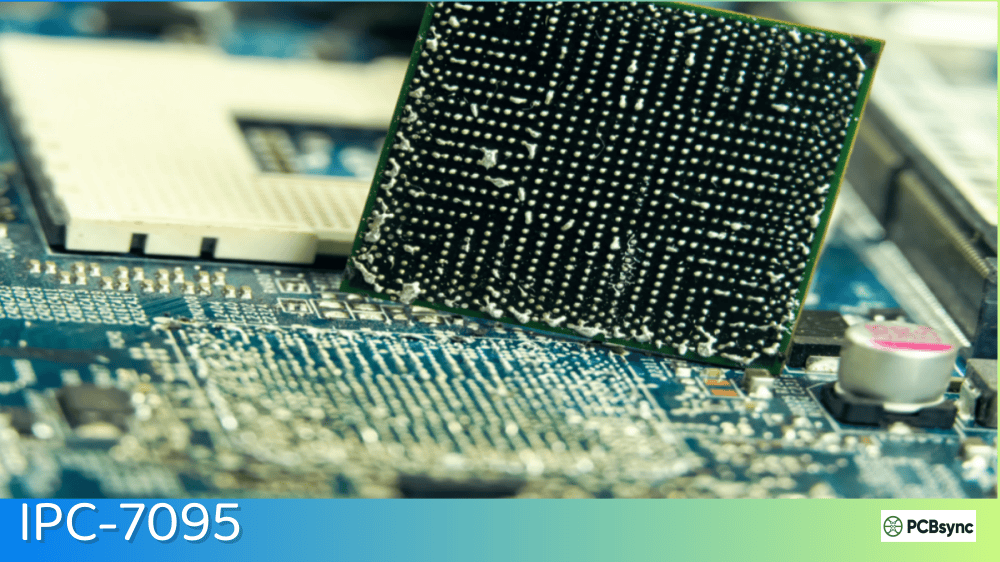
IPC has responded with updated standards: IPC-7351 replaced IPC-SM-782 for land pattern design, IPC-7525 addresses modern stencil design challenges, and IPC-7093 covers bottom termination components like QFNs. Despite these updates, the fundamental principles covered in IPC-TA-723 remain relevant because physics doesn’t change—solder still wets, components still experience thermal stress, and process control still matters.
Let me share some practical ways the knowledge in IPC-TA-723 applies to real-world SMT challenges.
Troubleshooting Reflow Defects
When you’re seeing tombstoning on chip components, IPC-TA-723’s process and design articles help you understand the root causes: unequal wetting forces during reflow caused by unequal pad sizes, unequal solder paste deposits, or thermal imbalances. This understanding guides effective corrective actions rather than random process adjustments.
The reflow soldering articles explain the four-stage thermal profile (preheat, soak, reflow, cooling) and how each stage affects solder joint formation. When you understand that the soak zone activates flux and equalizes component temperatures, you can better optimize profiles for your specific assemblies.
Understanding Solder Joint Reliability
Why do solder joints fail in field applications? The reliability articles in IPC-TA-723 explain fatigue mechanisms driven by thermal cycling. When a PCB and component heat up during operation, CTE mismatches create stress on solder joints. Over thousands of thermal cycles, fatigue cracks develop and propagate until electrical failure occurs.
This understanding influences design decisions: using smaller components (shorter solder joint moment arm), selecting PCB materials with CTE closer to components, and considering underfill for critical BGAs. The articles provide the technical foundation for these reliability improvement strategies.
Improving First-Pass Yield
Quality assessment articles help you establish effective inspection strategies. Understanding which defects are process-related versus design-related enables targeted corrective actions. For instance, consistent bridging at fine-pitch components might indicate stencil aperture issues (process) or insufficient solder mask dam spacing (design).
The materials articles help you optimize solder paste selection for your specific application. Paste rheology affects print quality, flux activity affects wetting, and particle size affects fine-pitch printing capability. Making informed material selections improves yield without endless trial-and-error.
How to Access IPC-TA-723
IPC-TA-723 is available through several authorized channels. As with all IPC standards, purchasing official copies ensures you receive accurate, complete documentation.
Official Sources for IPC-TA-723
Source
Website
Notes
IPC Official Store
shop.ipc.org
Primary source, member discounts
Accuris (Techstreet)
store.accuristech.com
Authorized distributor
SAI Global
infostore.saiglobal.com
International distributor
GlobalSpec/Engineering360
standards.globalspec.com
Standards search and information
IPC Membership Considerations
If your organization regularly uses IPC standards, membership often provides cost savings. Members receive discounts on standard purchases, access to certain free documents, and participation opportunities in standards development.
Complementary Resources
When working with IPC-TA-723, consider also accessing these related documents for a complete SMT reference library:
For Design:
IPC-7351B: Generic Requirements for Surface Mount Design and Land Pattern Standard
IPC-7525B: Stencil Design Guidelines
For Process:
IPC-S-816: SMT Process Guideline and Checklist
IPC-7530: Guidelines for Temperature Profiling
For Quality:
IPC-A-610: Acceptability of Electronic Assemblies
IPC-SM-785: Guidelines for Accelerated Reliability Testing
For Materials:
J-STD-004: Requirements for Soldering Fluxes
J-STD-005: Requirements for Soldering Pastes
Is IPC-TA-723 Still Relevant Today?
A fair question given the 1991 publication date. Here’s my perspective after decades in this industry.
What Remains Valuable
The fundamental principles of SMT haven’t changed. Solder paste printing still requires proper stencil design and print parameters. Reflow soldering still follows the same thermal profile stages. Solder joints still fail through the same fatigue mechanisms. The physics-based content in IPC-TA-723 remains as valid today as when it was written.
The troubleshooting approaches and quality assessment principles transfer directly to modern SMT lines. Understanding why defects occur enables effective problem-solving regardless of whether you’re placing 1206 components or 0201s.
What Has Evolved
Specific technologies have advanced significantly since 1991. Lead-free soldering (driven by RoHS legislation) changed solder alloy selection and required higher reflow temperatures. Component miniaturization pushed land pattern design to finer dimensions. Advanced packages like WLCSPs and micro-BGAs introduced new assembly challenges.
For these current topics, you’ll need newer IPC documents and contemporary resources. IPC-TA-723 provides foundational knowledge, but it shouldn’t be your only reference for cutting-edge SMT applications.
Bottom Line
Think of IPC-TA-723 as a solid foundation rather than a complete solution. The handbook builds understanding of SMT principles that remain constant, while newer standards address current technology specifics. Together, they create a comprehensive knowledge base for SMT professionals.
Frequently Asked Questions About IPC-TA-723
What does “TA” mean in IPC-TA-723?
“TA” stands for Technology Assessment. IPC uses this designation for documents that compile and assess technology rather than defining requirements or specifications. IPC-TA-723 assesses surface mount technology through curated expert articles rather than establishing compliance criteria.
Is IPC-TA-723 a mandatory standard?
No. IPC-TA-723 is a handbook providing educational content, not a mandatory compliance standard. It’s a reference resource for understanding SMT technology rather than a document you certify against. Standards like IPC-A-610 (for acceptance criteria) or J-STD-001 (for soldering requirements) are the compliance-focused documents.
How many articles are included in IPC-TA-723?
IPC-TA-723 contains 71 curated articles selected by an industry expert panel. Beyond these 71 articles, the handbook provides bibliographic references to dozens of additional related publications for engineers who want to research specific topics more deeply.
Has IPC-TA-723 been updated since 1991?
IPC-TA-723 has not been revised since its original 1991 publication. For current SMT technology, engineers should supplement IPC-TA-723 with newer standards like IPC-7351B (land patterns), IPC-7525B (stencil design), and IPC-A-610 (current revision for acceptability). The foundational knowledge in IPC-TA-723 remains valuable, but technology-specific guidance requires current documents.
What’s the difference between IPC-TA-722 and IPC-TA-723?
IPC-TA-722 is the “Technology Assessment Handbook on Soldering,” focusing specifically on soldering technologies across various methods (wave, reflow, vapor phase, manual, etc.). IPC-TA-723 focuses on surface mount technology more broadly, covering design, materials, packaging, reliability, and process considerations specific to SMT. There’s some overlap in soldering content, but the overall focus differs.
Tips for Getting the Most from IPC-TA-723
Based on my experience using this handbook, here are some practical suggestions for maximizing its value.
Start with Relevant Sections
Don’t try to read IPC-TA-723 cover to cover. Instead, identify your current challenges and focus on relevant topic areas. Facing yield issues? Start with process considerations and quality assessments. Designing your first SMT board? Begin with design considerations and packaging components.
Use the Bibliography
The bibliographic references at the end of IPC-TA-723 point to additional resources for deeper research. When an article introduces a concept you want to explore further, check these references for source materials and related publications.
Combine with Current Standards
Always pair IPC-TA-723 knowledge with current IPC standards for your specific application. The handbook provides the “why” while current standards provide the “what”—specific dimensions, tolerances, and acceptance criteria that reflect modern manufacturing capabilities.
Share with Your Team
IPC-TA-723 makes excellent training material. The curated articles explain concepts clearly enough for engineers new to SMT while providing depth that benefits experienced practitioners. Consider using specific articles in team training sessions or as required reading for new hires.
Final Thoughts
IPC-TA-723 represents a snapshot of SMT knowledge from industry pioneers who established many practices we still follow today. While specific technologies have evolved, the fundamental engineering principles in this handbook continue providing value for anyone working in surface mount assembly.
Whether you’re troubleshooting process issues, training new engineers, or simply building deeper understanding of SMT technology, IPC-TA-723 offers consolidated knowledge that would otherwise require searching through dozens of separate sources. Combined with current IPC standards for specific technical requirements, it forms part of a comprehensive reference library for SMT professionals.
Surface mount technology has transformed electronics manufacturing over the past several decades, and understanding its technical foundations helps engineers make better decisions in design, process development, and quality assurance. IPC-TA-723 provides exactly that foundational understanding in an accessible, well-organized format.
Inquire: Call 0086-755-23203480, or reach out via the form below/your sales contact to discuss our design, manufacturing, and assembly capabilities.
Quote: Email your PCB files to Sales@pcbsync.com (Preferred for large files) or submit online. We will contact you promptly. Please ensure your email is correct.
Notes: For PCB fabrication, we require PCB design file in Gerber RS-274X format (most preferred), *.PCB/DDB (Protel, inform your program version) format or *.BRD (Eagle) format. For PCB assembly, we require PCB design file in above mentioned format, drilling file and BOM. Click to download BOM template To avoid file missing, please include all files into one folder and compress it into .zip or .rar format.