Inquire: Call 0086-755-23203480, or reach out via the form below/your sales contact to discuss our design, manufacturing, and assembly capabilities.
Quote: Email your PCB files to Sales@pcbsync.com (Preferred for large files) or submit online. We will contact you promptly. Please ensure your email is correct.
Notes: For PCB fabrication, we require PCB design file in Gerber RS-274X format (most preferred), *.PCB/DDB (Protel, inform your program version) format or *.BRD (Eagle) format. For PCB assembly, we require PCB design file in above mentioned format, drilling file and BOM. Click to download BOM template To avoid file missing, please include all files into one folder and compress it into .zip or .rar format.
IPC-7711/7721 Explained: Complete Guide to PCB Rework, Repair & Modification
Every electronics manufacturer faces the same question when an assembly fails inspection or a board comes back from the field with a defect: do we scrap it or fix it? For a $50 consumer product, scrapping might make sense. For a $15,000 aerospace assembly or a prototype with an 8-week lead time, that’s rarely an option.
IPC-7711/7721 exists precisely for these situations. This standard provides the industry-accepted procedures for reworking defective assemblies, repairing damaged boards, and modifying products to meet new requirements. It’s the document that separates professional repair work from improvised fixes that may or may not hold up in service.
Whether you’re a technician performing daily rework, an engineer establishing repair procedures, or a quality manager defining acceptance criteria, understanding IPC-7711/7721 is essential. This guide covers everything you need to know about the standard, from basic concepts to certification options.
IPC-7711/7721, officially titled Rework, Modification and Repair of Electronic Assemblies, is a comprehensive procedural guide developed by the IPC (Association Connecting Electronics Industries). The standard provides detailed, step-by-step procedures for restoring electronic assemblies to conforming condition or modifying them to meet new requirements.
The standard is actually two documents combined into one:
Document
Focus Area
Purpose
IPC-7711
Rework
Procedures for removing and replacing components, correcting defects without changing original design
IPC-7721
Repair & Modification
Procedures for restoring damaged boards and altering assemblies to meet new requirements
Why Two Standards in One?
Historically, IPC-7711 and IPC-7721 were separate documents. IPC recognized that technicians performing rework often need to perform repairs as well—a lifted pad during component removal requires repair before the new component can be installed. Combining them into a single reference makes practical sense for the people actually doing the work.
The combined document also superseded IPC-R-700, an older repair standard that many aerospace and defense contractors referenced for decades.
Current version, expanded cable/wire harness procedures
Revision D is the current version as of 2024. It includes all previously published change pages and amendments, updated general information, and expanded coverage for cable and wire harness assemblies in addition to printed board assemblies.
Understanding Rework vs Repair vs Modification
IPC-7711/7721 makes clear distinctions between these three activities. The differences matter because they affect approval requirements, documentation, and quality expectations.
Definitions
Term
Definition
Example
Rework
Reprocessing non-complying product through original or equivalent processes to achieve full compliance with original requirements
Removing a misaligned component and reinstalling it correctly
Repair
Restoring a non-complying product to a condition where it can fulfill its intended use, even if it doesn’t fully meet original requirements
Replacing a damaged pad with a repair circuit frame
Modification
Revising a conforming product’s functional capability to satisfy new acceptance criteria
Adding a jumper wire to implement an engineering change
Why the Distinction Matters
Activity
Typical Approval Required
Result
Rework
Often pre-authorized during manufacturing
Product meets original specifications
Repair
Usually requires customer/engineering approval
Product functional but may not meet all original specs
Modification
Requires engineering change order
Product meets new specifications
The standard explicitly states that it does not limit the maximum number of rework, modification, or repair actions to a printed circuit assembly. However, your customer contracts or internal quality systems may impose such limits.
IPC Product Class System
Like other IPC standards, IPC-7711/7721 uses the three-class system to establish different levels of requirements based on end-use application.
Class Definitions
Class
Name
Description
Examples
Class 1
General Electronic Products
Products where function is the primary requirement
Consumer electronics, toys, some industrial equipment
Class 2
Dedicated Service Electronic Products
Products requiring continued performance and extended life
Products where continued performance or performance-on-demand is critical
Medical life support, military, aerospace, automotive safety
How Class Affects Procedures
The product class determines which procedures are acceptable and what conformance level is required. A repair technique acceptable for Class 1 may not meet Class 3 requirements. Throughout IPC-7711/7721, each procedure indicates which product classes it applies to using codes:
Code
Meaning
R
Rigid printed boards
F
Flexible circuits
W
Wires and wire harnesses
C
Cables
IPC-7711: Rework Procedures
IPC-7711 covers all aspects of component rework—the controlled removal and replacement of electronic components on assembled boards.
Through-Hole Desoldering — Continuous Vacuum, Full Clinch
Intermediate
3.1.4
Through-Hole Desoldering — Full Clinch Straightening
Intermediate
3.1.5
Through-Hole Desoldering — Full Clinch Wicking Method
Intermediate
3.2.x
PGA and Connector Removal — Various Methods
Advanced
Through-hole rework seems straightforward, but the devil is in the details. Full-clinched leads require different approaches than partial clinches. Heavy multilayer boards with internal ground planes need preheating to achieve proper solder reflow. The standard provides specific guidance for each situation.
Surface Mount Component Rework
Surface mount rework is where IPC-7711 really shines. The standard covers every common package type:
Component Type
Removal Method
Installation Method
Typical Skill Level
Chip components (0201-2512)
Hot air, conduction
Soldering iron, hot air
Intermediate
MELF
Hot air, conduction
Soldering iron
Intermediate
SOT/SOIC
Hot air
Hot air, soldering iron
Intermediate
QFP
Hot air, focused IR
Hot air, focused IR
Advanced
J-Lead (PLCC)
Hot air
Hot air
Advanced
BGA/CSP
Focused IR with preheater
Focused IR with preheater
Expert
QFN/LGA
Hot air, focused IR
Hot air, focused IR
Expert
BGA Rework Procedures
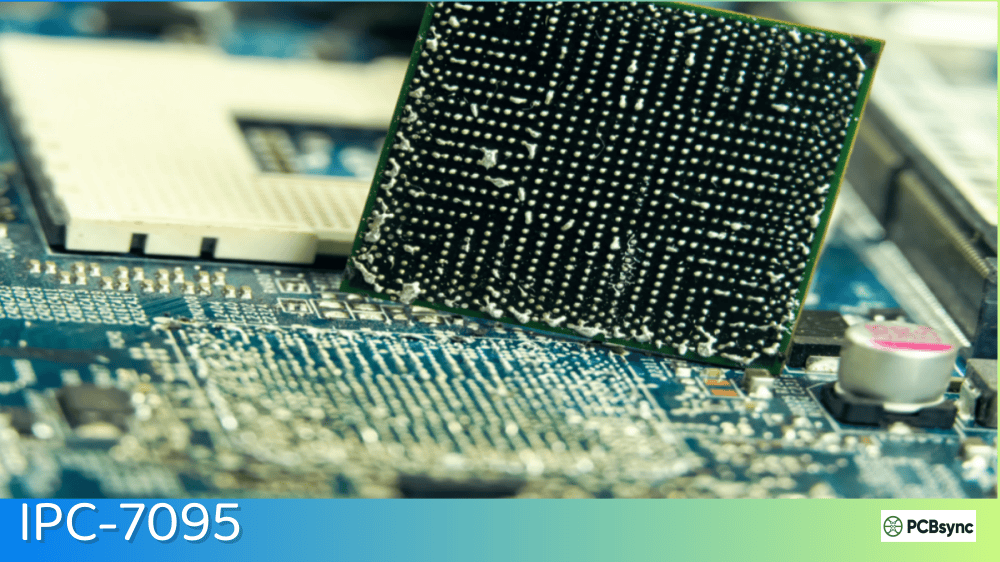
BGA rework deserves special attention because it’s technically demanding and increasingly common as more designs use area array packages. IPC-7711 includes comprehensive BGA coverage:
Procedure
Description
BGA Removal
Using focused IR reflow with bottom-side preheater
Site Preparation
Solder removal, pad cleaning, inspection
BGA Reballing — Fixture Method
Using reballing fixtures for new solder balls
BGA Reballing — Paper Carrier Method
Alternative for various ball sizes
BGA Reballing — Polyimide Stencil Method
Precision reballing
BGA Installation
Placement and reflow with profile control
For lead-free BGA rework, the standard recommends maintaining peak temperatures not exceeding 245°C while ensuring all solder joints reach liquidus. This requires careful profile development and often nitrogen atmosphere to prevent oxidation.
Conformal Coating Procedures
Before any rework can begin, conformal coating must be removed from the work area. After rework, coating must be replaced. IPC-7711 covers both:
IPC-7721 addresses situations where the board itself is damaged or needs to be modified. These procedures often require advanced skills and specialized materials.
Laminate repairs are some of the most challenging procedures in the standard. Delamination injection requires drilling access holes, injecting low-viscosity epoxy, and curing under controlled conditions. When done correctly, the repair restores structural integrity. When done poorly, it creates additional problems.
Conductor and Pad Repairs
Damaged traces and pads are common repair targets. IPC-7721 provides multiple methods for each situation:
Repair Type
Available Methods
Conformance Level
Lifted Land
Epoxy method, Film adhesive method
Medium to High
Land Replacement
Epoxy method, Film adhesive method
Medium to High
Surface Conductor Repair
Epoxy method, Film adhesive method, Solder method
Medium to High
Inner Layer Conductor
Cut and cap method, Drill through method
High
Edge Connector
Epoxy method, Film adhesive method, Plating method
Medium to High
Plated Through Hole
Eyelet method, Epoxy method, Solder method
Low to High
Circuit Modifications
When engineering changes require circuit modifications, IPC-7721 provides procedures for:
Modification Type
Procedure
Skill Level
Cutting Traces
Mechanical severing of surface conductors
Intermediate
Adding Jumper Wires
Installing point-to-point connections
Advanced
BGA Jumper Wires
Foil jumper method, Through board method
Expert
Component Additions
Adding components to existing circuits
Advanced
The jumper wire procedures specify wire gauges, routing requirements, strain relief, and attachment methods. For high-reliability applications, even jumper wires must meet rigorous workmanship standards.
Wire Splicing Procedures
IPC-7721 includes four approved methods for splicing wires:
Splice Type
Description
Conformance Level
Mesh Splice
Wires meshed together and soldered
Low
Wrap Splice
One wire wrapped around another
Low
Hook Splice
Wires hooked together
Low
Lap Splice
Wires overlapped parallel
Low
While these splicing methods have low conformance levels, they’re appropriate for field repairs and modifications where proper tooling isn’t available.
Skill Levels and Conformance Levels
IPC-7711/7721 assigns both skill level and conformance level ratings to each procedure. Understanding these ratings helps organizations assign work appropriately and assess risk.
Skill Level Definitions
Level
Code
Description
Intermediate
I
Basic soldering/assembly knowledge, still developing experience with most procedures
Advanced
A
Proficient with most procedures, building deeper experience
Skill levels aren’t just suggestions. Assigning a BGA rework task to an intermediate-level technician risks damaging expensive assemblies. The standard provides guidance for matching personnel capabilities to task requirements.
Conformance Level Definitions
Level
Code
Meaning
High
H
Procedure produces results equivalent to original manufacturing
Medium
M
Procedure produces acceptable results but may not equal original manufacturing
Low
L
Procedure produces functional results but with visible differences from original
For Class 3 products, customers typically require High conformance level procedures. Class 1 products may accept Low conformance procedures when appropriate for the application.
Tools, Materials, and Equipment
IPC-7711/7721 specifies the tools and materials needed for each procedure. While it doesn’t mandate specific brands, it establishes functional requirements.
Essential Rework Equipment
Equipment Category
Purpose
Key Requirements
Soldering Station
Hand soldering operations
Temperature control, ESD safe
Hot Air Rework System
SMD removal/installation
Temperature and airflow control
Focused IR System
BGA rework
Top and bottom heating, profile capability
Preheater
Board-level heating
Uniform heating, temperature control
Desoldering Station
Through-hole work
Vacuum extraction, temperature control
Microscope/Magnification
Inspection, fine work
Appropriate magnification for component size
Critical Materials
Material
Application
Considerations
Flux
Soldering operations
Must match solder alloy, cleaning requirements
Solder Wire
Hand soldering
Diameter, alloy, flux core type
Solder Paste
SMD rework
Alloy, mesh size, flux type
Cleaning Agents
Flux removal
Compatibility with materials, residue requirements
Epoxy (2-part)
Repairs
Electrical properties, cure requirements
Repair Circuit Frames
Pad replacement
Pre-made repair lands
Lead-Free Considerations
The standard addresses both tin-lead (SnPb) and lead-free soldering throughout. Key differences:
Parameter
SnPb (Sn63/Pb37)
Lead-Free (SAC305 typical)
Melting Point
183°C
217-220°C
Typical Peak Temp
225-235°C
240-250°C
Wetting
Excellent
Good (slower)
Oxidation
Moderate
Higher (nitrogen helps)
Tip Temperature
315-345°C
345-400°C
Mixing lead-free components with tin-lead solder (or vice versa) requires understanding the metallurgical implications. IPC-7711/7721 addresses backward compatibility considerations.
IPC-7711/7721 Training and Certification
IPC offers a comprehensive training and certification program for IPC-7711/7721. For organizations performing rework and repair, certification demonstrates competence and provides standardized skills.
Certification Levels
Level
Abbreviation
Duration
Target Audience
Certified IPC Specialist
CIS
4 days
Operators, technicians performing rework/repair
Certified Standards Expert
CSE
5 days
Quality engineers, process engineers, subject matter experts
Certified IPC Trainer
CIT
5 days
Individuals who will train others internally
Training Modules
The IPC-7711/7721 training program is modular, allowing organizations to certify personnel in specific areas relevant to their work:
Module
Content
Module 1
General requirements, common procedures (mandatory)
Module 2
Wire splicing procedures
Module 3
Conformal coating removal and replacement
Module 4
Through-hole component rework
Module 5
Chip and MELF component rework
Module 6
Gull wing (SOIC, QFP) component rework
Module 7
J-lead component rework
Module 8
BGA rework (lecture only in basic program)
Module 9
Laminate repair
Module 10
Circuit repair (conductor, pad)
Certification Benefits
Benefit
Description
Standardized Skills
All certified personnel trained to same criteria
Industry Recognition
Certification recognized worldwide
Customer Requirements
Many contracts require IPC-certified personnel
Reduced Defects
Proper training reduces rework of rework
Documentation
Traceable certification records
Certifications are valid for two years and require recertification to maintain.
Related Standards
IPC-7711/7721 references and works alongside several other IPC and industry standards:
Standard
Title
Relationship
J-STD-001
Requirements for Soldered Electrical and Electronic Assemblies
Quality requirements for soldering during rework
IPC-A-610
Acceptability of Electronic Assemblies
Acceptance criteria after rework/repair
IPC-A-620
Requirements for Cable and Wire Harness Assemblies
Criteria for wire/cable work
IPC-HDBK-001
Handbook for J-STD-001
Additional guidance for soldering
ESD S20.20
ESD Control Program
ESD protection during handling
ASTM Standards
Various test methods
Material property testing
When performing rework, the completed work must meet J-STD-001 requirements and pass IPC-A-610 acceptance criteria. IPC-7711/7721 tells you how to do the work; J-STD-001 and IPC-A-610 tell you whether the results are acceptable.
Authorized IPC training centers worldwide offer IPC-7711/7721 certification:
Provider Type
Examples
IPC-Authorized Centers
BEST Inc., EPTAC, STI Electronics, A.R.T., PIEK
In-House Programs
Many large manufacturers maintain CIT trainers
Regional Centers
Available in Americas, Europe, Asia
Supplementary Materials
Material
Purpose
Training workmanship kits
Practice boards for certification
Visual aids
Instructor presentation materials
Repair circuit frames
Pre-made repair lands for pad replacement
Frequently Asked Questions About IPC-7711/7721
What is the difference between IPC-7711 and IPC-7721?
IPC-7711 covers rework procedures—removing and replacing components, preparing sites for new components, and correcting assembly defects without changing the original design. IPC-7721 covers repair and modification—restoring damaged boards (traces, pads, laminate) and making changes to implement engineering modifications. They’re published as a combined document because technicians often need both during the same job. For example, if a pad lifts during component removal (IPC-7711 procedure), you need a pad repair procedure (IPC-7721) before installing the replacement component.
How often is IPC-7711/7721 updated?
The standard is typically revised every 5-7 years, though change pages may be released between major revisions. The most recent major revision is Revision D, released in January 2024. This revision expanded coverage for cable and wire harness assemblies and incorporated all previous change pages from Revision C. Organizations should verify they’re using the current revision, especially when certification or customer contracts reference the standard.
Does IPC-7711/7721 limit how many times a board can be reworked?
No. The standard explicitly states that it “does not limit the maximum number of rework, modification or repair actions to a printed circuit assembly.” However, customer specifications, contract requirements, or internal quality systems may impose limits. Repeated thermal cycles from multiple reworks can affect board and component reliability, so engineering judgment should be applied. Some high-reliability programs limit the number of rework cycles on specific component types, particularly BGAs.
What skill level is required for BGA rework?
IPC-7711/7721 classifies BGA rework procedures as Expert level, the highest skill classification. This reflects the technical difficulty of the process—maintaining proper thermal profiles, preventing damage to adjacent components, and achieving reliable solder joints on area array packages requires extensive experience and specialized equipment. Organizations should ensure technicians have demonstrated proficiency before assigning BGA rework tasks. Most CIS certification programs cover BGA only in lecture format; hands-on BGA certification typically requires additional training.
Is IPC-7711/7721 certification required by law?
IPC-7711/7721 certification is not legally required, but it may be contractually required by customers. Many aerospace, defense, and medical device manufacturers require suppliers to have IPC-certified rework personnel. Even without explicit requirements, certification demonstrates competence and provides standardized training that reduces quality issues. For organizations performing rework as a business, certification can be a competitive advantage and may be required for certain industry sectors.
Implementing IPC-7711/7721 in Your Organization
Adopting IPC-7711/7721 requires more than purchasing the document. Successful implementation involves several steps.
Assess Your Current State
Before implementing the standard, understand your current rework and repair practices:
What types of rework/repair do you perform?
What training do technicians currently have?
What equipment and materials are available?
What documentation exists for procedures?
What are customer requirements?
Establish Training Requirements
Based on your assessment, determine training needs:
Role
Typical Training Need
Rework technicians
CIS certification in relevant modules
Process engineers
CSE certification or equivalent knowledge
Quality engineers
CSE certification for procedure approval
Internal trainers
CIT certification to train CIS
Develop Internal Procedures
IPC-7711/7721 provides generic procedures. Many organizations develop internal work instructions that:
Reference specific IPC-7711/7721 procedure numbers
Specify equipment and materials used
Add organization-specific requirements
Include inspection checkpoints
Document approval workflows
Equip Your Facility
Ensure you have appropriate equipment for the procedures you’ll perform. Under-equipped facilities lead to poor results and frustrated technicians. Over-equipped facilities waste capital on capabilities you don’t need.
Document and Control
Establish documentation systems that:
Track certification status of personnel
Record rework/repair activities
Maintain material traceability
Support audit and compliance requirements
IPC-7711/7721 is fundamentally a procedures guide—it tells you how to do things correctly. But having the procedures is only the beginning. Having trained people who follow them consistently, with proper equipment and materials, under appropriate quality controls—that’s what produces reliable rework and repair results.
This article provides an overview of IPC-7711/7721 principles and procedures. For complete procedural details, illustrations, and requirements, purchase the standard directly from IPC at shop.ipc.org.
Inquire: Call 0086-755-23203480, or reach out via the form below/your sales contact to discuss our design, manufacturing, and assembly capabilities.
Quote: Email your PCB files to Sales@pcbsync.com (Preferred for large files) or submit online. We will contact you promptly. Please ensure your email is correct.
Notes: For PCB fabrication, we require PCB design file in Gerber RS-274X format (most preferred), *.PCB/DDB (Protel, inform your program version) format or *.BRD (Eagle) format. For PCB assembly, we require PCB design file in above mentioned format, drilling file and BOM. Click to download BOM template To avoid file missing, please include all files into one folder and compress it into .zip or .rar format.