Inquire: Call 0086-755-23203480, or reach out via the form below/your sales contact to discuss our design, manufacturing, and assembly capabilities.
Quote: Email your PCB files to Sales@pcbsync.com (Preferred for large files) or submit online. We will contact you promptly. Please ensure your email is correct.
Notes: For PCB fabrication, we require PCB design file in Gerber RS-274X format (most preferred), *.PCB/DDB (Protel, inform your program version) format or *.BRD (Eagle) format. For PCB assembly, we require PCB design file in above mentioned format, drilling file and BOM. Click to download BOM template To avoid file missing, please include all files into one folder and compress it into .zip or .rar format.
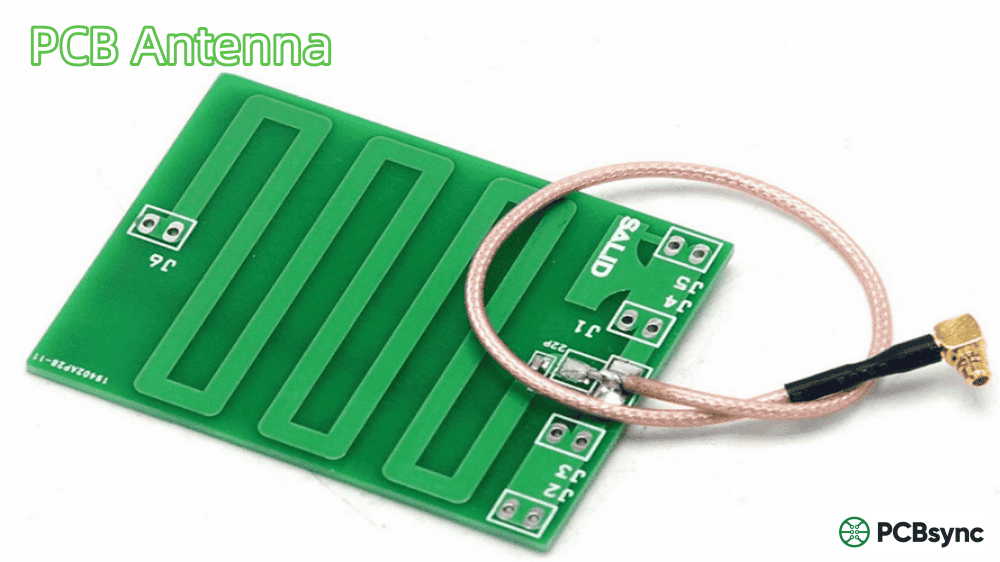
Designing a 915 MHz PCB antennafor LoRaWAN US915 presents specific challenges that differ from generic 900 MHz ISM band work. When I started adapting European 868 MHz LoRa designs for US deployments, I assumed the 5% frequency shift would be trivial. The antenna dimensions do scale predictably, but the LoRaWAN US915 channel plan spans 902–928 MHz with 72 channels—far wider than the European 8-channel plan. This bandwidth requirement changes how you optimize your antenna design and matching network.
This guide covers practical 915 MHz PCB antenna design specifically for LoRaWAN US915 applications. Whether you’re converting an existing 868 MHz design, starting fresh with an SX1262-based node, or integrating a chip antenna for a compact tracker, these dimensions and techniques will help you achieve reliable performance across the full US915 band. I’ll focus on proven implementations—inverted-F antennas (IFA), meander monopoles, and chip antenna integration—with specific attention to the bandwidth requirements of the 64+8 channel LoRaWAN US915 plan.
The LoRaWAN US915 specification defines a complex channel plan that your 915 MHz PCB antenna must accommodate efficiently.
LoRaWAN US915 Channel Plan
Channel Type
Frequency Range
Channels
Bandwidth
Direction
125 kHz uplink
902.3–914.9 MHz
64 (0–63)
125 kHz
Node → Gateway
500 kHz uplink
903.0–914.2 MHz
8 (64–71)
500 kHz
Node → Gateway
500 kHz downlink
923.3–927.5 MHz
8 (0–7)
500 kHz
Gateway → Node
Critical observation: US915 uplink channels span 902.3–914.9 MHz while downlink spans 923.3–927.5 MHz. Your antenna must perform well across the entire 902–928 MHz range—a 26 MHz bandwidth requirement that’s nearly 4× wider than EU868.
US915 vs EU868 Antenna Requirements
Parameter
LoRaWAN EU868
LoRaWAN US915
Uplink range
868.0–868.6 MHz
902.3–914.9 MHz
Downlink range
869.4–869.65 MHz
923.3–927.5 MHz
Total bandwidth
~7 MHz
26 MHz
Number of channels
8
72
Center frequency
868 MHz
915 MHz
λ/4 free space
86.4 mm
82.0 mm
The wider bandwidth requirement means your 915 MHz PCB antenna design should prioritize broader frequency coverage over maximum gain at a single frequency.
915 MHz Wavelength Calculations
Parameter
Value
Notes
Center frequency
915 MHz
US915 band center
Wavelength (λ)
328 mm
Free space
Quarter wavelength (λ/4)
82 mm
Monopole length
λ/4 on FR4 (εr ≈ 4.4)
49–58 mm
Effective on PCB
Full band coverage
902–928 MHz
26 MHz bandwidth required
Converting 868 MHz PCB Antenna to 915 MHz
Many engineers start with proven 868 MHz designs and adapt them for US markets. This section covers the conversion process for your 915 MHz PCB antenna.
Dimension Scaling for 868 MHz to 915 MHz
The frequency ratio is 915/868 = 1.054, meaning 915 MHz dimensions are approximately 5.4% shorter than 868 MHz equivalents.
868 MHz Dimension
915 MHz Equivalent
Scaling Factor
86.4 mm (λ/4)
82.0 mm
0.949
55 mm trace
52.2 mm
0.949
45 mm arm
42.7 mm
0.949
38 mm meander
36.1 mm
0.949
Practical Conversion Guidelines
Design Element
868 MHz Value
915 MHz Adjustment
Total trace length
~62 mm
~59 mm
IFA horizontal arm
52 mm
49 mm
IFA shorting stub
5 mm from feed
4–5 mm from feed
Meander footprint
40 × 20 mm
38 × 19 mm
Ground clearance
12 mm
10–12 mm (unchanged)
Matching Network Conversion
Converting matching networks requires recalculating for the new frequency:
Component
868 MHz Value
915 MHz Value
Change
Series inductor
22 nH
18–20 nH
Lower
Shunt capacitor
3.3 pF
2.7–3.0 pF
Lower
Series capacitor
4.7 pF
3.9–4.3 pF
Lower
Rule of thumb: Inductance and capacitance values scale inversely with frequency. Multiply 868 MHz component values by 0.95 as starting point for 915 MHz, then fine-tune with VNA measurement.
IFA Design for 915 MHz LoRaWAN
The Inverted-F Antenna (IFA) is one of the most popular choices for 915 MHz PCB antenna implementations. Texas Instruments’ DN023 provides an excellent reference design.
IFA Operating Principle
The IFA consists of:
Horizontal radiating arm (determines resonant frequency)
Vertical feed section (connects to RF trace)
Shorting stub to ground (provides impedance matching)
The shorting stub creates a parallel LC resonance that helps match the antenna to 50Ω without external components—a significant advantage for cost-sensitive LoRaWAN nodes.
TI DN023 IFA Dimensions for 915 MHz
Based on Texas Instruments Design Note DN023:
Parameter
868 MHz
915 MHz
Notes
Horizontal arm (L1+L2+L3+L4)
~52 mm
~49 mm
Total radiating length
L6 (tuning segment)
9 mm
1–3 mm
Critical for frequency
Vertical section height
8 mm
8 mm
Above ground plane
Shorting stub width
1 mm
1 mm
To ground
Feed point width
1 mm
1 mm
50Ω connection
Ground plane size
31 × 45 mm
31 × 45 mm
Minimum
Key insight: The tuning segment L6 changes dramatically between 868 MHz (9 mm) and 915 MHz (1–3 mm). This is often the primary adjustment needed when converting designs.
Custom IFA Dimensions for 915 MHz
For designs not based on TI reference:
Parameter
Dimension
Tolerance
Horizontal arm length
45–52 mm
±2 mm
Vertical section
6–10 mm
±1 mm
Shorting stub distance
3–6 mm from feed
Critical
Trace width
1.5–2.0 mm
±0.2 mm
Ground clearance
8–12 mm
Minimum 8 mm
Keep-out zone
55 × 20 mm
No copper
IFA Bandwidth Optimization for US915
To achieve the 26 MHz bandwidth required for full US915 coverage:
Technique
Effect
Trade-off
Wider trace (2 mm vs 1 mm)
+5–10 MHz bandwidth
Slightly lower Q
Larger ground plane
+3–5 MHz bandwidth
More PCB area
Reduced ground clearance
Narrower bandwidth
Avoid if possible
Thicker substrate
+2–3 MHz bandwidth
May affect other traces
Target S11 < -10 dB from 900 MHz to 930 MHz to ensure adequate margin across all LoRaWAN US915 channels.
Meander Antenna Design for 915 MHz
Meander antennas offer a good balance of size and performance for 915 MHz PCB antenna applications where dedicated antenna area is available.
Meander Dimensions for 915 MHz LoRaWAN
Compact Meander (28 × 14 mm):
Parameter
Dimension
Notes
Physical footprint
28 × 14 mm
Smallest practical
Trace width
1.0 mm
Higher Q
Trace spacing
1.0 mm
Minimize coupling
Number of meanders
5–6
Folds
Total trace length
~54 mm
Effective λ/4
Ground clearance
8 mm
Minimum
Bandwidth
20–25 MHz
Marginal for US915
Standard Meander (36 × 18 mm):
Parameter
Dimension
Notes
Physical footprint
36 × 18 mm
Recommended
Trace width
1.5 mm
Better bandwidth
Trace spacing
1.5 mm
Lower coupling
Number of meanders
4–5
Fewer folds
Total trace length
~58 mm
Effective λ/4
Ground clearance
10 mm
Better performance
Bandwidth
28–35 MHz
Good for US915
TI DN024 Reference (38 × 25 mm):
Parameter
Dimension
Notes
Physical footprint
38 × 25 mm
TI reference
Trace width
2.0 mm
Lowest loss
Total trace length
~60 mm
Tuned 915 MHz
Ground clearance
12 mm
Optimal
Measured gain
+3 to +5 dBi
With proper ground
Bandwidth
35–45 MHz
Excellent for US915
Efficiency
> 90%
TI measured
Chip Antenna Integration for 915 MHz
Chip antennas offer the smallest footprint for 915 MHz PCB antenna implementations, making them attractive for compact LoRaWAN nodes and trackers.
Recommendation: Tune for minimum S11 at 912–915 MHz center, verify S11 < -10 dB at both 902 MHz and 928 MHz band edges.
Component Selection
Parameter
Requirement
Why
Inductor Q
> 35 at 915 MHz
Minimize loss
Inductor type
Wirewound or thin film
Avoid multilayer
Inductor SRF
> 3 GHz
Well above 915 MHz
Capacitor type
C0G/NP0
Temperature stable
Package size
0402 preferred
Low parasitic
Testing 915 MHz PCB Antenna Performance
Validate your 915 MHz PCB antenna across the full LoRaWAN US915 band before production.
Test Equipment
Equipment
Purpose
Budget Option
VNA
S11, impedance
NanoVNA ($50–100)
Spectrum analyzer
TX power
TinySA (~$60)
LoRa reference
Range comparison
Known-good module
S11 Measurement Points
Frequency
Target S11
Why
902 MHz
< -10 dB
Band edge (uplink start)
908 MHz
< -12 dB
Mid-uplink
915 MHz
< -15 dB
Band center
923 MHz
< -10 dB
Downlink start
928 MHz
< -10 dB
Band edge (downlink end)
LoRaWAN Range Testing
Test Scenario
Good Result
Action if Poor
RSSI at 500 m (LOS)
> -90 dBm
Check matching
RSSI at 2 km (LOS)
> -110 dBm
Check ground plane
Join success rate
> 95%
Verify all channels
Downlink reliability
> 90%
Check 923–928 MHz
Important: Test on multiple channels across the band. A poorly designed antenna may work at 915 MHz but fail on downlink channels (923–927 MHz).
Common 915 MHz PCB Antenna Mistakes
Mistake 1: Designing for Single Frequency
Problem: Optimizing antenna for 915 MHz only. Effect: Poor performance on uplink (902–914 MHz) or downlink (923–928 MHz) channels. Solution: Design for 26 MHz bandwidth, test at band edges.
Mistake 2: Using 868 MHz Dimensions Without Scaling
Problem: Copying EU868 antenna directly without adjustment. Effect: Resonance at ~870 MHz, high VSWR at 915 MHz. Solution: Scale dimensions by 0.95× or adjust matching network.
Mistake 3: Insufficient Ground Plane for Chip Antennas
Problem: High-Q matching optimized for single frequency. Effect: Good at 915 MHz, poor at band edges. Solution: Use lower-Q matching for wider bandwidth.
Mistake 5: Testing Only at 915 MHz
Problem: VNA measurement only at center frequency. Effect: Hidden problems at band edges discovered in field. Solution: Measure S11 at 902, 915, and 928 MHz minimum.
Useful Resources for 915 MHz Antenna Design
Application Notes and Datasheets
Document
Source
Content
AN847
Silicon Labs
915 MHz antenna matrix (9 types)
DN023
Texas Instruments
915 MHz IFA reference design
DN024
Texas Instruments
915 MHz meander monopole
0915AT43A0026
Johanson
Chip antenna datasheet
SX1262 DS
Semtech
LoRa transceiver specifications
Design Calculators
Tool
Purpose
Cost
Saturn PCB Toolkit
Microstrip impedance
Free
AppCAD
RF matching networks
Free
SimNEC
Smith chart analysis
Free
RF Tools (Android/iOS)
Quick calculations
Free
Reference Hardware
Product
Source
Use
CC-Antenna-DK
Texas Instruments
Antenna development kit
RFM95W module
HopeRF
Reference LoRa design
RAK4631
RAKwireless
Known-good US915 implementation
Frequently Asked Questions
How do I convert my 868 MHz PCB antenna to work at 915 MHz?
Scale all antenna dimensions by 0.949 (multiply by 868/915). For a meander antenna, this typically means shortening the total trace length from ~62 mm to ~59 mm. For an IFA, the horizontal arm shortens from ~52 mm to ~49 mm. More critically, matching network components need recalculation—inductors and capacitors should be approximately 5% lower in value. After physical changes, use a VNA to verify resonance has shifted to 915 MHz and adjust matching if needed. The most common mistake is assuming only the antenna length matters—matching network changes are equally important for good VSWR.
Why does my 915 MHz antenna work for uplink but fail on downlink?
LoRaWAN US915 downlink channels (923.3–927.5 MHz) are 8–12 MHz higher than the uplink center frequency (~908 MHz). If your antenna is tuned narrowly around 910 MHz, it may have acceptable S11 for uplink but degraded performance at 923+ MHz where downlink occurs. Solution: design for wideband coverage (902–928 MHz) rather than peak performance at 915 MHz. Verify S11 < -10 dB at both 905 MHz and 925 MHz during testing. This ensures both uplink and downlink channels have adequate antenna efficiency.
What’s the minimum ground plane size for a 915 MHz PCB antenna?
For printed antennas (IFA, meander), minimum ground plane is approximately 25 × 45 mm. For chip antennas, follow the manufacturer’s datasheet exactly—the Johanson 0915AT43A0026 requires 20 × 49.5 mm minimum. Smaller ground planes cause impedance shift, reduced efficiency, and pattern distortion. If your PCB is smaller than these minimums, consider: (1) external wire antenna, (2) flexible PCB antenna mounted in enclosure, or (3) chip antenna with modified matching. Ground plane size matters more than total PCB size—a 20 × 60 mm board works better than a 35 × 35 mm square.
Should I use a chip antenna or PCB trace antenna for my LoRaWAN node?
For most 915 MHz PCB antenna applications: use PCB trace antenna if you have space (≥40 × 20 mm antenna area plus ground), chip antenna if space is very constrained. PCB trace antennas (IFA, meander) offer 2–4 dB better efficiency than chip antennas, are free (just copper), and are less sensitive to manufacturing variation. Chip antennas save space but require precise ground plane size, external matching components, and careful layout. For production volumes, chip antennas add $0.30–0.80 BOM cost plus matching components. For maximum LoRa range, PCB trace antennas are almost always superior.
How much bandwidth do I need for LoRaWAN US915?
Design for at least 30 MHz bandwidth (S11 < -10 dB) to cover the full 902–928 MHz LoRaWAN US915 allocation with margin. The actual channel allocation spans 902.3–927.5 MHz (25.2 MHz), but you want margin for manufacturing variation and temperature drift. Narrow-band antennas optimized for peak efficiency at 915 MHz often fail at band edges, particularly on downlink channels. To achieve adequate bandwidth: use wider traces (1.5–2 mm), ensure sufficient ground plane, and avoid high-Q matching networks. Verify bandwidth with VNA measurement across the full band, not just at center frequency.
Conclusion
Designing a successful 915 MHz PCB antenna for LoRaWAN US915 requires attention to the unique demands of the 72-channel, 26 MHz bandwidth US specification. Unlike narrowband European designs, your antenna must perform well from 902 MHz through 928 MHz to ensure reliable operation on all uplink and downlink channels.
For new US915 designs, I recommend starting with the TI DN023 IFA reference if board edge space is available, or the DN024 meander monopole if you have dedicated antenna area. Both designs achieve good efficiency with wide bandwidth suitable for the full US915 band. For space-constrained designs, the Johanson 0915AT43A0026 chip antenna works well with proper ground plane and matching.
When converting 868 MHz designs, remember that dimension scaling (0.95×) is only the starting point. Matching network recalculation and full-band testing are essential. Many “converted” designs work at 915 MHz but fail on downlink channels because bandwidth wasn’t verified.
Test with a NanoVNA across 900–930 MHz, not just at 915 MHz. Verify S11 < -10 dB at both band edges. Compare LoRaWAN join success rates and downlink reliability against a known-good reference module.
The US915 band’s higher allowed power (1W versus 25mW in EU) and lack of duty cycle restrictions make proper antenna design even more valuable. A well-designed 915 MHz PCB antenna can achieve 5+ km range with standard LoRa modules, enabling reliable IoT connectivity across urban, suburban, and rural environments.
Inquire: Call 0086-755-23203480, or reach out via the form below/your sales contact to discuss our design, manufacturing, and assembly capabilities.
Quote: Email your PCB files to Sales@pcbsync.com (Preferred for large files) or submit online. We will contact you promptly. Please ensure your email is correct.
Notes: For PCB fabrication, we require PCB design file in Gerber RS-274X format (most preferred), *.PCB/DDB (Protel, inform your program version) format or *.BRD (Eagle) format. For PCB assembly, we require PCB design file in above mentioned format, drilling file and BOM. Click to download BOM template To avoid file missing, please include all files into one folder and compress it into .zip or .rar format.