Inquire: Call 0086-755-23203480, or reach out via the form below/your sales contact to discuss our design, manufacturing, and assembly capabilities.
Quote: Email your PCB files to Sales@pcbsync.com (Preferred for large files) or submit online. We will contact you promptly. Please ensure your email is correct.
Notes: For PCB fabrication, we require PCB design file in Gerber RS-274X format (most preferred), *.PCB/DDB (Protel, inform your program version) format or *.BRD (Eagle) format. For PCB assembly, we require PCB design file in above mentioned format, drilling file and BOM. Click to download BOM template To avoid file missing, please include all files into one folder and compress it into .zip or .rar format.
680 Ohm Resistor: Complete Guide to Color Code, Specifications & Circuit Applications
After years of designing circuits, I can confidently say the 680 ohm resistor is one of those values that shows up in nearly every project folder. It’s part of the E12 and E24 standard series, which means it’s universally available, competitively priced, and stocked by every component distributor on the planet. Whether you’re limiting current through an LED, setting up a bias network, or building an audio circuit, this is a value you’ll reach for repeatedly.
This guide covers everything you need to know about the 680 ohm resistor, from reading its color bands correctly to selecting the right type for your specific application.
A 680 ohm resistor is a passive electronic component that provides 680 ohms of electrical resistance to current flow. This fixed resistance value helps regulate current levels, divide voltages, and protect sensitive components in your circuits.
What makes 680 ohms particularly useful is its position in the E12 series of preferred values. The E12 series contains 12 values per decade (10, 12, 15, 18, 22, 27, 33, 39, 47, 56, 68, 82), and 680 is simply 68 multiplied by 10. This means you can walk into any electronics shop worldwide and find this value immediately available.
Key Specifications of the 680 Ohm Resistor
Specification
Typical Values
Resistance
680Ω (nominal)
Standard Series
E6, E12, E24, E48, E96
Tolerance Options
±1%, ±2%, ±5%, ±10%
Power Ratings
1/8W, 1/4W, 1/2W, 1W, 2W, 5W+
Temperature Coefficient
50-250 ppm/°C
Package Types
Axial through-hole, SMD (0201-2512)
Construction Materials
Carbon film, Metal film, Wirewound, Thick film, Thin film
Maximum Voltage
150V-500V (depends on package/rating)
680 Ohm Resistor Color Code
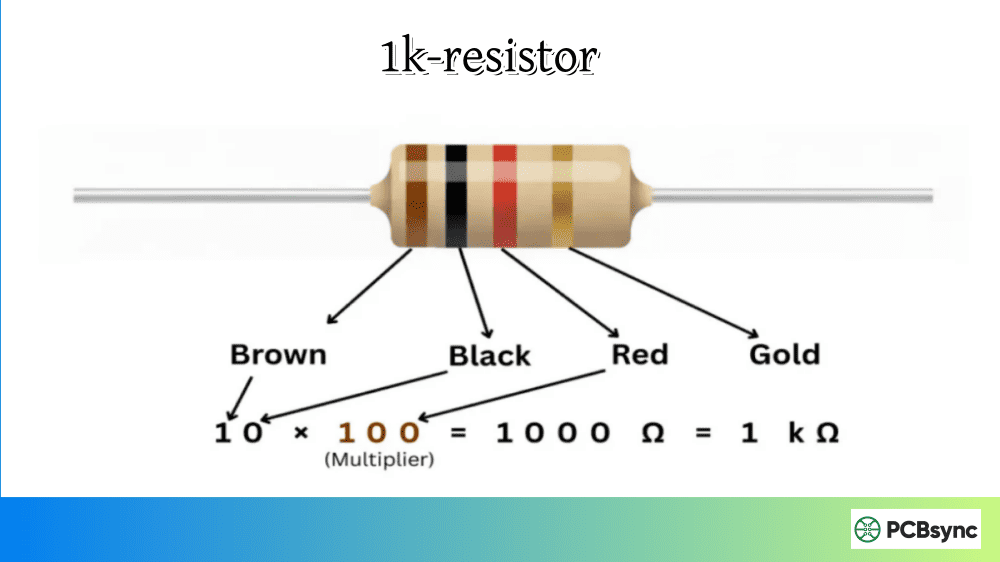
Reading resistor color codes becomes second nature after a while, but it’s worth reviewing the specifics for the 680 ohm resistor color code to avoid any confusion on the bench.
4-Band 680 Ohm Resistor Color Code
The most common configuration you’ll encounter uses four color bands:
Band Position
Color
Meaning
1st Band (First Digit)
Blue
6
2nd Band (Second Digit)
Gray
8
3rd Band (Multiplier)
Brown
×10
4th Band (Tolerance)
Gold
±5%
Calculation: 6 + 8 = 68 × 10 = 680Ω ±5%
With a 5% tolerance, your actual resistance will measure between 646Ω and 714Ω.
5-Band 680 Ohm Resistor Color Code (Precision)
Precision resistors use five bands for an extra significant digit:
Band Position
Color (±1% Tolerance)
Color (±5% Tolerance)
1st Band
Blue
Blue
2nd Band
Gray
Gray
3rd Band
Black
Black
4th Band (Multiplier)
Black
Black
5th Band (Tolerance)
Brown
Gold
Calculation: 6 + 8 + 0 = 680 × 1 = 680Ω
The key difference with 5-band codes is that three digits define the base number, and the multiplier then applies to that three-digit value.
6-Band 680 Ohm Resistor Color Code
For applications requiring temperature stability, 6-band resistors include a temperature coefficient indicator:
Band
Color
Meaning
Bands 1-5
Blue-Gray-Black-Black-Gold
680Ω ±5%
6th Band (TCR)
Black
250 ppm/K
6th Band (TCR)
Brown
100 ppm/K
6th Band (TCR)
Red
50 ppm/K
Complete Color Code Reference Chart
For quick identification of any resistor, here’s the master reference:
Color
Digit Value
Multiplier
Tolerance
Temp Coefficient
Black
0
×1
–
250 ppm/K
Brown
1
×10
±1%
100 ppm/K
Red
2
×100
±2%
50 ppm/K
Orange
3
×1,000
–
15 ppm/K
Yellow
4
×10,000
–
25 ppm/K
Green
5
×100,000
±0.5%
–
Blue
6
×1,000,000
±0.25%
10 ppm/K
Violet
7
–
±0.1%
5 ppm/K
Gray
8
–
±0.05%
–
White
9
–
–
–
Gold
–
×0.1
±5%
–
Silver
–
×0.01
±10%
–
Types of 680 Ohm Resistors
Selecting the right resistor type matters more than many engineers realize. I’ve seen circuits fail thermal testing simply because someone grabbed a carbon film resistor instead of metal film for a precision application. Here’s what you need to know:
Through-Hole (Axial Lead) Resistors
Through-hole 680 ohm resistors remain popular for prototyping, repair work, and applications where easy replacement matters.
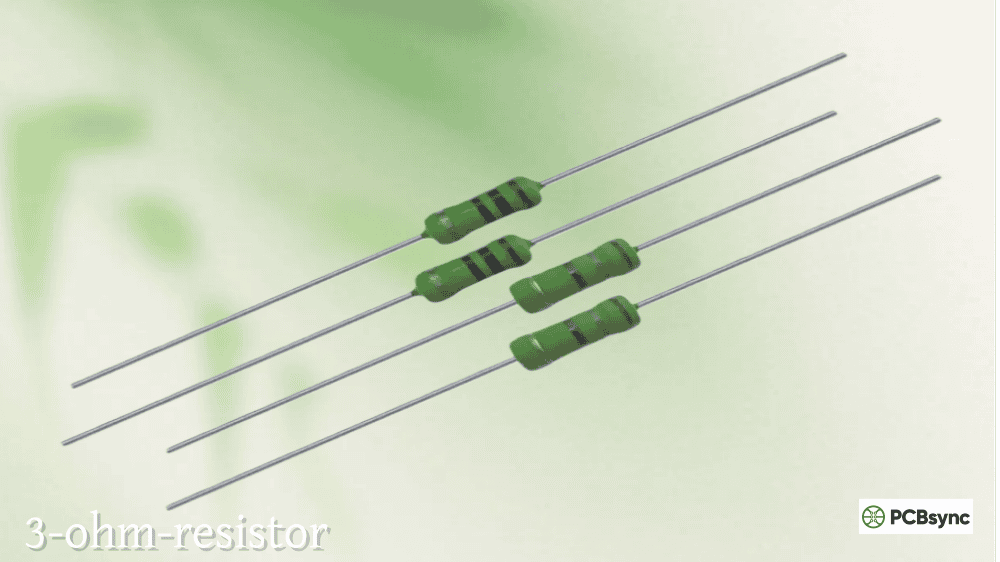
Carbon Film Resistors: The workhorse of general-purpose electronics. Carbon film 680 ohm resistors are inexpensive, widely available, and work perfectly for non-critical applications like LED limiting or pull-up/pull-down networks. Typical tolerance is ±5%, with power ratings from 1/8W to 2W.
Metal Film Resistors: When you need precision and stability, metal film is the answer. These offer tighter tolerances (down to ±0.1%), lower noise characteristics, and better temperature stability (typically 50-100 ppm/°C). Choose metal film for amplifier circuits, precision dividers, and measurement applications.
Wirewound Resistors: For high-power applications, wirewound 680 ohm resistors can handle 5W, 10W, or even higher dissipation. They’re excellent for power supplies and load testing but watch out for inductance in high-frequency circuits.
Surface Mount (SMD) Resistors
Modern PCB designs predominantly use surface mount 680 ohm resistors. Package size determines power handling:
Package Code
Dimensions (mm)
Power Rating
Typical Use
0201
0.6 × 0.3
1/20W (0.05W)
Ultra-compact designs
0402
1.0 × 0.5
1/16W (0.063W)
Mobile devices
0603
1.6 × 0.8
1/10W (0.1W)
General purpose
0805
2.0 × 1.25
1/8W (0.125W)
General purpose
1206
3.2 × 1.6
1/4W (0.25W)
Higher power
2010
5.0 × 2.5
1/2W (0.5W)
Power circuits
2512
6.4 × 3.2
1W
High power SMD
Thick Film SMD: The most common type for general applications. Cost-effective with tolerances from ±1% to ±5%.
Thin Film SMD: Premium choice for precision work. Offers tighter tolerances (±0.1%), better TCR (25 ppm/°C), and lower noise.
Practical Applications of 680 Ohm Resistors
The 680 ohm value appears constantly across different circuit types. Here are the applications where I use it most frequently:
LED Current Limiting
This is probably the most common use case. A 680 ohm resistor protects LEDs from excessive current while allowing adequate brightness.
Example calculation for a 5V supply with a red LED (2V forward voltage, 20mA desired):
R = (V_supply – V_forward) / I = (5V – 2V) / 0.020A = 150Ω
So 680 ohms gives more conservative current: I = 3V / 680Ω = 4.4mA
This lower current extends LED life and reduces power consumption while still providing visible illumination. For indicator LEDs where maximum brightness isn’t critical, 680 ohms is an excellent choice with 5V logic.
12V LED Circuit Example:
With a 12V supply and the same 2V red LED: I = (12V – 2V) / 680Ω = 14.7mA
This is close to the typical 20mA rating, making 680 ohms ideal for 12V LED applications.
Voltage Divider Circuits
Two 680 ohm resistors create a perfect 50% voltage divider. More commonly, you’ll pair 680Ω with other E12 values to achieve specific division ratios:
R1
R2
Output Ratio (R2/(R1+R2))
Application
680Ω
680Ω
0.500 (50%)
Half voltage reference
680Ω
1kΩ
0.595 (59.5%)
ADC input scaling
330Ω
680Ω
0.673 (67.3%)
Signal level shifting
680Ω
330Ω
0.327 (32.7%)
Voltage reduction
Audio Circuits
In audio applications, the 680 ohm resistor serves multiple purposes:
Input/Output Coupling: Provides appropriate loading for audio sources and destinations.
Feedback Networks: Sets gain in op-amp stages when paired with feedback capacitors.
Transistor Biasing: Establishes operating points for discrete amplifier stages.
Speaker Protection: Limits current in small speaker circuits to prevent damage.
Transistor Biasing and Base Resistors
When driving transistors from microcontroller outputs or other logic signals, 680 ohms provides reasonable base current limiting while ensuring reliable switching.
Pull-Up and Pull-Down Networks
While 4.7kΩ and 10kΩ are more common for I2C and general pull-ups, 680 ohms works well for faster rise times or when driving higher capacitive loads.
This is where many hobbyists and even some engineers get into trouble. A resistor that’s undersized for power will overheat, drift in value, and eventually fail.
Power Rating Selection Guide
Calculate power using P = V²/R or P = I²R:
Example: A 680 ohm resistor with 10V across it: P = (10V)² / 680Ω = 100 / 680 = 0.147W
A 1/4W (0.25W) resistor technically handles this, but operates at 59% of its rating. I always recommend 50% derating for reliability, so I’d specify a 1/2W resistor here.
Voltage Across Resistor
Current
Power Dissipated
Minimum Rating (with 50% derating)
3.3V
4.85mA
16mW
1/8W (125mW)
5V
7.35mA
37mW
1/8W (125mW)
9V
13.2mA
119mW
1/4W (250mW)
12V
17.6mA
212mW
1/2W (500mW)
24V
35.3mA
847mW
2W
Tolerance and Temperature Considerations
Understanding Tolerance Ranges
For a 680 ohm resistor with ±5% tolerance, the actual value can range from 646Ω to 714Ω:
Tolerance
Minimum Value
Maximum Value
±1%
673.2Ω
686.8Ω
±2%
666.4Ω
693.6Ω
±5%
646Ω
714Ω
±10%
612Ω
748Ω
Temperature Coefficient Impact
A 100 ppm/°C resistor operating 50°C above room temperature:
Resistance change = 680 × 100 × 50 × 10⁻⁶ = 3.4Ω
This represents a 0.5% shift, which matters in precision applications but is negligible for LED current limiting or general biasing.
Creating 680 Ohms from Other Values
Sometimes you don’t have a 680 ohm resistor handy. Here’s how to create the equivalent value:
Series Combinations (R_total = R1 + R2)
330Ω + 330Ω = 660Ω (close approximation)
470Ω + 220Ω = 690Ω (close approximation)
560Ω + 120Ω = 680Ω (exact)
Parallel Combinations (1/R_total = 1/R1 + 1/R2)
1kΩ || 2.2kΩ = 687.5Ω (close approximation)
1.5kΩ || 1.2kΩ ≈ 667Ω (close approximation)
Useful Resources and Databases
Here are the tools I use regularly when working with resistors:
IEC 60062: International standard for resistor color codes
IEC 60063: E-series preferred values standard
Frequently Asked Questions
What is the color code for a 680 ohm resistor?
A 4-band 680 ohm resistor has the color code Blue-Gray-Brown-Gold (for ±5% tolerance). Blue represents 6, Gray represents 8, Brown is the ×10 multiplier, and Gold indicates ±5% tolerance. For a 5-band precision resistor with ±1% tolerance, the code is Blue-Gray-Black-Black-Brown.
Can I use a 680 ohm resistor for LED circuits?
Yes, a 680 ohm resistor is commonly used for LED current limiting. With a 12V supply and a typical red LED (2V forward voltage), you’ll get approximately 15mA of current, which is within the safe operating range for most LEDs. For 5V circuits, the current will be around 4-5mA, which provides visible illumination while extending LED lifespan.
Is 680 ohms a standard resistor value?
Yes, 680 ohms is a standard value in the E6, E12, and E24 series. It’s one of the most commonly stocked resistor values worldwide. The base value of 6.8 (×100 = 680) appears in all major E-series from E6 through E192, making it available in tolerance ranges from ±20% down to ±0.1%.
What power rating do I need for a 680 ohm resistor?
Calculate power using P = V²/R or P = I²R, then select a resistor rated at 2× your calculated value. For a 5V application, power is approximately 37mW, so a 1/8W resistor works fine. For 12V applications with about 212mW dissipation, use a 1/2W resistor. Always verify calculations and add safety margin for continuous operation.
What’s the difference between carbon film and metal film 680 ohm resistors?
Carbon film resistors are less expensive, have wider tolerances (typically ±5%), and work well for general-purpose applications like LED limiting and pull-up networks. Metal film resistors offer tighter tolerances (±1% or better), lower noise, and better temperature stability (lower TCR), making them ideal for precision circuits, audio applications, and measurement equipment. For most hobby projects, carbon film is perfectly adequate.
Final Thoughts
The 680 ohm resistor deserves its place as a standard bench component. Its E12 membership guarantees universal availability, and its mid-range value makes it useful across countless applications from simple LED indicators to precision audio circuits.
When selecting your resistors, always consider the application requirements first. For basic current limiting and digital logic pull-ups, standard carbon film works great and saves money. For precision applications, invest in metal film resistors with appropriate tolerance and TCR specifications. And always, always verify your power calculations before finalizing a design.
Keep a healthy stock of 680 ohm resistors in both 1/4W through-hole and 0603/0805 SMD packages. You’ll reach for them more often than you expect.
Inquire: Call 0086-755-23203480, or reach out via the form below/your sales contact to discuss our design, manufacturing, and assembly capabilities.
Quote: Email your PCB files to Sales@pcbsync.com (Preferred for large files) or submit online. We will contact you promptly. Please ensure your email is correct.
Notes: For PCB fabrication, we require PCB design file in Gerber RS-274X format (most preferred), *.PCB/DDB (Protel, inform your program version) format or *.BRD (Eagle) format. For PCB assembly, we require PCB design file in above mentioned format, drilling file and BOM. Click to download BOM template To avoid file missing, please include all files into one folder and compress it into .zip or .rar format.