Inquire: Call 0086-755-23203480, or reach out via the form below/your sales contact to discuss our design, manufacturing, and assembly capabilities.
Quote: Email your PCB files to Sales@pcbsync.com (Preferred for large files) or submit online. We will contact you promptly. Please ensure your email is correct.
Notes: For PCB fabrication, we require PCB design file in Gerber RS-274X format (most preferred), *.PCB/DDB (Protel, inform your program version) format or *.BRD (Eagle) format. For PCB assembly, we require PCB design file in above mentioned format, drilling file and BOM. Click to download BOM template To avoid file missing, please include all files into one folder and compress it into .zip or .rar format.
When I first worked on a 48 layer PCB project for a telecommunications backplane, I remember thinking how far we’ve come from simple double-sided boards. A 48 layer PCB represents the pinnacle of printed circuit board technology, combining extreme complexity with precision engineering to power the most demanding electronic systems on the planet. Whether you’re designing for aerospace, supercomputers, or advanced medical equipment, understanding how these boards work can mean the difference between project success and costly failure.
In this comprehensive guide, I’ll walk you through everything you need to know about 48 layer PCBs, from fundamental concepts to advanced manufacturing processes, drawing on years of hands-on experience in high-layer-count board design.
A 48 layer PCB is a printed circuit board containing 48 individual copper layers, separated by insulating dielectric materials, all laminated together into a single, cohesive structure. These boards typically measure around 8-10mm in thickness after lamination, depending on the specific stackup configuration and materials used.
Unlike standard 4-layer or 6-layer boards that most engineers encounter daily, a 48 layer PCB falls into the “high layer count” (HLC) category. These boards incorporate power planes, ground planes, and signal layers arranged in carefully planned configurations to achieve optimal electrical performance.
Core Components of a 48 Layer PCB
Component
Function
Typical Specification
Copper Layers
Signal routing, power distribution, ground planes
0.5oz to 2oz thickness
Prepreg (PP)
Bonding material between layers
FR4, low-loss materials
Core Material
Structural base with copper on both sides
FR4, Rogers, Polyimide
Solder Mask
Protective coating on outer layers
Green, Black, White
Silkscreen
Component markings and identifiers
White, Yellow
Surface Finish
Protects exposed copper, aids soldering
ENIG, OSP, HASL
The complexity of a 48 layer PCB comes not just from the layer count itself, but from the intricate interconnections between layers. These boards utilize blind vias, buried vias, and microvias to create electrical pathways without consuming valuable routing space on outer layers.
Why Choose a 48 Layer PCB?
You might wonder: why would anyone need 48 layers when many complex designs work fine with 8 or 12? The answer lies in the specific demands of ultra-high-density applications where every square millimeter matters.
High-Density Interconnect Requirements
Modern Ball Grid Array (BGA) packages with 2000+ pins require escape routing that simply cannot be accomplished on lower layer counts. When you’re dealing with 0.4mm pitch BGAs or advanced FPGA packages, the math doesn’t lie. You need multiple routing layers just to fan out from a single component, let alone route signals across the board.
Signal Integrity at High Speeds
At data rates exceeding 25 Gbps, signal integrity becomes paramount. A 48 layer PCB allows designers to sandwich high-speed signal traces between reference planes, creating controlled impedance stripline configurations. This arrangement minimizes crosstalk, reduces electromagnetic interference (EMI), and ensures clean signal transmission.
Power Distribution Needs
Large server processors and FPGAs can draw hundreds of amperes. Distributing this power efficiently requires multiple dedicated power planes with low impedance paths. A 48 layer stackup provides the copper real estate needed for robust power distribution networks (PDN) without compromising signal routing.
48 Layer PCB Stackup Design
The stackup is arguably the most critical aspect of any 48 layer PCB design. Get it wrong, and no amount of clever routing will save your project.
Symmetric vs. Asymmetric Stackups
Most 48 layer PCBs use symmetric stackups, meaning the layer arrangement mirrors itself from top to bottom around the board’s center. This symmetry is crucial for preventing warpage during the lamination process and thermal cycling in operation.
Stackup Type
Advantages
Best For
Symmetric
Prevents warpage, predictable behavior
Most applications
Asymmetric
Can optimize specific layer pairs
Specialized RF sections
Hybrid
Combines different materials by region
Mixed-signal designs
Signal and Reference Layer Pairing
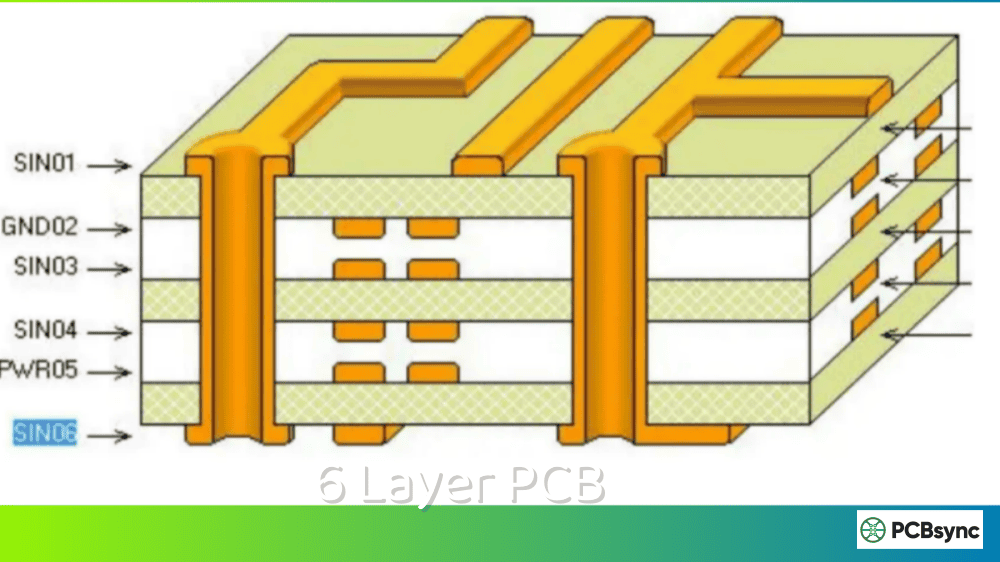
A fundamental rule in high-layer-count design: every signal layer needs an adjacent reference plane. In a 48 layer board, this typically means alternating between signal and plane layers throughout the stackup. A common configuration places signal layers between ground planes, creating the ideal stripline environment for high-speed signals.
Material Selection for 48 Layer PCBs
Standard FR4 works for many 48 layer applications, but high-performance designs often require specialty materials.
The choice between these materials impacts not only electrical performance but also manufacturing complexity and cost. Many 48 layer PCBs use hybrid stackups, combining low-loss materials for critical high-speed layers with standard FR4 for power planes where losses matter less.
48 Layer PCB Manufacturing Process
Manufacturing a 48 layer PCB is among the most challenging tasks in the PCB industry. The process requires precision equipment, extensive quality controls, and deep expertise in PCB manufacturing.
Inner Layer Fabrication
The process begins with creating individual inner layer pairs on copper-clad laminate. Each layer undergoes:
Photoresist application and imaging
Pattern development and etching
Automated Optical Inspection (AOI)
Oxide treatment for bonding
For a 48 layer board, this means processing 24 inner layer pairs before lamination even begins.
Sequential Lamination
Unlike simpler boards that laminate all layers in a single press cycle, 48 layer PCBs require sequential lamination. This multi-stage process bonds layers in groups, allowing for buried and blind via creation between lamination cycles.
A typical 48 layer board might follow this sequence:
First lamination: Core layers 22-27 (center of board)
Drill and plate buried vias
Second lamination: Add layers 16-21 and 28-33
Drill and plate next via set
Continue until all 48 layers are bonded
This sequential approach can require 4-6 lamination cycles, each adding time and potential for defects.
Via Formation and Plating
48 layer PCBs utilize multiple via types:
Via Type
Description
Aspect Ratio
Typical Use
Through-hole
Drills through entire board
10:1 to 15:1
Component mounting, power
Blind
Connects outer to inner layers
1:1 (microvias)
BGA escape routing
Buried
Connects only inner layers
Varies
Internal layer interconnect
Stacked Microvias
Multiple microvias aligned vertically
1:1 per level
High-density interconnect
Achieving reliable copper plating in high aspect ratio vias (where hole depth significantly exceeds diameter) represents one of the greatest challenges in 48 layer PCB fabrication. The industry standard maximum aspect ratio for through-holes is approximately 15:1, meaning a 9.6mm thick board can reliably support vias no smaller than about 0.65mm diameter.
Quality Control and Testing
Every 48 layer PCB undergoes rigorous testing:
Automated Optical Inspection (AOI): Checks inner layers before lamination
X-Ray Inspection: Verifies internal layer alignment and via formation
Electrical Testing: Flying probe or bed-of-nails testing for opens/shorts
Microsection Analysis: Destructive testing of sample coupons
For mission-critical applications like aerospace or medical devices, additional testing may include thermal shock cycling, ionic cleanliness testing, and extended environmental stress screening.
Designing a successful 48 layer PCB requires careful attention to factors that might be negligible on simpler boards.
Signal Integrity Planning
With 48 layers available, the temptation is to route everywhere. But intelligent layer assignment is crucial:
Reserve inner stripline layers for the highest-speed signals
Keep sensitive analog signals isolated from digital noise
Maintain consistent reference planes under critical traces
Plan return current paths from the beginning
Simulation tools like Ansys SIwave or Cadence Sigrity have become essential for 48 layer designs. Pre-layout impedance planning and post-layout signal integrity verification catch problems before expensive prototypes.
Thermal Management
48 layer PCBs present unique thermal challenges. Heat generated by components must dissipate through multiple insulating layers. Design strategies include:
Thermal vias connecting component pads to internal copper planes
Dedicated thermal layers with maximized copper coverage
Strategic component placement to distribute heat loads
Back-drilling of via stubs that would otherwise trap heat
Design for Manufacturing (DFM)
Working closely with your fabricator is essential for 48 layer designs. Key DFM considerations include:
Parameter
Typical Capability
Advanced Capability
Minimum trace width
4 mil (0.1mm)
3 mil (0.075mm)
Minimum spacing
4 mil (0.1mm)
3 mil (0.075mm)
Microvia diameter
4 mil (0.1mm)
3 mil (0.075mm)
Registration tolerance
±3 mil
±2 mil
Impedance tolerance
±10%
±5%
As a Multilayer PCB expert, I always recommend early engagement with your manufacturing partner. Their input on stackup optimization and process capabilities can save weeks of redesign later.
Applications of 48 Layer PCBs
48 layer PCBs find their home in applications where no other solution will work. These boards represent significant investments, so they’re reserved for systems where performance requirements justify the complexity and cost.
Telecommunications and Data Centers
Server backplanes and high-speed networking equipment represent the largest market for 48 layer PCBs. Modern hyperscale data centers process exabytes of data daily, requiring network switches and routers capable of handling massive throughput. These boards must handle:
Multiple 100+ Gbps data channels with PAM4 signaling
Thousands of high-pin-count connectors for blade server interfaces
Extreme power delivery requirements exceeding 1000 watts per board
24/7 reliability demands with zero tolerance for downtime
The complexity of these applications often pushes beyond 48 layers, with some backplane designs reaching 60 or more layers to accommodate all routing requirements.
Aerospace and Defense
Avionics systems, satellite communications, and radar equipment rely on 48 layer technology for mission-critical operations. The aerospace industry demands the highest reliability standards, with failure simply not an option. These applications require:
Compact form factors in space-constrained aircraft and satellite platforms
Radiation-hardened designs with redundant routing paths
Extreme temperature performance ranging from -55°C to +125°C
Superior vibration and shock resistance for harsh operating environments
Compliance with MIL-PRF-31032 and similar military specifications
Medical Equipment
Advanced medical imaging systems including MRI, CT scanners, and PET machines use 48 layer PCBs for their sophisticated electronic subsystems. Additionally, life-critical monitoring equipment and surgical robotics systems demand the precision and reliability these boards provide. Key requirements include:
Ultra-low-noise analog signal processing for accurate diagnostics
High-speed data acquisition systems with minimal latency
Compact portable diagnostic devices for point-of-care applications
Full regulatory compliance with FDA and IPC Class 3 reliability standards
Biocompatibility considerations for implantable device interfaces
High-Performance Computing
Supercomputers and AI accelerator systems push the boundaries of what 48 layer PCBs can achieve:
Multiple large FPGA/ASIC packages per board
Memory interfaces running at extreme speeds
Power delivery for 500+ watt processors
Thermal management in dense server environments
Cost Factors for 48 Layer PCBs
Let me be direct: 48 layer PCBs are expensive. Understanding the cost drivers helps optimize your design and budget.
Prototype quantities (1-10 boards) for 48 layer PCBs can easily exceed $1000-5000 per board depending on size and complexity. Production volumes see significant per-unit cost reductions, but the base cost remains high due to material consumption and process complexity.
Design Software for 48 Layer PCBs
Professional-grade EDA tools are mandatory for 48 layer designs. Consumer-level software simply cannot handle the complexity.
Recommended Design Tools
Tool
Strength
Best For
Cadence Allegro
Signal integrity, constraint management
Enterprise teams
Altium Designer
Ease of use, 3D visualization
Mid-size projects
Mentor Xpedition
Large design teams, variant management
Complex programs
Zuken CR-8000
Japanese market, rigid-flex
Specific industries
All these tools support advanced features essential for 48 layer design: constraint-driven routing, impedance planning, automated via optimization, and comprehensive DRC/DFM checking.
Future Trends in High Layer Count PCBs
The PCB industry continues pushing boundaries. Emerging trends affecting 48 layer and higher designs include:
Ultra HDI Technology
Trace widths below 25 microns (1 mil) enable even higher density, potentially reducing layer counts for equivalent functionality.
Embedded Components
Resistors, capacitors, and even active components embedded within PCB layers can reduce external component count and improve signal integrity.
Advanced Materials
New low-loss materials with improved thermal performance enable higher data rates without increasing layer count.
3D Packaging Integration
Through-silicon vias (TSVs) and advanced packaging blur the line between PCB and IC substrate, creating new design possibilities.
Frequently Asked Questions About 48 Layer PCBs
What is the typical lead time for a 48 layer PCB prototype?
Expect 4-8 weeks for prototype quantities of 48 layer PCBs. The sequential lamination process, multiple drilling operations, and extensive testing all contribute to extended lead times. Rush services exist but come at significant premium costs, often 50-100% above standard pricing.
How thick is a 48 layer PCB?
A typical 48 layer PCB measures between 8mm and 10mm in total thickness, depending on the specific stackup design. The thickness is determined by copper weight on each layer, prepreg and core thicknesses, and the number of lamination cycles required.
Can any PCB manufacturer produce 48 layer boards?
No. 48 layer PCB manufacturing requires specialized equipment including precision lamination presses, advanced drilling capabilities, and sophisticated inspection systems. Only a small percentage of PCB manufacturers worldwide have the capability and certification for 48+ layer production. Always verify your supplier’s actual high-layer-count experience and certifications before committing.
What is the minimum order quantity for 48 layer PCBs?
Most manufacturers accept prototype quantities as low as 1-5 pieces, though pricing per board is significantly higher than production quantities. For production, minimum orders typically start at 50-100 pieces, with best pricing achieved at quantities of 500+ boards.
How do I choose between 32, 40, or 48 layers for my design?
Start with your actual routing requirements: BGA escape routing needs, high-speed signal count, and power distribution demands. Use your EDA tool’s layer planning features to estimate minimum layer count. Add layers for design margin (typically 10-20% spare routing capacity) but avoid over-specifying. Each additional layer adds cost and manufacturing complexity. Consult with your fabricator early; they can often suggest stackup optimizations that reduce layer count without compromising performance.
What certifications should I look for in a 48 layer PCB manufacturer?
For mission-critical applications, look for manufacturers with ISO 9001:2015 quality management certification as a baseline. Aerospace projects require AS9100D certification, while automotive applications need IATF 16949 compliance. Medical device PCBs should come from ISO 13485 certified facilities. Additionally, verify IPC Class 3 capability, which ensures the highest reliability standards for high-performance electronics. UL listing and RoHS compliance are standard requirements for most applications.
Can I repair or rework a 48 layer PCB?
Rework on 48 layer PCBs is extremely challenging and often not cost-effective. The high layer count means internal defects are impossible to access, and the thermal mass of thick boards makes component removal difficult without damaging adjacent parts. For prototype stages, build extra boards to account for potential assembly defects. In production, focus on process controls to minimize defects rather than relying on rework capability. When rework is absolutely necessary, specialized equipment and highly skilled technicians are essential.
Useful Resources and References
For engineers working on 48 layer PCB designs, these resources provide valuable additional information:
Cadence Allegro: Enterprise-level design platform with integrated signal integrity
Saturn PCB Design Toolkit: Free impedance and stackup calculator
Technical Communities:
Signal Integrity Network: Industry forum for high-speed design discussions
PCB Design subreddit: Community support for PCB designers
Altium Community Forum: Design technique discussions and tutorials
Conclusion
A 48 layer PCB represents the convergence of advanced materials, precision manufacturing, and sophisticated design techniques. While the complexity and cost put these boards beyond typical applications, they remain essential for pushing the boundaries of electronic system performance in telecommunications, aerospace, medical, and high-performance computing applications.
Success with 48 layer PCBs requires understanding not just the technology, but the entire ecosystem of design, fabrication, and testing. Early collaboration with experienced manufacturers, investment in professional design tools, and thorough simulation and verification practices separate successful projects from expensive lessons.
The decision to use a 48 layer PCB should never be taken lightly. Before committing to this level of complexity, exhaust all options for reducing layer count through better component selection, HDI technology, or design optimization. When 48 layers truly are necessary, however, embrace the challenge with proper preparation and expert support.
Whether you’re designing your first high-layer-count board or your hundredth, the fundamentals remain constant: plan carefully, simulate thoroughly, and never underestimate the importance of manufacturing partnership. The rewards, measured in performance, reliability, and system capability, make the effort worthwhile. As electronic systems continue demanding more capability in smaller packages, the 48 layer PCB will remain an essential tool in the engineer’s arsenal for years to come.
Inquire: Call 0086-755-23203480, or reach out via the form below/your sales contact to discuss our design, manufacturing, and assembly capabilities.
Quote: Email your PCB files to Sales@pcbsync.com (Preferred for large files) or submit online. We will contact you promptly. Please ensure your email is correct.
Notes: For PCB fabrication, we require PCB design file in Gerber RS-274X format (most preferred), *.PCB/DDB (Protel, inform your program version) format or *.BRD (Eagle) format. For PCB assembly, we require PCB design file in above mentioned format, drilling file and BOM. Click to download BOM template To avoid file missing, please include all files into one folder and compress it into .zip or .rar format.