Inquire: Call 0086-755-23203480, or reach out via the form below/your sales contact to discuss our design, manufacturing, and assembly capabilities.
Quote: Email your PCB files to Sales@pcbsync.com (Preferred for large files) or submit online. We will contact you promptly. Please ensure your email is correct.
Notes: For PCB fabrication, we require PCB design file in Gerber RS-274X format (most preferred), *.PCB/DDB (Protel, inform your program version) format or *.BRD (Eagle) format. For PCB assembly, we require PCB design file in above mentioned format, drilling file and BOM. Click to download BOM template To avoid file missing, please include all files into one folder and compress it into .zip or .rar format.
470 Ohm Resistor: Color Code, Applications & Selection Guide
The 470 ohm resistor holds a special place in my parts collection. It’s one of those values that keeps showing up in designs, particularly when working with 9V and 12V circuits. While the 330 ohm gets all the attention in 5V Arduino projects, the 470 ohm really shines when you need to drive LEDs from higher voltage sources without cooking them.
I’ve used hundreds of these over the years in everything from indicator panels to audio circuits. Understanding how to identify and apply the 470 ohm value correctly will make your circuit designs cleaner and more reliable.
A 470 ohm resistor provides exactly 470 ohms of electrical resistance. This value sits comfortably in the E12 standard series, making it universally available and inexpensive. When current flows through this resistor, it opposes that flow proportionally, following Ohm’s Law.
In practical terms, connecting a 470 ohm resistor to a 9V supply limits current to roughly 19 milliamps (ignoring any load). That’s right in the sweet spot for driving standard indicator LEDs at full brightness without exceeding their ratings.
Key Specifications of 470 Ohm Resistors
Parameter
Typical Value
Notes
Resistance
470 Ω
E12/E24 standard value
Common Tolerances
±5%, ±1%, ±10%
Gold, Brown, or Silver band
Power Ratings
1/8W, 1/4W, 1/2W, 1W
1/4W most common for through-hole
Temperature Coefficient
100-250 ppm/K
Depends on construction type
Maximum Voltage
150-500V
Varies by package and rating
470 Ohm Resistor Color Code
The color bands on a 470 ohm resistor create a distinctive yellow-violet-brown pattern that becomes easy to spot once you’ve worked with a few. The yellow starting band sets it apart from lower values in the same series.
4-Band 470 Ohm Resistor Color Code
The standard 4-band configuration you’ll encounter most often:
Band Position
Color
Value
Meaning
1st Band
Yellow
4
First significant digit
2nd Band
Violet
7
Second significant digit
3rd Band
Brown
×10
Multiplier
4th Band
Gold
±5%
Tolerance
Reading it: Yellow-Violet-Brown-Gold gives you 47 × 10 = 470Ω with ±5% tolerance.
With that gold tolerance band, your actual resistance falls between 446.5Ω and 493.5Ω. For LED current limiting and most general applications, this range works perfectly.
5-Band 470 Ohm Resistor Color Code
When you need tighter tolerance for precision work:
Band Position
Color
Value
Meaning
1st Band
Yellow
4
First significant digit
2nd Band
Violet
7
Second significant digit
3rd Band
Black
0
Third significant digit
4th Band
Black
×1
Multiplier
5th Band
Brown
±1%
Tolerance
The 5-band code Yellow-Violet-Black-Black-Brown represents 470 × 1 = 470Ω with ±1% tolerance.
6-Band 470 Ohm Resistor Color Code
For temperature-sensitive applications requiring stability:
Band Position
Color
Value
Meaning
1st Band
Yellow
4
First significant digit
2nd Band
Violet
7
Second significant digit
3rd Band
Black
0
Third significant digit
4th Band
Black
×1
Multiplier
5th Band
Brown
±1%
Tolerance
6th Band
Brown
100 ppm/K
Temperature coefficient
The sixth band tells you the resistance drift per degree Celsius, critical for precision analog circuits.
Resistor Color Code Reference Chart
Color
Digit
Multiplier
Tolerance
Black
0
×1
–
Brown
1
×10
±1%
Red
2
×100
±2%
Orange
3
×1,000
–
Yellow
4
×10,000
–
Green
5
×100,000
±0.5%
Blue
6
×1,000,000
±0.25%
Violet
7
–
±0.1%
Gray
8
–
±0.05%
White
9
–
–
Gold
–
×0.1
±5%
Silver
–
×0.01
±10%
SMD 470 Ohm Resistor Markings
Surface mount 470 ohm resistors use numerical codes. Here’s where it gets a bit tricky, so pay attention.
3-Digit SMD Code
A 470 ohm resistor in 3-digit format is marked 471.
Breaking it down:
First two digits (47) = significant figures
Third digit (1) = number of zeros to add = one zero
Result: 47 + one zero = 470Ω
Important: Don’t confuse 470 marked on an SMD with 470Ω. The code 470 actually means 47Ω (47 with zero additional zeros). This trips up a lot of people.
4-Digit SMD Code
Precision SMD resistors use 4700 for 470 ohms:
First three digits (470) = significant figures
Fourth digit (0) = multiplier = ×1
Result: 470 × 1 = 470Ω
EIA-96 Code
For 1% tolerance SMDs, the EIA-96 system marks 470Ω as 68A:
68 = code for 470 (from the E96 lookup table)
A = multiplier of ×1
SMD Marking System
Code for 470Ω
Typical Tolerance
3-Digit
471
±5%
4-Digit
4700
±1%
EIA-96
68A
±1%
Circuit Applications for 470 Ohm Resistors
The 470 ohm resistor excels in specific voltage ranges where lower values would allow too much current and higher values would dim your LEDs excessively.
LED Current Limiting at 9V and 12V
This is where the 470 ohm truly shines. At 9V with a standard red LED (2V forward voltage):
The calculation: R = (Vsupply – Vforward) / I
For a red LED at 20mA target: R = (9V – 2V) / 0.020A = 350Ω
The nearest standard value above this? 470 ohm. This gives approximately 14.9mA, keeping the LED well within safe operating limits while maintaining good brightness.
Supply Voltage
LED Type
Forward Voltage
Current with 470Ω
5V
Red
2.0V
6.4 mA
5V
Blue/White
3.2V
3.8 mA
9V
Red
2.0V
14.9 mA
9V
Blue/White
3.2V
12.3 mA
12V
Red
2.0V
21.3 mA
12V
Blue/White
3.2V
18.7 mA
Notice how the 470 ohm keeps current under 20mA across most common scenarios. At 12V, you’re right at the edge for red LEDs. Some engineers prefer 560Ω for 12V systems with plenty of margin.
Automotive and 12V Systems
The 470 ohm resistor appears frequently in 12V automotive circuits for LED indicators. Vehicle electrical systems can spike to 14.4V during charging, and the 470 ohm provides enough headroom to handle those peaks without smoking your LEDs.
Audio Circuit Applications
In audio amplifiers and signal conditioning circuits, 470 ohm resistors serve several purposes:
Setting bias points for transistor stages
Input impedance matching
Feedback networks in op-amp circuits
Signal attenuation in headphone amplifiers
The moderate resistance keeps noise manageable while allowing sufficient signal swing.
Voltage Divider Networks
Combine a 470 ohm resistor with other values for specific voltage ratios:
R1
R2
Vout (from 12V input)
470Ω
470Ω
6V
470Ω
1kΩ
8.16V
470Ω
2.2kΩ
9.89V
1kΩ
470Ω
3.84V
Transistor Biasing
When driving transistors from higher voltage rails, a 470 ohm base resistor limits current appropriately. With 12V drive:
Ibase = (12V – 0.7V) / 470Ω = 24mA
That’s solid base drive for saturating transistors handling loads up to about 2.4A (assuming hFE of 100).
Optocoupler Input Circuits
The input LED of optocouplers often runs at 10-20mA. A 470 ohm resistor from a 9V or 12V signal provides appropriate current without overstressing the internal LED.
Signal Conditioning and Filtering
In RC filter circuits, combining a 470 ohm resistor with capacitors creates useful time constants:
Capacitor
Time Constant (τ)
Cutoff Frequency
100nF
47µs
3.39 kHz
1µF
470µs
339 Hz
10µF
4.7ms
33.9 Hz
100µF
47ms
3.39 Hz
Power Rating Considerations
Before specifying a 470 ohm resistor, calculate the power dissipation:
Power formula: P = I² × R or P = V² / R
For a 470 ohm resistor dropping 7V (typical for 9V supply with 2V LED):
P = (7V)² / 470Ω = 104mW
A standard 1/4W (250mW) resistor handles this with comfortable margin.
Voltage Across 470Ω
Power Dissipated
Minimum Rating
3V
19 mW
1/8W fine
5V
53 mW
1/8W fine
7V
104 mW
1/4W fine
10V
213 mW
1/4W marginal
12V
306 mW
1/2W needed
SMD Package Selection for 470 Ohm Resistors
Package
Size (mm)
Typical Power
0201
0.6 × 0.3
1/20W (50mW)
0402
1.0 × 0.5
1/16W (62.5mW)
0603
1.6 × 0.8
1/10W (100mW)
0805
2.0 × 1.25
1/8W (125mW)
1206
3.2 × 1.6
1/4W (250mW)
For 12V LED circuits, I typically use 0805 or 1206 packages with 470 ohm values to ensure adequate power handling.
The most common and economical choice for general applications. Carbon film 470 ohm resistors offer:
Tolerance: typically ±5%
Temperature coefficient: 200-500 ppm/K
Good for hobby projects and non-critical circuits
Metal Film Resistors
Better stability and precision for demanding applications:
Tolerance: ±1% or better available
Temperature coefficient: 50-100 ppm/K
Lower noise than carbon film
Preferred for audio and measurement circuits
Wirewound Resistors
For high-power applications where standard resistors would overheat:
Available in 1W, 2W, 5W and higher ratings
Excellent stability
Used in power supplies and industrial controls
Common Mistakes to Avoid
Confusing 470Ω with 47Ω or 4.7kΩ
These values look similar under poor lighting:
Value
Color Code
Quick Identifier
47Ω
Yellow-Violet-Black
Black multiplier
470Ω
Yellow-Violet-Brown
Brown multiplier
4.7kΩ
Yellow-Violet-Red
Red multiplier
When in doubt, verify with your multimeter before soldering.
SMD Code Confusion
Remember: 470 on an SMD means 47Ω, not 470Ω. The correct code for a 470 ohm SMD resistor is 471. This catches even experienced engineers occasionally.
Underestimating Power at Higher Voltages
At 12V direct supply, a 470 ohm resistor dissipates over 300mW. A 1/4W resistor will overheat in this scenario. Always calculate power dissipation for your specific circuit conditions.
How to Measure a 470 Ohm Resistor
Verifying resistance takes seconds with a digital multimeter:
Set your meter to resistance mode (Ω)
Select a range including 470Ω (usually 2kΩ range or auto-range)
Remove the resistor from any circuit to avoid parallel path errors
Touch probes to each lead
Read the display
A ±5% 470 ohm resistor should measure between 446.5Ω and 493.5Ω. Readings outside this range indicate a damaged or mislabeled component.
470 Ohm vs. Neighboring Resistor Values
Value
Color Code
Best For
330Ω
Orange-Orange-Brown
5V LED circuits
470Ω
Yellow-Violet-Brown
9V-12V LED circuits
560Ω
Green-Blue-Brown
Conservative 12V LED limiting
680Ω
Blue-Gray-Brown
Lower brightness, longer LED life
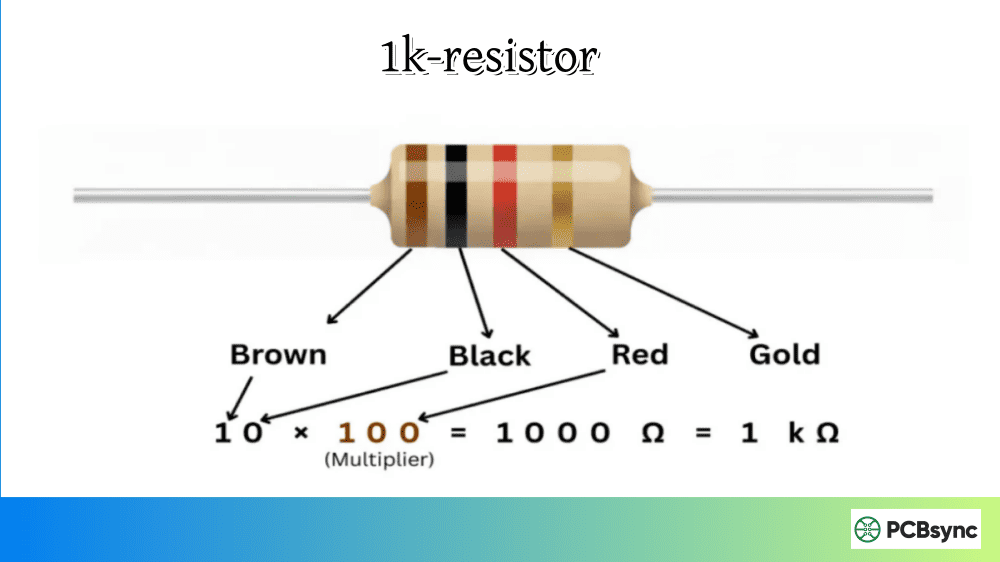
1kΩ
Brown-Black-Red
Pull-ups, general purpose
The 470 ohm occupies that useful range between 5V-optimized values and the higher resistances used for conservative current limiting.
A 4-band 470 ohm resistor has the color code Yellow-Violet-Brown-Gold. Yellow represents 4, Violet represents 7, Brown is a ×10 multiplier, and Gold indicates ±5% tolerance. Multiply 47 by 10 to get 470 ohms. For 5-band precision versions, the code is Yellow-Violet-Black-Black-Brown with ±1% tolerance.
Why is 470 ohm commonly used with 9V batteries?
The 470 ohm value provides ideal current limiting for standard LEDs when powered by 9V sources. With a typical red LED having 2V forward voltage drop, a 470Ω resistor limits current to approximately 14.9mA. This falls safely below the 20mA maximum rating of most indicator LEDs while providing good visible brightness, making 470 ohm the go-to value for 9V LED circuits.
What is the SMD code for a 470 ohm resistor?
For standard tolerance SMD resistors, a 470 ohm value is marked 471 using the 3-digit code (47 with one zero added). For precision 1% resistors using the 4-digit code, look for 4700. Be careful not to confuse 470 on an SMD with 470Ω. The marking 470 actually represents 47Ω (47 with zero additional zeros added).
Can I use 470 ohm instead of 330 ohm for LEDs?
Yes, in most LED circuits you can substitute a 470 ohm resistor for 330Ω. The LED will run slightly dimmer because less current flows. At 5V with a 2V red LED, a 330Ω resistor passes about 9.1mA while a 470 ohm passes about 6.4mA. For 5V circuits where brightness matters, stick with 330Ω. For 9V or 12V circuits, 470 ohm is usually the better choice anyway.
How much power does a 470 ohm resistor dissipate?
Power dissipation depends on voltage and current. Using P = V²/R, a 470 ohm resistor with 5V across it dissipates 53mW. With 7V across it (typical in 9V LED circuits), dissipation reaches 104mW. At 10V, power jumps to 213mW, approaching the limit for 1/4W resistors. Always verify power requirements and select appropriate wattage ratings for your application.
Summary
The 470 ohm resistor earns its keep as the standard choice for 9V and 12V LED circuits. Its Yellow-Violet-Brown color pattern becomes second nature after building a few projects, and the 471 SMD code is worth committing to memory.
For 5V Arduino work, you’ll probably reach for 330Ω instead. But when your power supply jumps to 9V or 12V, the 470 ohm steps in to keep your LEDs running at safe, bright levels without the thermal stress that lower values would cause.
Keep a healthy stock of 470 ohm resistors in various packages. They’re essential components for automotive projects, battery-powered indicators, and any design running from voltages above the standard 5V logic level.
Inquire: Call 0086-755-23203480, or reach out via the form below/your sales contact to discuss our design, manufacturing, and assembly capabilities.
Quote: Email your PCB files to Sales@pcbsync.com (Preferred for large files) or submit online. We will contact you promptly. Please ensure your email is correct.
Notes: For PCB fabrication, we require PCB design file in Gerber RS-274X format (most preferred), *.PCB/DDB (Protel, inform your program version) format or *.BRD (Eagle) format. For PCB assembly, we require PCB design file in above mentioned format, drilling file and BOM. Click to download BOM template To avoid file missing, please include all files into one folder and compress it into .zip or .rar format.