Inquire: Call 0086-755-23203480, or reach out via the form below/your sales contact to discuss our design, manufacturing, and assembly capabilities.
Quote: Email your PCB files to Sales@pcbsync.com (Preferred for large files) or submit online. We will contact you promptly. Please ensure your email is correct.
Notes: For PCB fabrication, we require PCB design file in Gerber RS-274X format (most preferred), *.PCB/DDB (Protel, inform your program version) format or *.BRD (Eagle) format. For PCB assembly, we require PCB design file in above mentioned format, drilling file and BOM. Click to download BOM template To avoid file missing, please include all files into one folder and compress it into .zip or .rar format.
When you’re working on cutting-edge electronics for aerospace systems, medical imaging equipment, or high-performance computing applications, you’ll eventually hit a wall with standard multilayer boards. That’s when a 40 layer PCB becomes not just an option, but a necessity.
I’ve spent years designing complex circuit boards, and I can tell you that moving from a 16-layer board to something with 30 or 40 layers isn’t just about adding more copper. It fundamentally changes how you approach signal routing, power distribution, and thermal management. In this guide, I’ll walk you through everything you need to know about 40 layer PCB technology—from the real-world design challenges to the cost factors that will impact your project budget.
A 40 layer PCB is an advanced multilayer PCB that consists of 40 conductive copper layers separated by insulating dielectric materials (typically FR-4 or high-performance laminates). These layers are bonded together using prepreg material under high temperature and pressure during the lamination process.
Unlike simpler 4-layer or 6-layer boards where you might have two signal layers and two plane layers, a 40 layer PCB gives you the flexibility to dedicate multiple layers specifically for:
High-speed signal routing with controlled impedance
Separate ground planes for different circuit sections
Multiple power planes at various voltage levels
RF shielding and EMI isolation
Thermal dissipation paths
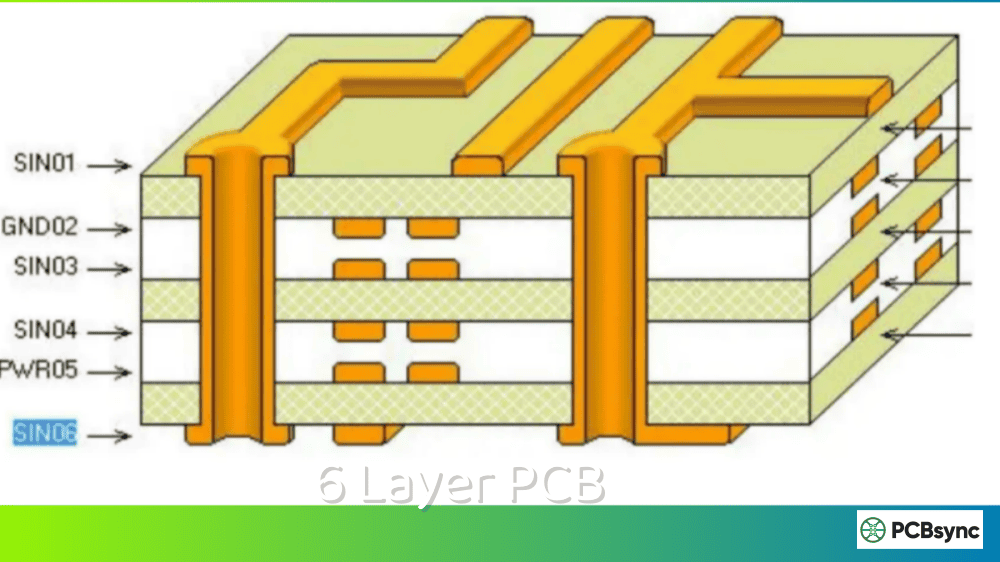
The internal layers are typically arranged in pairs around a central core and bonded using prepreg as the insulating layer. Vias—through-hole, blind, buried, and microvias—provide the electrical connections between these diverse layers.
40 Layer PCB Structure Overview
Component
Function
Typical Specification
Signal Layers
Route high-speed traces
12-20 layers dedicated
Ground Planes
EMI shielding, return paths
8-12 layers
Power Planes
Voltage distribution
6-10 layers
Prepreg
Bonding/insulation
Multiple plies per gap
Core Material
Structural base
FR-4, Polyimide, Rogers
Total Thickness
Physical dimension
3.0mm – 6.5mm
Why Would You Need a 40 Layer PCB?
Here’s the honest truth: most electronic products don’t need anything close to 40 layers. If you’re designing consumer electronics or basic industrial controls, you’re probably fine with 4-8 layers. But there are specific scenarios where high layer counts become essential.
Complex BGA Breakout Requirements
Modern processors and FPGAs often come in Ball Grid Array packages with over 2,000 pins at pitches as tight as 0.4mm. Breaking out signals from these dense packages requires multiple routing layers just for the fan-out alone. You might need 4-6 layers just to escape the BGA footprint before you even start routing to other components.
High-Speed Digital Design
When you’re dealing with DDR4/DDR5 memory interfaces, PCIe Gen 4/5, or 100Gbps+ Ethernet, signal integrity becomes critical. Each high-speed differential pair ideally needs its own reference plane, and you need proper layer separation to manage crosstalk. More layers give you the routing flexibility to maintain consistent impedance and minimize stub lengths.
Mixed-Signal Isolation
In applications combining sensitive analog circuits with noisy digital sections—think medical imaging or precision measurement equipment—you need dedicated ground planes to isolate different circuit domains. A 40 layer PCB allows you to create completely separate analog and digital ground systems with proper isolation.
Aerospace and Defense Applications
Military and aerospace electronics operate in extreme environments and require redundant circuits, extensive shielding, and rigorous reliability standards. The layer count directly supports these requirements. Companies like Advanced Circuits and RayPCB specifically market their 40-layer capabilities for defense and aerospace customers who need to meet MIL-PRF-31032 and AS9100 certifications.
Key Advantages of 40 Layer PCBs
Superior Signal Integrity
With more layers available, you can sandwich every signal layer between ground planes. This approach, called “ground-signal-ground” or “broadside coupling,” provides excellent EMI shielding and reduces crosstalk between adjacent signal traces. The dedicated reference planes create low-impedance return paths essential for high-speed signals.
In practical terms, this means you can route 10Gbps+ signals with clean eye diagrams and meet tight jitter specifications that would be impossible on lower layer count boards.
Compact Form Factor with High Density
A 40 layer PCB can integrate the functionality of multiple separate boards into a single compact design. This reduces:
Overall system weight (critical for aerospace applications)
Connector count and associated reliability issues
Assembly complexity and labor costs
Total system footprint
For size-constrained applications like satellites, medical implants, or handheld military equipment, this density advantage justifies the additional board cost.
Enhanced Power Distribution
Multiple power planes at different voltage levels provide low-impedance power delivery to demanding processors and FPGAs. You can dedicate entire planes to specific voltage rails rather than routing wide traces across shared layers. This results in:
Lower power delivery network (PDN) impedance
Better transient response for high-current loads
Reduced voltage ripple at sensitive components
Improved Thermal Management
While PCBs aren’t primarily thermal conductors, the internal copper planes do conduct heat laterally. In a 40 layer board, you have more copper mass available to spread heat from hotspots. Combined with strategic thermal via placement, this helps manage thermals in high-power designs.
Comparison: 40 Layer PCB vs. Lower Layer Counts
Parameter
4-6 Layer PCB
12-16 Layer PCB
40 Layer PCB
Max Signal Speed
1-5 Gbps
10-25 Gbps
50+ Gbps
BGA Support
Up to 0.8mm pitch
0.5mm pitch
0.4mm pitch
EMI Control
Moderate
Good
Excellent
Design Complexity
Low
Medium
Very High
Relative Cost
1x
3-5x
15-25x
Typical Applications
Consumer, IoT
Telecom, Industrial
Aerospace, Defense, HPC
Design Challenges for 40 Layer PCBs
Designing a 40 layer board isn’t simply scaling up your 8-layer design process. There are fundamental challenges that require specialized expertise and tools.
Stackup Planning Complexity
The stackup—how you arrange signal, ground, and power layers—becomes exponentially more complex with 40 layers. You need to consider:
Symmetry Requirements: The stackup must be symmetric around the center to prevent warping during lamination and thermal cycling. An asymmetric stackup will bow and twist, causing assembly failures and reliability issues.
Layer Pair Assignment: Which signals go on which layers? High-speed differential pairs need dedicated layers with consistent reference planes. You can’t just throw signals on any available layer.
Dielectric Thickness Control: The thickness between layers determines impedance. With 40 layers, you’re working with very thin dielectrics (sometimes under 3 mils), and controlling those thicknesses precisely across production is challenging.
Via Strategy and Interconnect Design
A 40 layer PCB typically requires a sophisticated via strategy including:
Via Type
Description
Typical Use in 40-Layer
Through-hole
Connects all layers
Power, ground connections
Blind Via
Surface to inner layer
BGA breakout
Buried Via
Inner layer to inner layer
Internal signal routing
Microvia
Laser-drilled, 0.1mm
HDI fanout
Stacked Microvia
Multiple microvias aligned
High-density interconnect
Staggered Microvia
Offset microvias
Sequential lamination builds
The aspect ratio (board thickness to hole diameter) becomes critical. A 5mm thick board with 0.2mm vias has a 25:1 aspect ratio—at the edge of what most fabricators can reliably plate. Many 40 layer designs require expensive sequential lamination processes with laser-drilled microvias to achieve the required interconnect density.
Signal Integrity Simulation Requirements
At 40 layers, you can’t rely on rules of thumb for signal integrity. Every high-speed net needs simulation for:
Impedance discontinuities at via transitions
Crosstalk from adjacent signals on same and adjacent layers
Power integrity and simultaneous switching noise
Timing margins for high-speed interfaces
This typically requires tools like Cadence Sigrity, Ansys SIwave, or Keysight ADS—not simple 2D calculators. Budget significant engineering time (and tool licenses) for SI/PI analysis.
Thermal Management Considerations
With 40 layers packed into 4-6mm thickness, heat has limited vertical escape paths. The thermal strategy must be designed in from the start:
Thermal vias under hot components connecting to internal planes
Strategic placement of copper pours for heat spreading
Layer assignment to keep heat-generating circuits near outer layers where convection helps
Coordination with mechanical design for heatsinks and airflow
Manufacturing Registration and Yield
Every additional layer increases the chance of registration errors during lamination. Layer-to-layer misalignment of even a few mils can cause via connection failures or unintended shorts. Fabricators capable of 40-layer production invest heavily in:
High-precision tooling and alignment systems
Advanced lamination presses with uniform pressure distribution
Extensive in-process inspection at each lamination stage
Even with top-tier fabricators, expect lower yields compared to standard boards. This directly impacts cost.
The PCB manufacturing process for a 40 layer board is substantially more complex than standard multilayer production. Here’s what happens:
Inner Layer Processing
Each inner layer pair starts as a copper-clad core. The circuit pattern is imaged using laser direct imaging (LDI) for the precision required at high layer counts. After etching, each layer undergoes automated optical inspection (AOI) to catch defects early—before they’re buried inside the finished board.
Sequential Lamination Build
A 40 layer board cannot be built in a single lamination cycle. Instead, manufacturers use sequential lamination:
Build sub-assemblies of 4-8 layers each
Drill and plate vias in each sub-assembly
Laminate sub-assemblies together with additional prepreg
Repeat until all layers are integrated
Final drilling for through-hole vias
Outer layer processing and surface finish
This sequential approach enables blind and buried vias but dramatically increases production time and cost.
Critical Process Controls
Process Step
Control Parameter
Typical Tolerance
Layer Registration
X/Y alignment
±2 mils (50μm)
Dielectric Thickness
Prepreg flow
±10%
Copper Thickness
Plating uniformity
±0.5 oz
Hole Position
Drill accuracy
±2 mils
Via Plating
Wall coverage
>20μm minimum
Impedance
Controlled traces
±10%
Testing and Inspection
Every 40 layer board undergoes extensive testing:
Electrical testing of all nets (flying probe or fixture)
Cross-sectioning of sample coupons to verify layer registration and via quality
Impedance testing on controlled impedance structures
Microsection analysis for via plating integrity
Cost Factors for 40 Layer PCBs
Let’s talk money. A 40 layer PCB will cost significantly more than standard boards, but understanding the cost drivers helps you optimize your design and budget.
Layer Count Impact
The relationship between layer count and cost isn’t linear—it accelerates at higher counts. Industry data suggests:
Layer Count
Relative Cost Multiplier
2 layers
1.0x (baseline)
4 layers
1.5-2.0x
8 layers
2.5-4.0x
16 layers
5.0-8.0x
32 layers
12-18x
40 layers
15-25x
The jump from 32 to 40 layers adds another 25-40% because you’re pushing manufacturing limits.
Material Selection
Standard FR-4 may work for some 40 layer designs, but many applications require:
High-Tg FR-4 ($15-25/sq ft vs $8-12 for standard)
Low-loss materials like Isola Tachyon or Panasonic Megtron ($40-80/sq ft)
Rogers PTFE for RF sections ($50-150/sq ft)
Polyimide for high-temperature environments ($60-120/sq ft)
Material cost can easily equal or exceed fabrication cost in advanced designs.
Via Technology Premium
Standard mechanical drilling is cheapest. But 40 layer designs typically need:
Via Technology
Cost Premium
Blind/Buried Vias
+30-50%
Microvias (laser)
+50-100%
Via Fill (copper)
+20-40%
Via Fill (epoxy + cap)
+15-25%
Sequential Lamination
+40-80%
Volume Considerations
NRE (non-recurring engineering) costs are substantial for 40 layer boards:
Stackup engineering and impedance modeling
Tooling and test fixture development
First article inspection and qualification
These costs can run $5,000-$25,000 depending on complexity. For prototypes or low volumes (under 50 boards), this NRE dominates the per-board cost. At higher volumes (500+ boards), the NRE amortizes and material/processing costs dominate.
Cost Optimization Strategies
Based on real project experience, here are ways to reduce 40 layer PCB costs:
Right-size your layer count: Do you really need 40 layers, or would 32 work? Each layer you eliminate saves material and processing.
Minimize HDI complexity: Standard vias are cheaper than microvias. Only use laser-drilled features where density absolutely requires them.
Standardize materials: Work with your fabricator to use their standard stackup materials rather than specifying exotic laminates.
Design for panelization: Optimize board dimensions to maximize panel utilization and reduce waste.
Consolidate via types: If you can eliminate buried vias and use only blind vias, you reduce lamination cycles.
Partner with the right fabricator: Not all PCB manufacturers can produce 40 layers. Work with specialists who have the equipment and experience—they’ll actually be cheaper than general shops struggling with your design.
Applications and Industry Use Cases
Aerospace and Defense
Satellite communication systems, radar electronics, and missile guidance systems commonly use 40 layer PCBs. These applications demand:
Extreme reliability (no field service possible in space)
Radiation-hardened designs with redundant circuits
Wide temperature range operation (-55°C to +125°C)
Conformal coating compatibility
Manufacturers like AdvancedPCB and Epec specifically highlight their ITAR registration and MIL-spec certifications for these markets.
Medical Imaging Equipment
CT scanners, MRI systems, and advanced ultrasound equipment require complex signal processing with strict electromagnetic compatibility. The 40 layer boards in these systems support:
High-speed data acquisition from detector arrays
Mixed-signal processing with excellent isolation
Regulatory compliance (FDA, IEC 60601)
High-Performance Computing
GPU boards, AI accelerator cards, and server motherboards increasingly push layer counts toward 40. NVIDIA’s latest GPU boards reportedly use 24+ layers for routing thousands of BGA connections. As memory bandwidth and I/O speeds increase, layer counts follow.
Telecommunications Infrastructure
5G base stations and network switches process enormous data volumes requiring:
Multiple 100Gbps+ SerDes channels
Precise timing distribution
Thermal management for high power dissipation
Selecting a 40 Layer PCB Manufacturer
Not every PCB fabricator can handle 40 layers. Here’s what to look for:
Manufacturer application notes from Isola, Rogers, Panasonic
Frequently Asked Questions About 40 Layer PCBs
What is the maximum layer count possible for PCBs?
While 40 layers represents the practical limit for most commercial applications, specialized manufacturers can produce boards with 50+ layers for specific requirements. Some sources mention capabilities up to 100 layers for extreme cases. However, beyond 40 layers, costs increase dramatically and very few applications justify the expense. Most complex designs find ways to optimize at 40 layers or below.
How long does it take to manufacture a 40 layer PCB?
Expect 4-8 weeks for prototype quantities of 40 layer boards, compared to 1-2 weeks for standard 4-6 layer boards. The sequential lamination process, multiple inspection stages, and specialized testing all add time. For production volumes, lead times may extend to 10-12 weeks depending on material availability and fabricator capacity. Always confirm lead times early in your project planning.
Can any PCB manufacturer produce 40 layer boards?
No. Producing 40 layer PCBs requires specialized equipment including precision lamination presses, laser drilling systems, and advanced inspection capabilities. Many regional PCB shops max out at 16-20 layers. For 40 layer production, you’ll need to work with larger, well-capitalized fabricators who have invested in high-layer-count capabilities. In North America, companies like Advanced Circuits, AdvancedPCB, and TTM Technologies are examples. In Asia, major players include AT&S, Unimicron, and Shennan Circuits.
How does a 40 layer PCB affect my design process?
Designing for 40 layers requires more upfront planning and analysis than simpler boards. You’ll need to invest in signal integrity simulation, work closely with your fabricator on stackup design, and allow more time for design reviews. The CAD tools matter more—you’ll want a robust layer stack manager and constraint-driven routing. Budget 30-50% more engineering time compared to a 16-layer design of similar complexity. Also plan for longer prototype cycles since manufacturing takes more time.
Are there alternatives to 40 layer PCBs for complex designs?
Sometimes yes. Consider these alternatives before committing to 40 layers:
Multiple interconnected boards: Split functionality across several simpler boards connected by high-density connectors
HDI technology: Using microvias and laser drilling can achieve similar routing density in fewer layers (though not always cheaper)
Chip-on-board or embedded components: Reduce interconnect complexity by embedding passives or using advanced packaging
System-in-Package (SiP): Move interconnect complexity into the component package
Each alternative has tradeoffs in cost, schedule, and technical risk. Evaluate them against your specific requirements.
Wrapping Up
A 40 layer PCB represents the pinnacle of conventional printed circuit board technology. When your application demands extreme signal integrity, maximum routing density, or uncompromising reliability, 40 layers provides the foundation for success.
But this technology isn’t for every project. The design complexity, extended timelines, and substantial costs mean you should only go to 40 layers when simpler alternatives won’t meet your requirements. If you do need this capability, partner with experienced fabricators early, invest in proper simulation and analysis, and build realistic schedules that account for the manufacturing realities.
The electronics industry continues pushing toward higher speeds, smaller form factors, and more complex integrations. For the applications demanding the absolute best, 40 layer PCB technology delivers capabilities that simply aren’t achievable any other way.
Inquire: Call 0086-755-23203480, or reach out via the form below/your sales contact to discuss our design, manufacturing, and assembly capabilities.
Quote: Email your PCB files to Sales@pcbsync.com (Preferred for large files) or submit online. We will contact you promptly. Please ensure your email is correct.
Notes: For PCB fabrication, we require PCB design file in Gerber RS-274X format (most preferred), *.PCB/DDB (Protel, inform your program version) format or *.BRD (Eagle) format. For PCB assembly, we require PCB design file in above mentioned format, drilling file and BOM. Click to download BOM template To avoid file missing, please include all files into one folder and compress it into .zip or .rar format.