Inquire: Call 0086-755-23203480, or reach out via the form below/your sales contact to discuss our design, manufacturing, and assembly capabilities.
Quote: Email your PCB files to Sales@pcbsync.com (Preferred for large files) or submit online. We will contact you promptly. Please ensure your email is correct.
Notes: For PCB fabrication, we require PCB design file in Gerber RS-274X format (most preferred), *.PCB/DDB (Protel, inform your program version) format or *.BRD (Eagle) format. For PCB assembly, we require PCB design file in above mentioned format, drilling file and BOM. Click to download BOM template To avoid file missing, please include all files into one folder and compress it into .zip or .rar format.
After spending over a decade designing high-density interconnect boards for aerospace and telecommunications applications, I can tell you that working with a 36 layer PCB presents some of the most demanding engineering challenges in electronics manufacturing. This guide distills years of hands-on experience into practical knowledge that will help you understand when, why, and how to design these complex circuit boards.
What is a 36 Layer PCB?
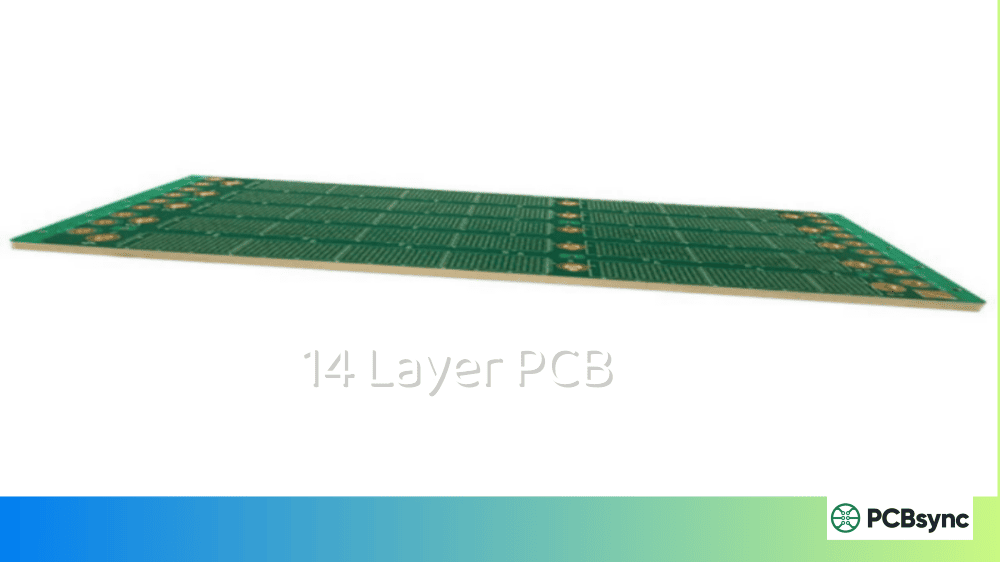
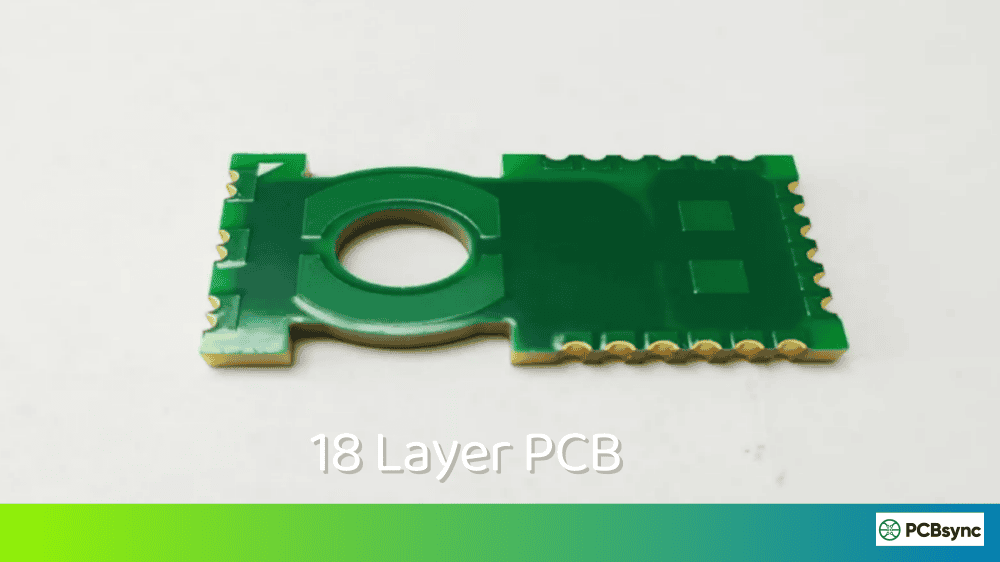
A 36 layer PCB is an ultra-high-density printed circuit board consisting of 36 individual conductive copper layers separated by dielectric materials and bonded together into a single unified structure. These boards represent the pinnacle of multilayer PCB technology, offering exceptional routing density and signal integrity performance for the most demanding electronic applications.
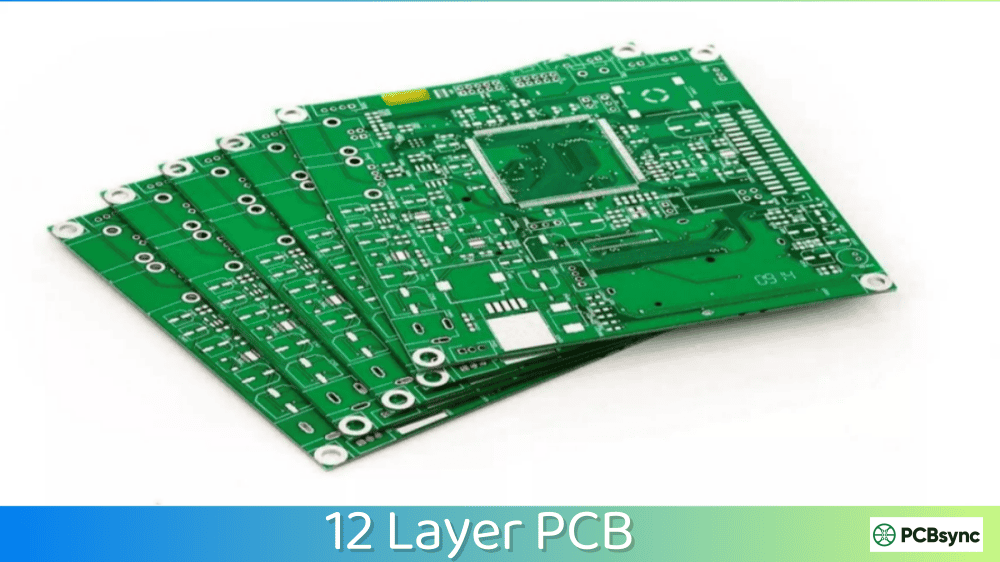
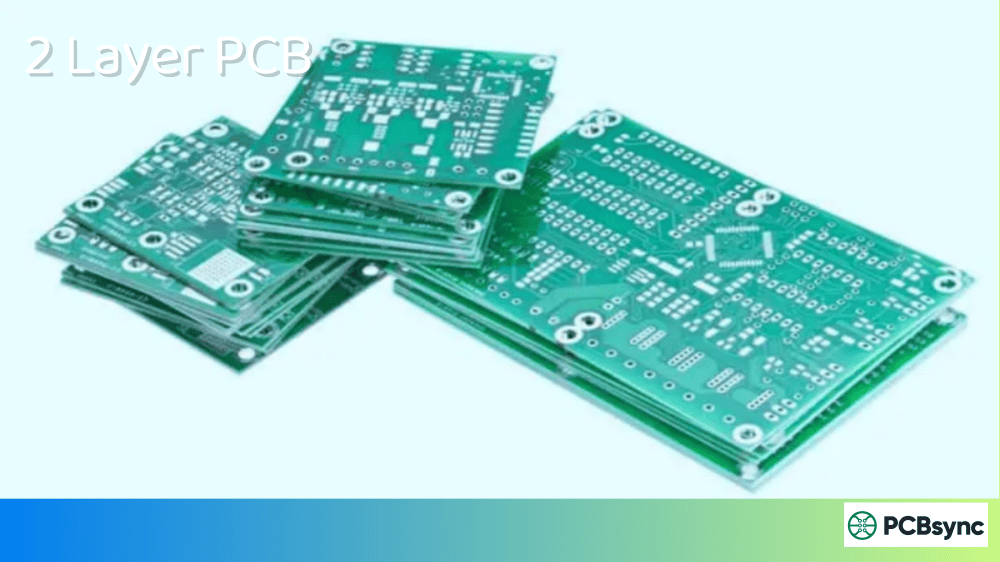
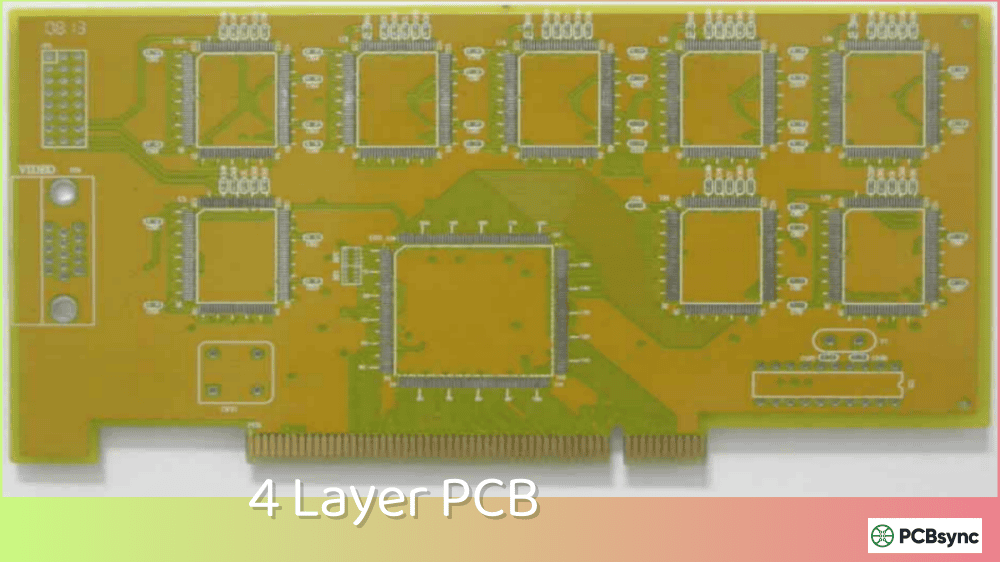
Unlike standard 4-layer or even 12-layer boards that most engineers work with daily, a 36 layer PCB requires meticulous attention to stack-up design, impedance control, thermal management, and manufacturing tolerances. The complexity isn’t just additive—it compounds with each additional layer pair.
The decision to use a 36 layer PCB isn’t made lightly. These boards cost significantly more than their lower-layer counterparts and require extended manufacturing lead times. However, certain applications demand this level of complexity.
High-performance computing systems often require 36 layer PCB designs to route the massive number of signals between modern processors, memory controllers, and high-speed interfaces. Telecommunications equipment handling multi-gigabit data streams needs the controlled impedance environments that properly designed 36 layer boards provide.
Medical imaging equipment, aerospace avionics, and advanced radar systems also frequently specify 36 layer PCB construction to meet their stringent performance and reliability requirements.
Understanding 36 Layer PCB Stack-Up Design
The stack-up configuration represents the foundation of any successful 36 layer PCB design. Getting this wrong creates problems that cannot be fixed later in the design process.
Core Stack-Up Principles
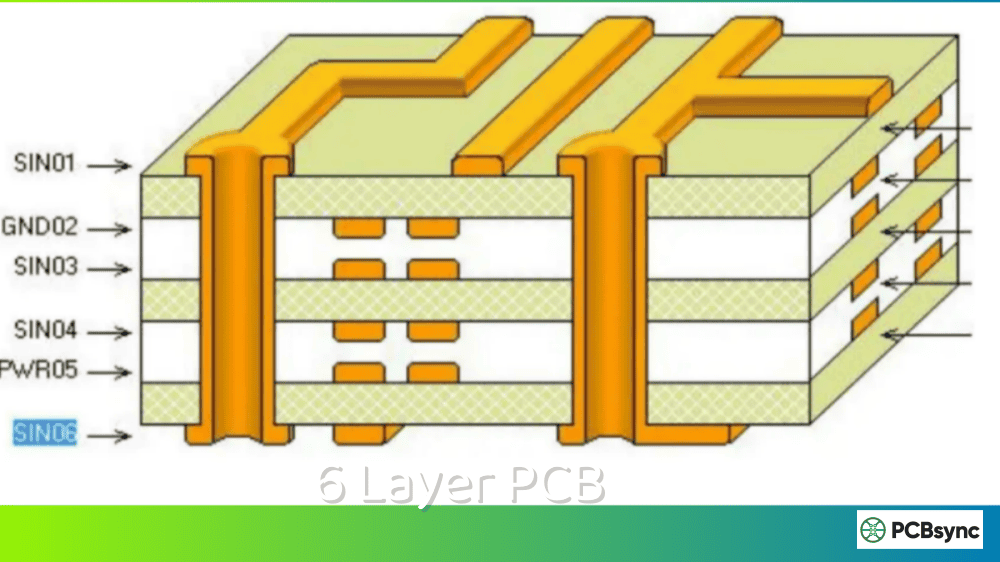
A well-designed 36 layer PCB stack-up follows established principles that balance electrical performance, mechanical stability, and manufacturability. The arrangement of signal, ground, and power planes directly impacts signal integrity, power distribution, and electromagnetic compatibility.
Layer Type
Typical Count in 36L
Primary Function
Signal Layers
18-22
High-speed routing, general interconnect
Ground Planes
8-10
Return paths, shielding, reference
Power Planes
6-8
Power distribution, decoupling
The ideal 36 layer PCB stack-up maintains symmetry around the center of the board. This symmetry prevents warpage during thermal cycling and ensures consistent mechanical properties across the structure.
Signal Layer Placement Strategy
When designing a 36 layer PCB, I always position high-speed signal layers adjacent to solid ground planes. This provides low-inductance return paths and maintains controlled impedance throughout the trace length. The relationship between signal layer and reference plane spacing directly determines characteristic impedance.
For differential pairs running at 10 Gbps and above, the signal layer should be no more than 4 mils from its reference plane. This tight coupling minimizes electromagnetic emissions and improves noise immunity.
Power Distribution Architecture
A 36 layer PCB provides substantial real estate for power plane pairs. Effective designs dedicate multiple plane pairs to different voltage domains, with each pair consisting of a power plane and its adjacent ground plane. This capacitor-like arrangement provides inherent decoupling and reduces the number of discrete components required.
Material Selection for 36 Layer PCB Manufacturing
Material choice profoundly impacts the performance of any 36 layer PCB. Standard FR-4 may work for some applications, but high-frequency designs demand more sophisticated laminates.
Laminate Options Comparison
Material
Dk (Dielectric Constant)
Df (Loss Tangent)
Best Applications
Standard FR-4
4.2-4.5
0.020-0.025
Low-speed digital, cost-sensitive
High-Speed FR-4
4.0-4.3
0.010-0.015
Moderate speed digital
Megtron 6
3.4
0.002
High-speed server, networking
Isola I-Speed
3.6
0.007
Mid-range high-speed
Rogers 4350B
3.48
0.0037
RF, microwave applications
Nelco N4000-13
3.7
0.008
Mixed digital/RF designs
For a 36 layer PCB handling signals above 5 GHz, I strongly recommend low-loss materials like Megtron 6 or equivalent. The cumulative effect of dielectric losses through 36 layers can devastate signal quality with standard FR-4.
Hybrid Stack-Up Considerations
Cost optimization sometimes drives hybrid material approaches where premium low-loss laminates are used only for critical high-speed layers, while standard materials handle power planes and lower-speed signals. This strategy can reduce material costs by 30-40% while maintaining performance where it matters.
Designing a 36 layer PCB demands strict adherence to design rules that ensure manufacturability and electrical performance.
Critical Design Parameters
Parameter
Typical Value
Notes
Minimum trace width
3-4 mils
Layer dependent
Minimum spacing
3-4 mils
Between traces
Via drill diameter
8-10 mils
Mechanical drills
Via pad diameter
14-18 mils
Depends on aspect ratio
Aspect ratio
10:1 to 12:1
Drill depth to diameter
Annular ring
3 mils minimum
Pad to drill tolerance
Copper weight
0.5-1 oz inner, 1 oz outer
Application dependent
Via Structures in 36 Layer PCB Design
The 36 layer PCB introduces via complexity that simpler boards never encounter. Through-hole vias spanning all 36 layers create stubs that degrade high-speed signals. Managing these parasitics requires careful via planning.
Blind vias connect outer layers to inner layers without penetrating the entire board. In a 36 layer PCB, these might span layers 1-6 or 31-36, reducing stub effects on critical nets.
Buried vias connect inner layers to each other without reaching either surface. A 36 layer PCB might use buried vias connecting layers 8-12 for inner routing, keeping these connections isolated from the outer layer structures.
Back-drilled vias remove the unused stub portion of through-hole vias after PCB manufacturing. This technique dramatically improves signal integrity for high-speed interfaces on 36 layer PCB designs.
Impedance Control Requirements
Every controlled impedance net on a 36 layer PCB requires specification of target impedance and tolerance. Common requirements include single-ended traces at 50 ohms and differential pairs at 85-100 ohms, typically with ±10% tolerance.
The manufacturer must model and document the actual achieved impedances through test coupons fabricated alongside your 36 layer PCB. Request these test reports as part of your quality documentation.
Manufacturing Process for 36 Layer PCB
The fabrication of a 36 layer PCB represents advanced PCB manufacturing capability that not all fabricators possess. Understanding the process helps engineers design more manufacturable boards.
Sequential Lamination Process
A 36 layer PCB cannot be manufactured in a single lamination cycle. The process requires sequential lamination, typically in three or more cycles. Each cycle bonds a subset of layers together before the next layer set is added.
The first cycle might laminate a core set of layers 14-23. The second cycle adds layers 8-13 and 24-29. The final cycle completes the outer layers 1-7 and 30-36. This sequential approach maintains registration accuracy that would be impossible with simultaneous lamination of all layers.
Drilling Operations
Drilling a 36 layer PCB typically requires multiple drilling operations with different bit sizes and depths. Laser drilling handles microvias in the outer layers, while mechanical drilling creates the larger through-holes and blind via structures.
The aspect ratio challenge intensifies with board thickness. A 36 layer PCB measuring 180 mils thick with 10-mil drilled holes approaches the 18:1 aspect ratio limit of most fabricators. Design accordingly.
Registration and Alignment
Layer-to-layer registration becomes increasingly critical as layer count grows. A 36 layer PCB might specify ±3 mil registration tolerance between any two layers. Achieving this requires sophisticated registration systems and controlled manufacturing environments.
Signal Integrity Considerations
High-speed signal integrity on a 36 layer PCB demands attention to details that lower-layer-count boards can often ignore.
Return Path Planning
Every signal requires a continuous return path on an adjacent reference plane. In a 36 layer PCB with multiple reference planes, signals transitioning between layers must have corresponding return path vias to maintain current loop integrity.
I place return path vias within 50 mils of every signal via transition. This practice adds to via count but eliminates the resonances and crosstalk issues that plague poorly designed 36 layer PCB implementations.
Crosstalk Management
The routing density possible on a 36 layer PCB creates crosstalk opportunities. Adjacent traces on the same layer couple through their electric and magnetic fields. Maintaining 3x trace width spacing between nets reduces coupling to acceptable levels.
Layer-to-layer crosstalk also affects 36 layer PCB performance. Routing high-speed signals on adjacent layers with traces running parallel creates broadside coupling. Orthogonal routing between adjacent signal layers eliminates this concern.
Power Integrity Analysis
A 36 layer PCB provides excellent power distribution capability, but this must be verified through simulation. Power integrity analysis ensures that voltage droops during transient current demands remain within component tolerances.
The multiple power plane pairs in a 36 layer PCB create complex resonant structures. Identifying and damping these resonances prevents noise coupling into sensitive circuits.
Thermal Management for 36 Layer PCB
Heat dissipation presents unique challenges in 36 layer PCB designs due to the thick board cross-section and limited thermal conductivity paths.
Thermal Via Implementation
Thermal vias beneath power components provide vertical heat conduction through the 36 layer PCB structure. A field of 8-mil vias on 20-mil centers under a hot component can reduce junction temperatures by 20°C or more.
Filling these thermal vias with conductive material like copper or silver-filled epoxy further improves thermal performance. Specify this in your fabrication notes for critical thermal paths.
Copper Pour Strategies
Continuous copper pours on inner layers create heat spreading paths. Connect these pours to thermal vias for vertical conduction to outer layer heat sinks. A well-designed 36 layer PCB can dissipate significant power through board-level thermal management alone.
Testing and Quality Assurance
Verifying a 36 layer PCB meets specifications requires comprehensive testing beyond what simpler boards need.
Electrical Testing
Test Type
Purpose
Coverage
Continuity
Verify all connections
100% of nets
Isolation
Confirm no shorts
All adjacent nets
Impedance
Validate controlled traces
Sample coupons
HiPot
Dielectric strength
Layer pairs
Time Domain Reflectometry
Signal path quality
Critical nets
Flying probe testers or dedicated fixtures perform electrical testing. Given the net count on typical 36 layer PCB designs, test time and cost should be factored into project budgets.
Cross-Section Analysis
Destructive cross-section analysis verifies internal construction meets specification. For a 36 layer PCB, this confirms layer thicknesses, via quality, and registration accuracy. Request microsection photos as part of first-article inspection.
X-Ray Inspection
Non-destructive X-ray inspection reveals internal defects without destroying boards. BGA connections, via fill quality, and internal layer alignment can all be verified. This testing is standard practice for high-reliability 36 layer PCB applications.
Panelization efficiency significantly impacts 36 layer PCB unit cost. Working with your manufacturer to optimize panel utilization can reduce costs by 15-20%.
Standard materials and processes cost less than exotic options. Specify premium features only where electrical or mechanical requirements demand them.
Volume commitments enable better pricing. Even if initial production quantities are low, sharing projected annual volumes with suppliers often yields better pricing structures.
Applications of 36 Layer PCB Technology
The 36 layer PCB finds applications where no alternative technology suffices.
Data Center and Server Equipment
Modern servers processing AI workloads require 36 layer PCB motherboards to route thousands of high-speed signals between processors, memory, and accelerators. The controlled impedance environment supports the multi-gigabit interfaces these systems demand.
Telecommunications Infrastructure
5G base stations and network switches rely on 36 layer PCB designs to handle the massive bandwidth requirements of modern communications. RF sections coexist with digital processing on these complex assemblies.
Medical Imaging Systems
CT scanners, MRI systems, and PET imaging equipment use 36 layer PCB boards for their data acquisition and processing systems. The combination of analog precision and digital speed demands the capabilities these boards provide.
Aerospace and Defense
Radar systems, satellite communications, and avionics computers frequently specify 36 layer PCB construction. These applications demand the highest reliability and performance that only properly designed high-layer-count boards can provide.
Common Design Mistakes to Avoid
Years of reviewing 36 layer PCB designs have revealed recurring mistakes that cause problems.
Asymmetric stack-ups create warpage during thermal cycling. Always maintain symmetry around the board center, matching materials and copper distributions on corresponding layer pairs.
Insufficient reference plane continuity disrupts return currents. Every signal layer should have immediate access to a solid reference plane without relying on distant connections.
Ignoring via stub effects destroys high-speed signal quality. Plan via structures to minimize stubs, using back-drilling or blind vias where necessary.
Underestimating thermal expansion differences between materials leads to reliability failures. Match CTE values where dissimilar materials interface, particularly at component attachment points.
Inadequate power integrity analysis causes voltage regulation problems during operation. Simulate power delivery networks before committing to fabrication.
Useful Resources for 36 Layer PCB Design
Industry Standards
IPC-2221B provides the generic standard for printed board design, including guidance applicable to high-layer-count boards. IPC-2226 specifically addresses high density interconnect design considerations relevant to 36 layer PCB implementation.
Design Software
Modern EDA tools from vendors like Cadence, Mentor, and Altium include stack-up planning, impedance calculation, and signal integrity simulation capabilities essential for 36 layer PCB design.
Manufacturer Design Guides
Leading fabricators publish design guides specific to their capabilities. These documents provide valuable insight into achievable specifications and preferred design practices for 36 layer PCB fabrication.
Resource Type
Key Standards/Tools
Design Standards
IPC-2221B, IPC-2226, IPC-6012D
Material Specs
IPC-4101 (Laminate), IPC-4562 (Copper)
Testing Standards
IPC-9252 (Electrical), IPC-TM-650 (Test Methods)
Quality Standards
AS9100, ISO 9001
Simulation Tools
Ansys HFSS, Keysight ADS, Cadence Sigrity
Frequently Asked Questions About 36 Layer PCB
What is the typical lead time for 36 layer PCB fabrication?
Standard lead time for 36 layer PCB production typically ranges from 4-6 weeks for prototype quantities. This extended timeline reflects the sequential lamination process, multiple drilling operations, and increased inspection requirements. Quick-turn services may reduce this to 3 weeks with premium pricing, while production volumes often require 6-8 weeks to accommodate testing and qualification procedures.
How thick is a typical 36 layer PCB?
A standard 36 layer PCB using conventional 4-mil cores and prepregs measures approximately 160-200 mils (4-5 mm) thick. This thickness can be reduced to 120-140 mils using thin core technology, or increased beyond 250 mils for applications requiring thick copper planes. The final thickness depends on copper weights, dielectric thicknesses, and the specific stack-up configuration required for impedance targets.
What aspect ratio limitations apply to 36 layer PCB drilling?
Most fabricators support 10:1 aspect ratios for mechanical drilling on 36 layer PCB designs, with advanced facilities achieving 12:1 or higher. For a 180-mil thick board, this means minimum via drill diameters of 15-18 mils for through-hole vias. Laser-drilled microvias in outer layers can achieve much smaller diameters but limited depth penetration.
Can standard FR-4 material be used for 36 layer PCB?
Standard FR-4 can technically be used for 36 layer PCB construction, but it’s rarely appropriate for the applications requiring this layer count. The cumulative dielectric losses through 36 layers significantly attenuate high-speed signals. Most 36 layer PCB applications specify mid-loss or low-loss materials like Isola 370HR, Megtron 6, or similar high-performance laminates.
How do I verify the internal quality of my 36 layer PCB?
Internal quality verification requires a combination of techniques. Cross-section analysis (microsectioning) provides direct visualization of layer thickness, via quality, and registration. X-ray inspection reveals internal defects non-destructively. Electrical testing confirms continuity and isolation. Time domain reflectometry characterizes high-speed signal paths. Specify first-article inspection with microsection photographs and test reports for initial production runs.
Conclusion
Designing and manufacturing a 36 layer PCB demands expertise that extends far beyond basic PCB knowledge. The interplay between electrical performance, mechanical reliability, thermal management, and manufacturing capability creates a multidimensional optimization problem that challenges even experienced engineers.
Success with 36 layer PCB technology requires close collaboration between design engineers and manufacturing partners from the earliest project stages. Engage your fabricator during stack-up planning, share design intent for critical features, and leverage their process knowledge to create manufacturable designs.
The investment in mastering 36 layer PCB technology pays dividends through projects that meet specifications on first prototypes and transition smoothly to production. As electronic systems continue pushing performance boundaries, engineers who understand these complex boards will remain in high demand.
Whether you’re designing your first high-layer-count board or optimizing an existing 36 layer PCB design, the principles outlined in this guide provide the foundation for success. Apply them thoughtfully, validate thoroughly, and never hesitate to consult with specialists when facing unfamiliar challenges.
Inquire: Call 0086-755-23203480, or reach out via the form below/your sales contact to discuss our design, manufacturing, and assembly capabilities.
Quote: Email your PCB files to Sales@pcbsync.com (Preferred for large files) or submit online. We will contact you promptly. Please ensure your email is correct.
Notes: For PCB fabrication, we require PCB design file in Gerber RS-274X format (most preferred), *.PCB/DDB (Protel, inform your program version) format or *.BRD (Eagle) format. For PCB assembly, we require PCB design file in above mentioned format, drilling file and BOM. Click to download BOM template To avoid file missing, please include all files into one folder and compress it into .zip or .rar format.