Inquire: Call 0086-755-23203480, or reach out via the form below/your sales contact to discuss our design, manufacturing, and assembly capabilities.
Quote: Email your PCB files to Sales@pcbsync.com (Preferred for large files) or submit online. We will contact you promptly. Please ensure your email is correct.
Notes: For PCB fabrication, we require PCB design file in Gerber RS-274X format (most preferred), *.PCB/DDB (Protel, inform your program version) format or *.BRD (Eagle) format. For PCB assembly, we require PCB design file in above mentioned format, drilling file and BOM. Click to download BOM template To avoid file missing, please include all files into one folder and compress it into .zip or .rar format.
When standard heavy copper isn’t enough, you’re looking at 20 oz PCB territory. I’ve designed boards for Formula E racing teams and industrial power converters, and I can tell you: 20 oz copper is where things get serious—and expensive. But when you need to push 100+ amps through a circuit board, there’s no substitute.
This guide covers everything about 20 oz extreme copper PCB: specifications, design rules, manufacturing challenges, and when it actually makes sense to use it. If you’re evaluating whether your project needs this level of copper, read on.
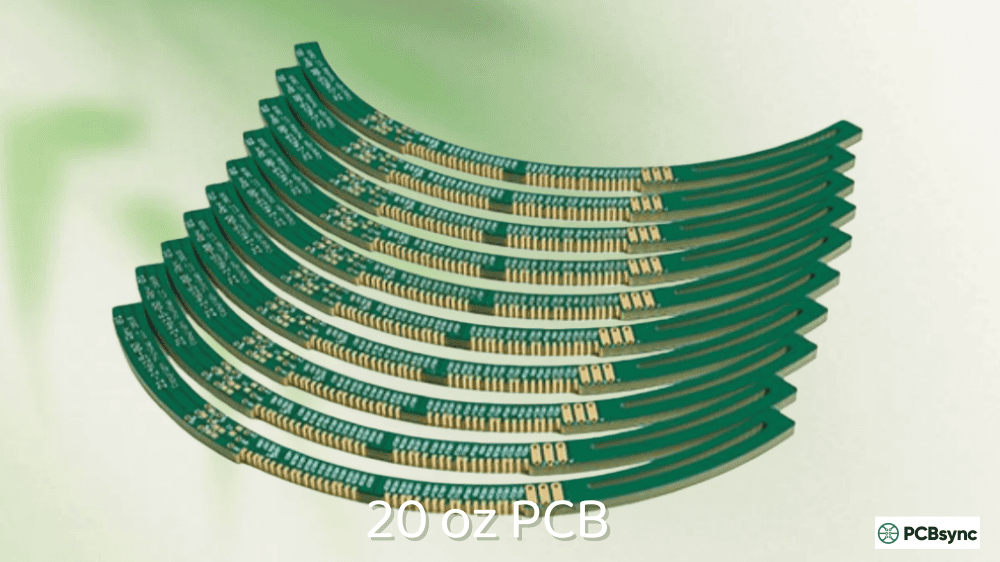
A 20 oz PCB is an extreme heavy copper printed circuit board with 20 ounces of copper per square foot on each layer. That translates to a copper thickness of approximately 700 μm (0.7 mm) or 27.56 mils.
To put this in perspective: a standard PCB uses 1 oz copper at 35 μm. A 20 oz board has twenty times that thickness. You’re essentially embedding copper plates into your circuit board.
The industry classifies copper weights like this:
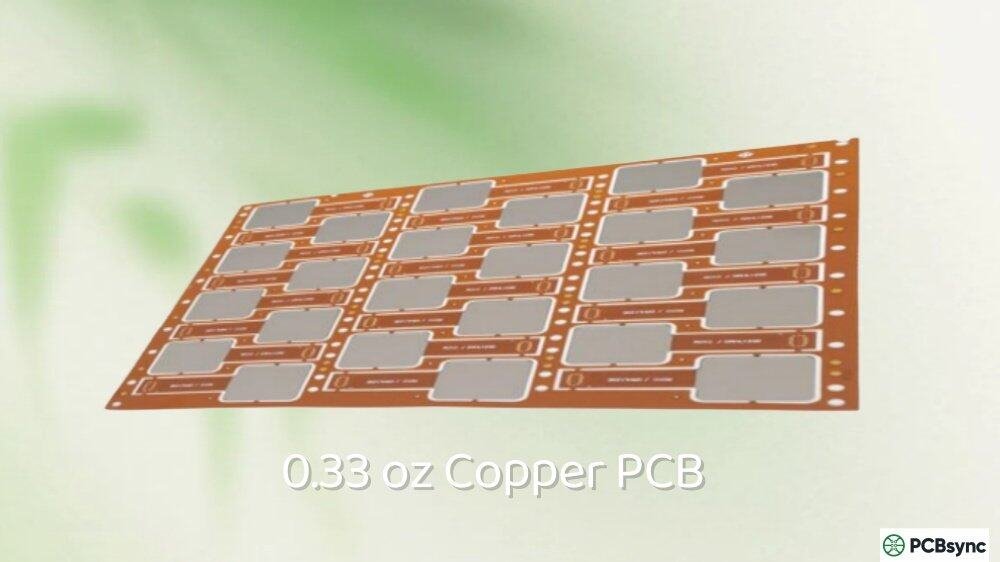
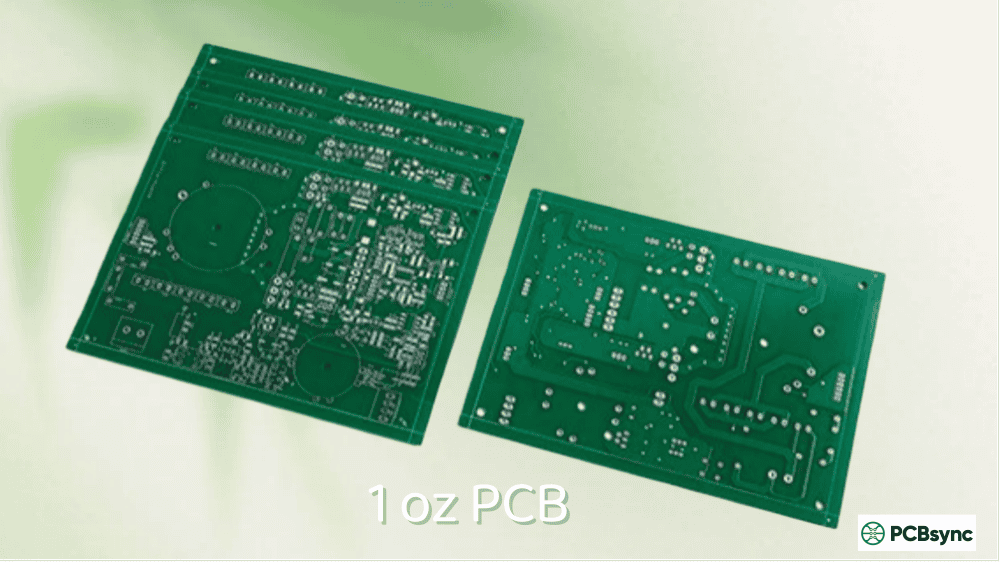
Standard copper: 0.5–2 oz (17.5–70 μm)
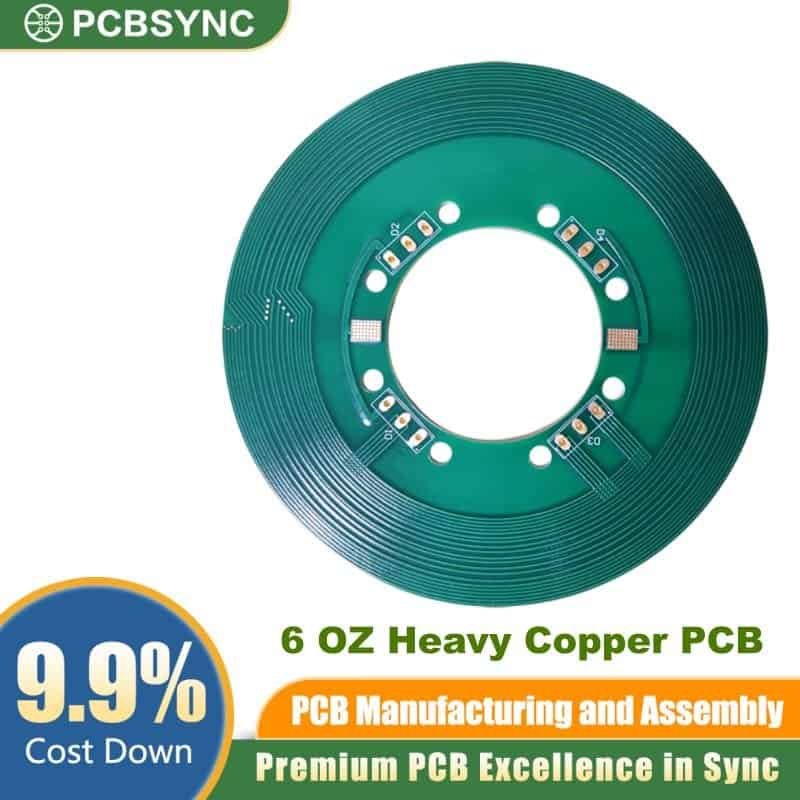
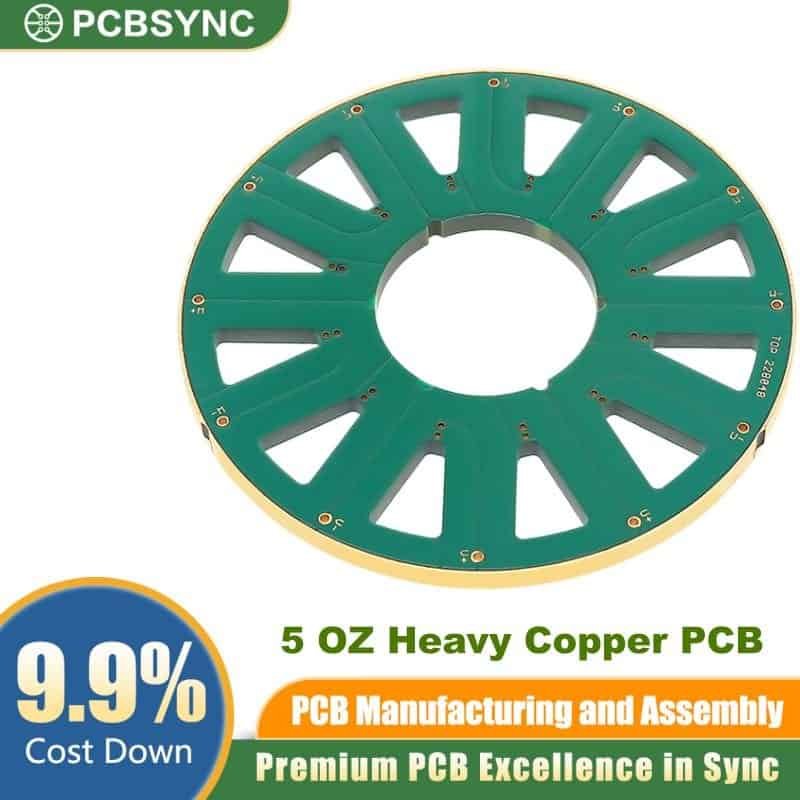
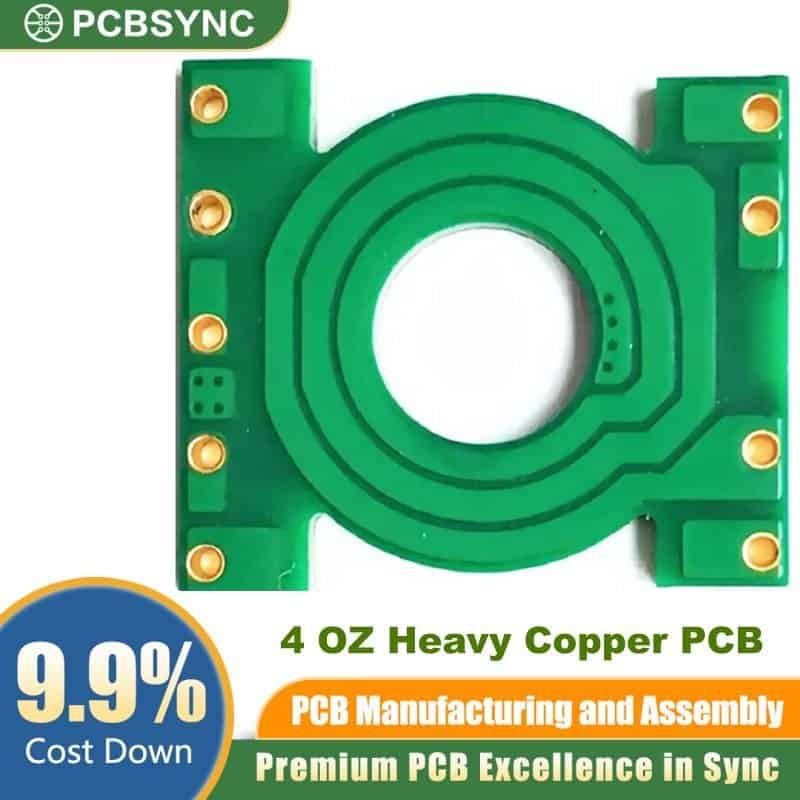
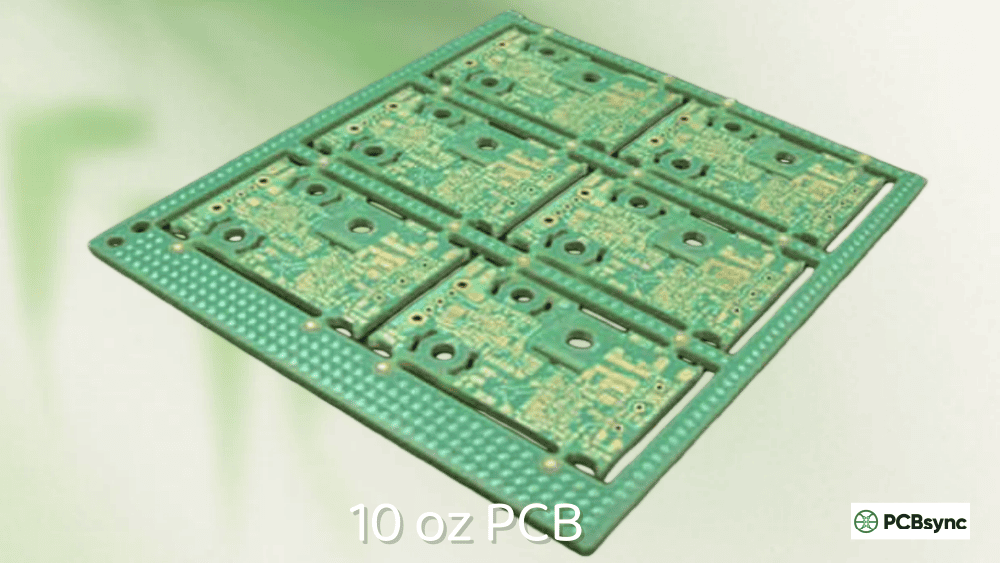
Heavy copper: 3–10 oz (105–350 μm)
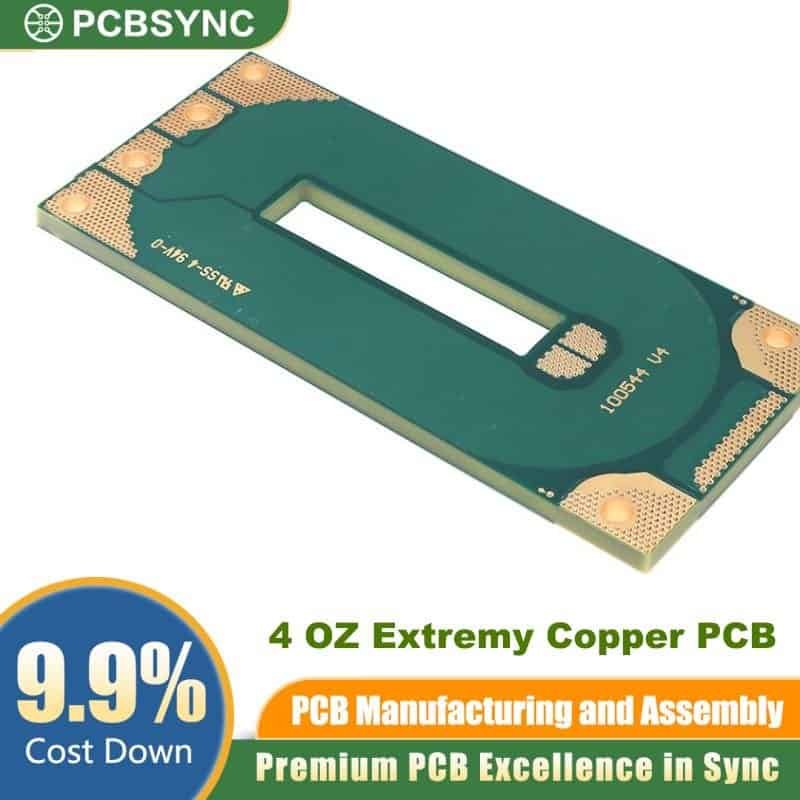
Extreme copper: 20–200 oz (700–7000 μm)
20 oz sits right at the threshold of extreme copper. It’s the thickest option most specialty PCB manufacturers can reliably produce in multilayer configurations.
20 oz Copper Thickness Conversion Chart
Copper Weight
Thickness (μm)
Thickness (mils)
Thickness (mm)
Category
1 oz
35
1.37
0.035
Standard
2 oz
70
2.76
0.070
Standard
4 oz
140
5.51
0.140
Heavy
6 oz
210
8.27
0.210
Heavy
10 oz
350
13.78
0.350
Heavy
12 oz
420
16.54
0.420
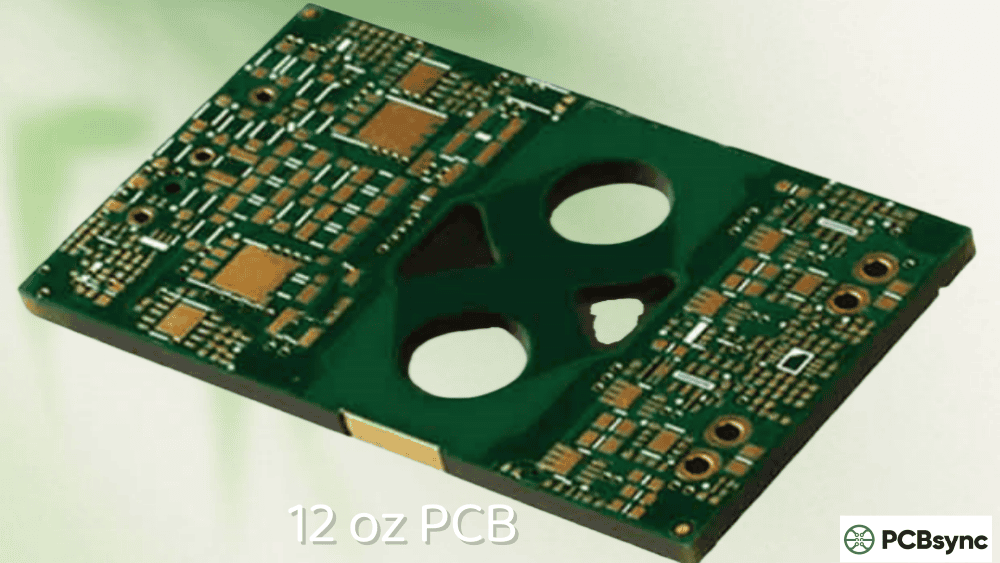
Heavy
20 oz
700
27.56
0.700
Extreme
40 oz
1400
55.12
1.400
Extreme
Why Use 20 oz Extreme Copper PCB?
I’ve had engineers ask me: “Can’t we just use multiple layers of thinner copper?” Sometimes yes. But 20 oz PCB offers advantages that parallel copper paths can’t match.
Maximum Current Carrying Capacity
The cross-sectional area of a 20 oz copper trace is massive. A single 100-mil wide trace can safely carry over 100A continuous current with acceptable temperature rise. Try doing that with 1 oz copper—you’d need traces so wide they’d consume your entire board.
Here’s a practical comparison I use when consulting:
Copper Weight
100-mil Trace Current (10°C Rise)
Required Width for 50A
1 oz
~4A
~1200 mil (impractical)
4 oz
~15A
~350 mil
10 oz
~40A
~150 mil
20 oz
~80A
~70 mil
The numbers speak for themselves. When you’re designing EV power electronics or industrial motor drives, 20 oz PCB makes previously impossible designs feasible.
Superior Thermal Performance
Copper has a thermal conductivity of approximately 385-401 W/m·K. With 0.7mm of copper acting as a heat spreader, your board becomes an effective heatsink. I’ve measured 25-30°C temperature reductions in DC-DC converter designs by upgrading from 6 oz to 20 oz copper.
The thick copper mass also provides thermal inertia—the board absorbs transient heat spikes without immediate temperature jumps. This protects components during startup surges and fault conditions.
Near-Total EMI Shielding
Those massive uninterrupted copper planes provide exceptional electromagnetic shielding. For high-power RF amplifiers and switch-mode power supplies generating significant EMI, 20 oz copper inner planes create effective Faraday cage isolation between sensitive circuits.
Extreme Mechanical Reliability
The thick copper reinforces the entire board structure. Plated-through holes with 20 oz barrels can withstand hundreds of thousands of thermal cycles without barrel cracking. Connector attachment points have dramatically improved pull strength.
I’ve seen 20 oz boards survive mechanical stress testing that would destroy standard heavy copper designs within hours.
Designing for 20 oz copper isn’t like standard PCB layout. The rules change significantly, and ignoring them will result in unmanufacturable or unreliable boards.
Minimum Trace Width and Spacing
This is where most designers make their first mistake. Etching 700 μm of copper creates significant undercut. You need wider traces and larger gaps than heavy copper designs.
These are typical values—your fabricator may have tighter or looser capabilities. Always verify before layout.
Via and Hole Design Considerations
Drilling through 0.7mm of copper per layer creates unique challenges. The aspect ratio—hole depth divided by diameter—becomes critical.
Minimum hole size: Most manufacturers require 50 mil (1.27mm) minimum finished hole size for 20 oz boards. Smaller holes risk drill breakage and incomplete plating.
Re-drilling requirement: After copper plating, holes shrink significantly. Many fabricators drill oversized, plate, then re-drill to achieve the final hole size. This process demands careful planning.
Via current capacity: The good news—via barrels plated during 20 oz processing are incredibly robust. A single 50-mil via can carry 20-30A.
Stackup Design for 20 oz PCB
Multilayer 20 oz boards require careful stackup planning:
Prepreg selection: You need high-resin-content prepreg to fill the valleys between copper features. Standard prepreg will leave voids that cause delamination.
Symmetric construction: Balance copper weight across the stackup centerline. If layer 1 has 20 oz, layer N should have 20 oz. Asymmetric builds warp badly.
Resin fill calculation: Use your fabricator’s software to verify adequate resin flow. Low resin levels create voids between layers—a reliability killer.
Typical 4-layer 20 oz stackup:
Layer 1: 20 oz copper (power)
Prepreg: High-fill type (multiple sheets)
Layer 2: 2-4 oz copper (signal/control)
Core
Layer 3: 2-4 oz copper (signal/control)
Prepreg: High-fill type (multiple sheets)
Layer 4: 20 oz copper (power)
Material Selection Requirements
Standard FR-4 won’t cut it for extreme copper applications. Your laminate needs:
Property
Requirement
Why It Matters
Glass Transition (Tg)
≥170°C, preferably 180°C+
Withstands thermal stress
Decomposition Temp (Td)
≥340°C
Prevents material breakdown
CTE (Z-axis)
<60 ppm/°C
Reduces via stress
Tensile Strength
High
Tolerates mechanical forces
Shear Strength
High
Resists delamination
Popular choices include high-Tg FR-4 (Isola 370HR, Shengyi S1000-2) and polyimide for extreme temperature applications.
20 oz PCB Manufacturing Challenges
Manufacturing 20 oz copper boards is genuinely difficult. Not every PCB shop can do it, and those who can charge premium prices for good reason.
Registration Accuracy
Accumulated tolerance across 0.7mm of copper per layer leads to misalignment between layers. Manufacturers need registration accuracy within 0.10mm—far tighter than standard PCB production.
High Aspect Ratio Plating
Plating copper into holes with 28:1 aspect ratios (depth to diameter) pushes electroplating chemistry to its limits. Achieving uniform copper thickness from hole entry to center requires specialized bath chemistry and pulse-plating techniques.
Lamination Control
Preventing voids during lamination requires precise pressure and temperature profiles plus high-filler prepreg. Any resin starvation creates reliability problems.
Surface Finish Uniformity
The coarse surface texture of 20 oz foil makes uniform surface finish challenging. ENIG (Electroless Nickel Immersion Gold) is often recommended because it levels the surface better than HASL.
Etching Precision
Defining fine features on rough 20 oz foil surfaces while controlling undercut requires advanced etching processes and tight chemistry control.
20 oz PCB vs Alternative Approaches
Before committing to 20 oz copper, consider whether alternatives might work:
20 oz PCB vs Multiple Thinner Layers
Approach
Pros
Cons
Single 20 oz layer
Simplest current path, best thermal
Higher cost, limited suppliers
Multiple 6 oz layers in parallel
More suppliers available
Current sharing uncertainty, more vias needed
Busbar + standard PCB
Proven approach
Larger size, assembly complexity
In my experience, multiple thinner layers work if you have board space and can tolerate the added vias. But for compact designs with tight current requirements, 20 oz remains the best solution.
20 oz PCB vs 12 oz PCB
Parameter
12 oz PCB
20 oz PCB
Copper Thickness
420 μm
700 μm
Current Capacity
~65% of 20 oz
Baseline
Min Trace/Space
20-25 mil
30-40 mil
Manufacturer Availability
Moderate
Limited
Relative Cost
Baseline
40-60% higher
Typical Applications
Power supplies, EV auxiliary
Formula E, high-power industrial
If 12 oz copper meets your current requirements with adequate margin, use it. 20 oz makes sense when you’re pushing the limits of what’s possible.
Where does 20 oz PCB actually get used? These applications justify the cost and complexity:
Electric Vehicle Powertrains
EV motor controllers, battery management systems, and DC-DC converters handle enormous currents. Tesla, Rivian, and Formula E teams use extreme copper boards in their power electronics. A typical motor controller might see 200-400A—exactly where 20 oz shines.
Industrial Power Supplies and UPS Systems
High-capacity uninterruptible power supplies and industrial DC power systems need reliable high-current paths. 20 oz copper ensures minimal voltage drop and maximum efficiency in 10kW+ systems.
Renewable Energy Inverters
Solar and wind power inverters convert DC to AC at kilowatt to megawatt scales. The power stage requires robust current handling that 20 oz copper provides.
High-Power RF Amplifiers
Broadcast transmitters and radar systems use high-power RF amplifiers with significant current requirements. The EMI shielding benefits of 20 oz copper are equally important here.
Traction Power Systems
Railway substations, locomotive power converters, and electric transit systems rely on extreme copper for their power distribution boards.
Finding a Qualified 20 oz PCB Manufacturer
Not every PCB shop can handle 20 oz copper. Here’s what to look for:
Capability Checklist
Capability
Minimum Requirement
Registration accuracy
≤0.10mm between layers
Plating aspect ratio
≥20:1 reliable plating
Max copper weight
20 oz stated capability
Fine line etching
≤2 mil line/space on standard copper
Peel strength
≥15 N/mm interlaminar
Via fill
Pore-free copper fill
Surface finish
Uniform ENIG or hard gold
Questions to Ask Potential Suppliers
How many 20 oz multilayer boards have you produced in the past year?
What is your typical yield rate for 20 oz designs?
Can you provide references from similar projects?
What prepreg systems do you use for extreme copper?
Do you perform cross-section analysis on production boards?
A qualified manufacturer will answer these confidently with specific data.
Cost Factors for 20 oz PCB
Let’s be direct: 20 oz PCB is expensive. A complex multilayer board can cost $2,000-$5,000 or more for a single prototype.
Cost drivers include:
Material cost: 20 oz copper-clad laminate costs 8-10x standard material. Copper prices fluctuate, affecting quotes.
What is the maximum current a 20 oz PCB can carry?
Current capacity depends on trace width, acceptable temperature rise, and layer position. A 200-mil wide external trace on 20 oz copper can safely carry approximately 150A with 10°C temperature rise. For precise calculations, use IPC-2152 methods with your specific parameters.
Can 20 oz copper be used on inner layers of multilayer PCBs?
Yes, but with limitations. Most manufacturers can produce multilayer boards with up to 20 oz on inner layers, though 12-14 oz is more common for inner layers with 20 oz on outer layers. The lamination process becomes increasingly difficult with thicker inner layer copper. Discuss specific requirements with your fabricator early.
How much does a 20 oz PCB cost compared to standard boards?
Expect to pay 10-20x the cost of equivalent standard copper boards for prototype quantities. A complex 4-layer 20 oz board measuring 6″x6″ might cost $2,000-$4,000 per unit in prototype quantities. Volume pricing improves this ratio, but 20 oz remains a premium product.
What surface finishes work with 20 oz extreme copper?
ENIG (Electroless Nickel Immersion Gold) is most commonly recommended because it provides a flat surface that compensates for the rough copper topography. Hard gold works for high-wear applications. HASL is possible but may have uniformity issues. Immersion silver and OSP are options for lower-cost applications with appropriate storage requirements.
How do I know if my design actually needs 20 oz copper?
Calculate your current requirements using IPC-2152 and compare against what 10 oz or 12 oz copper can provide with your available trace widths. If you have margin with lower copper weights, use them—they’re easier to manufacture and less expensive. Reserve 20 oz for applications where calculations show you genuinely need the extreme current capacity, or where thermal performance is critical and board space is constrained.
Final Thoughts
20 oz PCB represents the outer edge of what’s practically manufacturable in multilayer printed circuit boards. When your application demands 100+ amp current handling, superior thermal management, and maximum reliability, it’s often the only viable solution.
But it’s not a specification to choose lightly. The PCB manufacturing challenges are real, the supplier pool is limited, and the costs are substantial. Make sure your design actually requires extreme copper before committing.
If you’re moving into 20 oz territory for the first time, invest in a thorough DFM review with your chosen manufacturer. The design rules are different, the tolerances are tighter, and the cost of mistakes is high. Get it right on paper before you commit to fabrication.
For the applications that truly need it—Formula E power electronics, industrial motor drives, EV powertrains—20 oz copper delivers performance that no other PCB technology can match.
Have questions about specifying 20 oz PCB for your extreme power application? Leave a comment below.
Inquire: Call 0086-755-23203480, or reach out via the form below/your sales contact to discuss our design, manufacturing, and assembly capabilities.
Quote: Email your PCB files to Sales@pcbsync.com (Preferred for large files) or submit online. We will contact you promptly. Please ensure your email is correct.
Notes: For PCB fabrication, we require PCB design file in Gerber RS-274X format (most preferred), *.PCB/DDB (Protel, inform your program version) format or *.BRD (Eagle) format. For PCB assembly, we require PCB design file in above mentioned format, drilling file and BOM. Click to download BOM template To avoid file missing, please include all files into one folder and compress it into .zip or .rar format.