Inquire: Call 0086-755-23203480, or reach out via the form below/your sales contact to discuss our design, manufacturing, and assembly capabilities.
Quote: Email your PCB files to Sales@pcbsync.com (Preferred for large files) or submit online. We will contact you promptly. Please ensure your email is correct.
Notes: For PCB fabrication, we require PCB design file in Gerber RS-274X format (most preferred), *.PCB/DDB (Protel, inform your program version) format or *.BRD (Eagle) format. For PCB assembly, we require PCB design file in above mentioned format, drilling file and BOM. Click to download BOM template To avoid file missing, please include all files into one folder and compress it into .zip or .rar format.
Sometimes the standard options just don’t work. I’ve been in this situation more times than I can count—you’ve got a design that demands something between 2.4mm and 3.2mm, and neither of those stock thicknesses will do. That’s when you start looking at custom specifications, and 2.8mm PCB thickness becomes a serious consideration.
Most engineers default to standard thicknesses because they’re readily available, cost-effective, and well-documented. But real-world projects don’t always fit into neat categories. When your enclosure has precisely 3.1mm of clearance, or your multilayer stack-up calculations land you at 2.75mm, you’re faced with a choice: compromise your design or go custom. This guide is for engineers who’ve decided that compromise isn’t acceptable.
In my experience, the decision to specify a 2.8mm PCB usually comes from one of two scenarios: either the mechanical constraints of your system demand it, or your electrical stack-up requirements land you there naturally. Either way, understanding how to successfully execute a custom thickness design can save your project from costly redesigns.
Before diving into the specifics of 2.8mm boards, let’s establish what “non-standard” actually means in PCB manufacturing.
What Makes 2.8mm PCB a Custom Thickness?
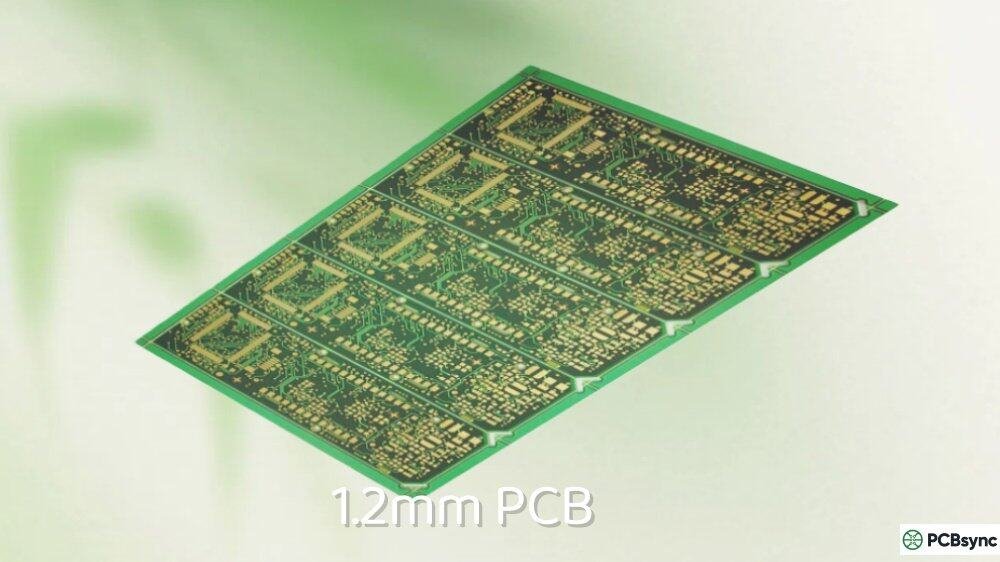
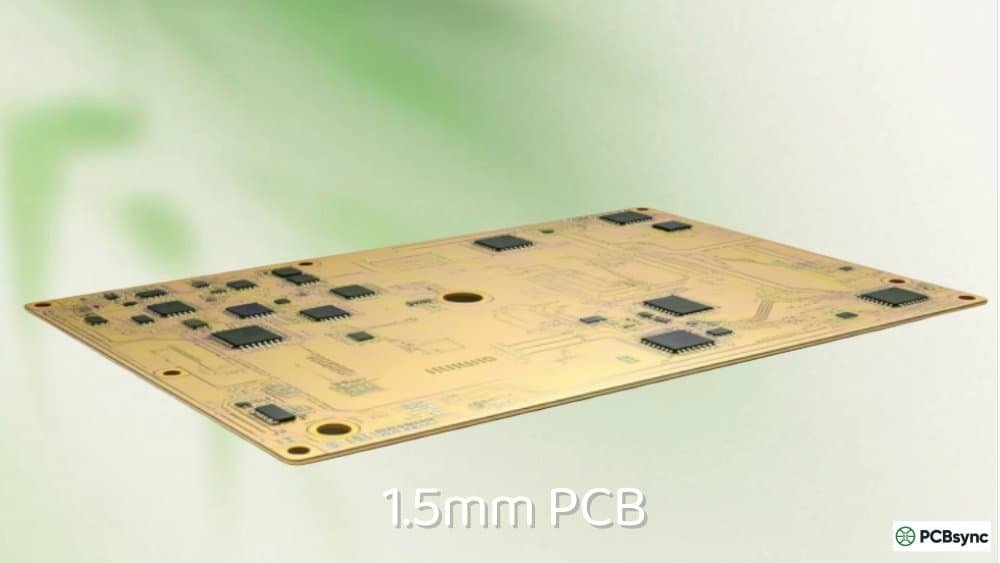
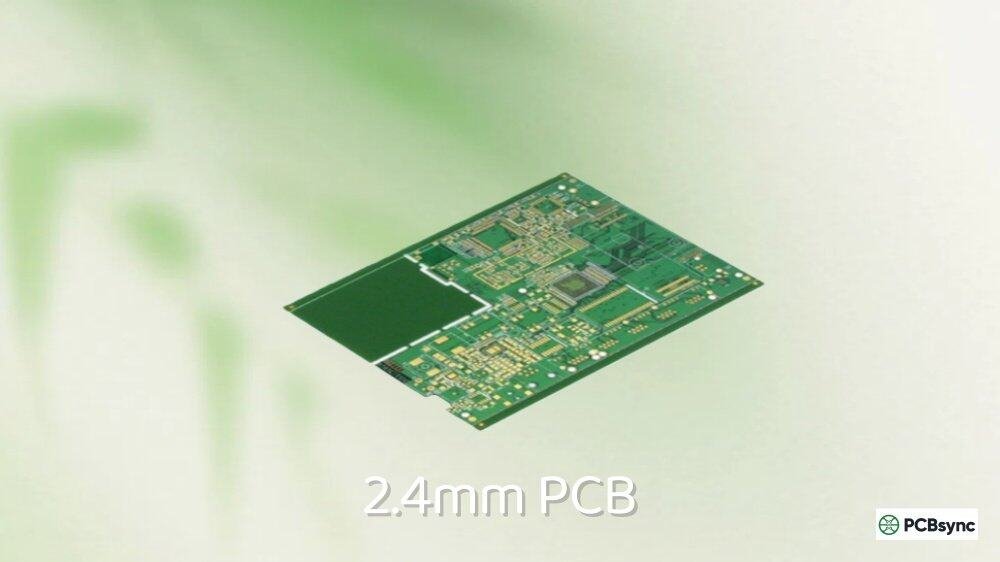
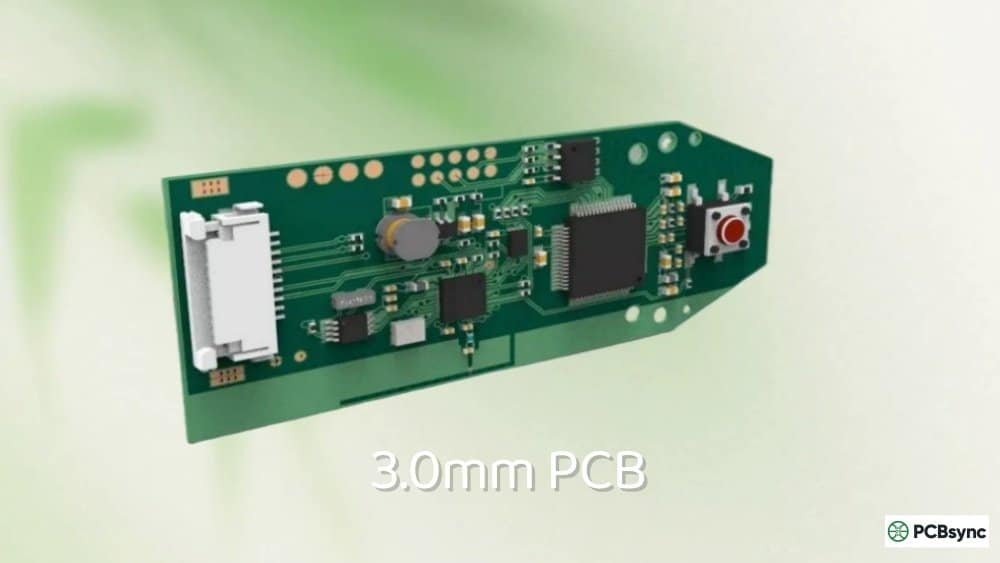
The PCB industry has settled on a set of commonly manufactured thicknesses based on historical precedent and manufacturing efficiency. These standard options include 0.8mm, 1.0mm, 1.2mm, 1.6mm, 2.0mm, 2.4mm, and 3.2mm. Notice that 2.8mm isn’t on this list—it falls in the gap between 2.4mm and 3.2mm, making it a custom specification.
When you request a 2.8mm PCB from your fabricator, they can’t simply pull pre-made laminate off the shelf. Instead, they must combine specific core materials and prepreg layers to achieve your target thickness. This isn’t necessarily difficult, but it does require planning and adds variables to the manufacturing process.
Standard vs. Custom Thickness Comparison
Thickness
Category
Availability
Lead Time Impact
Cost Impact
1.6mm
Standard
Immediate stock
None
Baseline
2.0mm
Standard
Usually in stock
Minimal
+5-10%
2.4mm
Standard
Common stock
Minimal
+10-15%
2.8mm
Custom
Built to order
+3-7 days
+15-25%
3.0mm
Semi-standard
Limited stock
+1-3 days
+15-20%
3.2mm
Standard
Usually in stock
Minimal
+15-20%
The 2.8mm thickness sits in an interesting position. It’s thick enough to provide substantial mechanical benefits over 2.4mm, but not so extreme that it creates major manufacturing challenges. For many applications, it represents an optimal middle ground.
When to Specify 2.8mm PCB Thickness
The decision to go custom should be driven by genuine technical requirements, not arbitrary preferences. Here are the scenarios where 2.8mm PCB thickness makes engineering sense.
Mechanical Fit Requirements
The most common reason I’ve specified 2.8mm boards is simple: they fit where standard thicknesses don’t. Consider these real-world scenarios:
Retrofit designs where you’re replacing an existing board in legacy equipment. The original designer used a thickness that’s no longer common, and your replacement must match exactly for connector alignment and mounting hole registration.
Card cage systems with fixed slot dimensions. Many industrial card cages were designed around specific board thicknesses, and deviation by even 0.4mm can cause insertion problems or inadequate card retention.
Multi-board assemblies where stack height is critical. When you’re sandwiching boards with specific standoff heights, the cumulative tolerance of each board thickness matters.
Multilayer Stack-Up Optimization
Sometimes the 2.8mm thickness emerges naturally from your electrical requirements rather than mechanical constraints. This happens when:
Your controlled impedance calculations require specific dielectric thicknesses between signal and reference layers. After specifying the dielectrics needed for your target impedance values, the total stack-up lands at 2.8mm.
You need a particular number of routing layers with adequate copper weights, and the combination of cores and prepregs that achieves your electrical goals totals 2.8mm.
Your design requires specific layer spacing for EMI control or crosstalk management, and those spacings sum to a non-standard total.
Heavy Copper with Moderate Thickness
The 2.8mm PCB thickness enables some interesting heavy copper configurations that wouldn’t work well on thinner boards. You can achieve 3oz or 4oz copper on multiple layers while maintaining reasonable aspect ratios for vias—something that becomes problematic if you try to cram heavy copper into a standard 2.4mm board.
Copper Configuration
Minimum Recommended Thickness
2.8mm Suitability
2oz outer / 1oz inner
1.6mm
Overkill
3oz outer / 2oz inner
2.0mm – 2.4mm
Good fit
4oz outer / 2oz inner
2.4mm – 2.8mm
Excellent fit
4oz outer / 3oz inner
2.8mm – 3.2mm
Optimal choice
6oz outer / 3oz inner
3.2mm+
Consider 3.2mm
The 2.8mm thickness provides adequate substrate material to buffer the thermal stress from heavy copper without the weight and cost penalty of jumping to 3.2mm.
Designing Your 2.8mm PCB Stack-Up
Creating a successful 2.8mm PCB starts with a well-planned stack-up. Since you’re working outside standard configurations, you’ll need to be more hands-on with material selection.
Sample 4-Layer 2.8mm Stack-Up
Layer
Material
Thickness
Notes
Top Copper
2oz
70μm
Heavy copper outer
Prepreg
2116 x2
0.24mm
Dual sheets
Inner Layer 1
1oz
35μm
Signal/Ground
Core
FR-4
1.8mm
Thick core
Inner Layer 2
1oz
35μm
Power/Signal
Prepreg
2116 x2
0.24mm
Dual sheets
Bottom Copper
2oz
70μm
Heavy copper outer
Total
~2.8mm
After lamination
Sample 6-Layer 2.8mm Stack-Up
Layer
Material
Thickness
Notes
Top Copper
1oz
35μm
Signal
Prepreg
2116
0.12mm
Single sheet
Inner Layer 1
1oz
35μm
Ground plane
Core 1
FR-4
0.8mm
Standard core
Inner Layer 2
1oz
35μm
Power plane
Prepreg
7628
0.20mm
Thicker prepreg
Inner Layer 3
1oz
35μm
Power plane
Core 2
FR-4
0.8mm
Standard core
Inner Layer 4
1oz
35μm
Ground plane
Prepreg
2116
0.12mm
Single sheet
Bottom Copper
1oz
35μm
Signal
Total
~2.8mm
After lamination
The key to achieving 2.8mm is combining available core and prepreg thicknesses creatively. Work with your fabricator early—they’ll know exactly which materials they stock and can suggest combinations that hit your target.
Manufacturing Considerations for 2.8mm PCB
Going custom means paying closer attention to manufacturing factors that you might overlook with standard boards.
Aspect Ratio and Via Design
For a 2.8mm board, maintaining good via aspect ratios requires attention. Most manufacturers prefer aspect ratios of 10:1 or better for reliable plating. This means minimum via diameters of 0.28mm (about 11 mils) for through-hole vias.
Via Type
Minimum Diameter
Aspect Ratio
Plating Quality
Standard PTH
0.28mm
10:1
Reliable
Enhanced PTH
0.35mm
8:1
Excellent
Mechanical
0.40mm+
7:1
Maximum reliability
If your design requires finer vias, discuss blind or buried via options with your manufacturer. These don’t traverse the full board thickness, enabling smaller diameters without aspect ratio concerns.
Material Availability and Lead Time
Not every prepreg and core combination exists in every thickness. When you specify 2.8mm PCB thickness, your fabricator may need to:
Order specific laminate materials that aren’t in regular stock
Combine unusual prepreg configurations to hit the target
Allow extra time for material procurement
Plan for an additional 3-7 days of lead time compared to standard thickness orders. For prototype quantities, this might stretch longer if materials must be cut from larger sheets specifically for your order.
Tolerance Considerations
Custom thickness boards often have slightly wider tolerances than standard options. While a 1.6mm board might hold ±0.1mm easily, a 2.8mm PCB might specify ±0.15mm or even ±0.2mm depending on the specific stack-up.
Thickness
Standard Tolerance
Achievable Tolerance
Notes
1.6mm
±10% (±0.16mm)
±0.10mm
Well-characterized
2.4mm
±10% (±0.24mm)
±0.15mm
Standard process
2.8mm
±10% (±0.28mm)
±0.15mm
Custom stack-up
3.2mm
±10% (±0.32mm)
±0.20mm
Thicker tolerance
If your application requires tighter thickness control, discuss this with your manufacturer before finalizing the design. Tighter tolerances may require specific material selections or additional process controls.
Custom thickness adds cost—there’s no way around that. The question is whether the benefits justify the premium.
Cost Factors for Custom Thickness
Material costs: Non-standard combinations may require purchasing materials in smaller quantities at higher unit prices.
Setup time: The fabricator must calculate and verify the custom stack-up, potentially running test panels.
Yield risk: Less-characterized processes carry slightly higher scrap risk, which gets priced into the quote.
Minimum orders: Some fabricators have higher minimums for custom work to justify the setup investment.
When Custom Thickness Pays Off
Despite the premium, 2.8mm PCB specifications often make economic sense when:
Redesigning to standard thickness would require expensive mechanical changes elsewhere in the system
The alternative is multiple design iterations to fit standard thickness constraints
Field reliability improvements from optimal thickness reduce warranty costs
The board is destined for high-reliability applications where performance outweighs material cost
I’ve seen projects where engineers spent weeks trying to force a design into 2.4mm thickness when a 2.8mm custom board would have solved all their problems for an extra $50 per prototype run. Sometimes the “expensive” option is actually cheaper when you account for engineering time.
Working with Manufacturers on Custom Thickness
Successful custom thickness projects require closer collaboration with your fabricator than standard orders.
Early Engagement is Critical
Don’t wait until your design is complete to discuss thickness with your manufacturer. Reach out early with your requirements:
Target thickness and acceptable tolerance range
Layer count and copper weight requirements
Any impedance control needs
Expected production volumes
This conversation often reveals options you hadn’t considered. Your fabricator might have a semi-standard 2.8mm stack-up they’ve used before, or they might suggest a 2.75mm or 2.85mm alternative that uses more readily available materials.
Documentation Requirements
Custom boards require more explicit documentation than standard orders. Include:
Detailed stack-up drawing with all layer thicknesses
Material callouts (specific FR-4 grade, prepreg types)
Thickness tolerance requirements
Any special processing notes
Don’t rely on the fabricator to interpret your intent—spell everything out clearly.
Useful Resources for Custom PCB Design
Design Tools and Calculators
Saturn PCB Design Toolkit – Includes stack-up planning tools and impedance calculators (free download at saturnpcb.com)
Polar Instruments Speedstack – Professional stack-up planning with manufacturer material libraries
IPC-4101 – Specification for Base Materials for Rigid and Multilayer Printed Boards
IPC-6012 – Qualification and Performance Specification for Rigid Printed Boards
IPC-2221 – Generic Standard on Printed Board Design
Manufacturer Resources
Most fabricators publish design guidelines and standard stack-up options on their websites. Request custom stack-up capabilities directly—this information often isn’t published but is readily available to serious customers.
Common Applications for 2.8mm PCB
Based on my project experience, here are the applications where I most frequently see 2.8mm PCB specifications:
Industrial Control and Automation
Process controllers, PLCs, and industrial I/O modules often end up at 2.8mm due to the combination of heavy connectors, power handling requirements, and rigid card cage mounting systems inherited from earlier equipment generations.
Test and Measurement Equipment
Instrumentation often has specific board thickness requirements driven by RF shielding enclosure designs or precision connector mounting. The 2.8mm thickness frequently appears in high-precision analog front ends where mechanical stability affects measurement accuracy.
Telecom and Networking Equipment
Line cards and switch modules in established chassis designs sometimes require 2.8mm boards. These systems were often designed with specific slot dimensions that don’t accommodate standard modern thicknesses.
Custom Power Electronics
Medium-power converters and inverters benefit from the 2.8mm thickness when they need heavy copper but aren’t pushing into the extreme-thickness territory that would require 3.2mm boards.
Frequently Asked Questions About 2.8mm PCB
Why would I choose 2.8mm instead of rounding to 3.0mm or 3.2mm?
The primary reasons are mechanical fit, weight, and cost. If your enclosure or mounting system requires 2.8mm, rounding up to 3.2mm creates interference problems. Additionally, the extra 0.4mm of material adds weight—significant in mobile or aerospace applications—and increases material cost by 10-15%. When your design naturally lands at 2.8mm from stack-up calculations, there’s no engineering benefit to adding unnecessary thickness.
How much longer is the lead time for 2.8mm PCB compared to standard thickness?
Expect 3-7 additional days for prototype quantities due to material procurement and stack-up verification. For production quantities, the lead time impact diminishes once the fabricator has validated the process and stocked appropriate materials. Some fabricators may be able to expedite if they happen to have suitable materials in stock from previous custom orders. Always confirm lead time before committing to a 2.8mm PCB specification in a time-sensitive project.
Can all PCB manufacturers produce 2.8mm thickness boards?
Most capable fabricators can produce 2.8mm boards, but not all will accept the order. Some high-volume manufacturers focused on standard products may decline custom thickness work as it disrupts their optimized processes. Mid-tier fabricators specializing in prototype and low-volume production are often better equipped for custom specifications. Always confirm capability before starting your design, and be prepared to provide detailed stack-up specifications rather than expecting the manufacturer to figure it out.
What’s the typical tolerance for 2.8mm PCB thickness?
Standard tolerance for 2.8mm PCB is typically ±10%, meaning acceptable finished thickness ranges from 2.52mm to 3.08mm. Tighter tolerances of ±0.15mm or better are achievable with specific material selections and process controls, but expect additional cost. For applications where thickness variation is critical—such as card-edge connector fit—specify your tolerance requirement explicitly and confirm the fabricator can meet it before placing the order.
Is 2.8mm thick enough for heavy copper designs?
Yes, 2.8mm provides excellent support for heavy copper configurations up to 4oz on outer layers and 3oz on inner layers. The additional thickness compared to 2.4mm boards helps accommodate the mechanical stress from CTE mismatch between copper and FR-4 during thermal cycling. For extremely heavy copper (6oz and above), consider whether 3.2mm might provide better long-term reliability, but for most heavy copper power applications, the 2.8mm PCB thickness is a solid choice.
Making the Custom Thickness Decision
Specifying a 2.8mm PCB is a deliberate choice that should be driven by concrete technical requirements. The extra cost and lead time are worthwhile when standard thicknesses genuinely don’t meet your needs—whether due to mechanical constraints, stack-up optimization, or heavy copper requirements.
The key to success with custom thickness boards is early engagement with your fabricator, explicit documentation of your requirements, and realistic expectations about tolerance and lead time. When you approach it thoughtfully, custom thickness opens up design possibilities that simply aren’t available with off-the-shelf options.
If you’re sitting on the fence between forcing your design into 2.4mm or 3.2mm versus going custom at 2.8mm, consider the total project cost including engineering time and potential redesigns. Often, the custom board pays for itself by eliminating compromise elsewhere in your system.
Not every design needs custom thickness—but when yours does, understanding how to execute it successfully can be the difference between a problematic build and a smooth production run.
Inquire: Call 0086-755-23203480, or reach out via the form below/your sales contact to discuss our design, manufacturing, and assembly capabilities.
Quote: Email your PCB files to Sales@pcbsync.com (Preferred for large files) or submit online. We will contact you promptly. Please ensure your email is correct.
Notes: For PCB fabrication, we require PCB design file in Gerber RS-274X format (most preferred), *.PCB/DDB (Protel, inform your program version) format or *.BRD (Eagle) format. For PCB assembly, we require PCB design file in above mentioned format, drilling file and BOM. Click to download BOM template To avoid file missing, please include all files into one folder and compress it into .zip or .rar format.