Inquire: Call 0086-755-23203480, or reach out via the form below/your sales contact to discuss our design, manufacturing, and assembly capabilities.
Quote: Email your PCB files to Sales@pcbsync.com (Preferred for large files) or submit online. We will contact you promptly. Please ensure your email is correct.
Notes: For PCB fabrication, we require PCB design file in Gerber RS-274X format (most preferred), *.PCB/DDB (Protel, inform your program version) format or *.BRD (Eagle) format. For PCB assembly, we require PCB design file in above mentioned format, drilling file and BOM. Click to download BOM template To avoid file missing, please include all files into one folder and compress it into .zip or .rar format.
When standard PCB thickness falls short, engineers turn to heavy-duty solutions. I’ve been designing circuit boards for industrial and power electronics applications for nearly fifteen years, and there’s a specific thickness that keeps showing up in my most demanding projects: 2.4mm PCB.
This isn’t a thickness you’ll find in smartphones or consumer gadgets. The 2.4mm board is built for serious work—handling hundreds of amps in motor drives, surviving temperature extremes in outdoor equipment, and providing the mechanical backbone for server motherboards that run 24/7. If you’re reading this, you’re probably facing a design challenge where the standard 1.6mm board simply won’t survive.
In this comprehensive guide, I’ll share everything I’ve learned about 2.4mm PCBs: when they’re necessary, how to design with them effectively, and the real-world considerations that separate a successful thick-board design from an expensive failure.
A 2.4mm PCB measures approximately 0.094 inches (94 mils) in total finished thickness. This measurement encompasses the complete board structure: FR-4 substrate layers, copper foils, prepreg materials, solder mask, and surface finish. At roughly 50% thicker than the industry-standard 1.6mm, these boards occupy a specific niche in the PCB thickness spectrum.
The 2.4mm thickness sits in what I call the “enhanced industrial” category. It’s substantially more robust than standard boards but not quite as extreme as the 3.2mm monsters used in specialized power distribution equipment. This makes it ideal for applications requiring significant improvements in mechanical strength and thermal capacity without the manufacturing complexity of ultra-thick designs.
Where 2.4mm Falls in the PCB Thickness Spectrum
To understand why 2.4mm matters, you need to see where it fits among available options:
Thickness
Inches
Category
Primary Applications
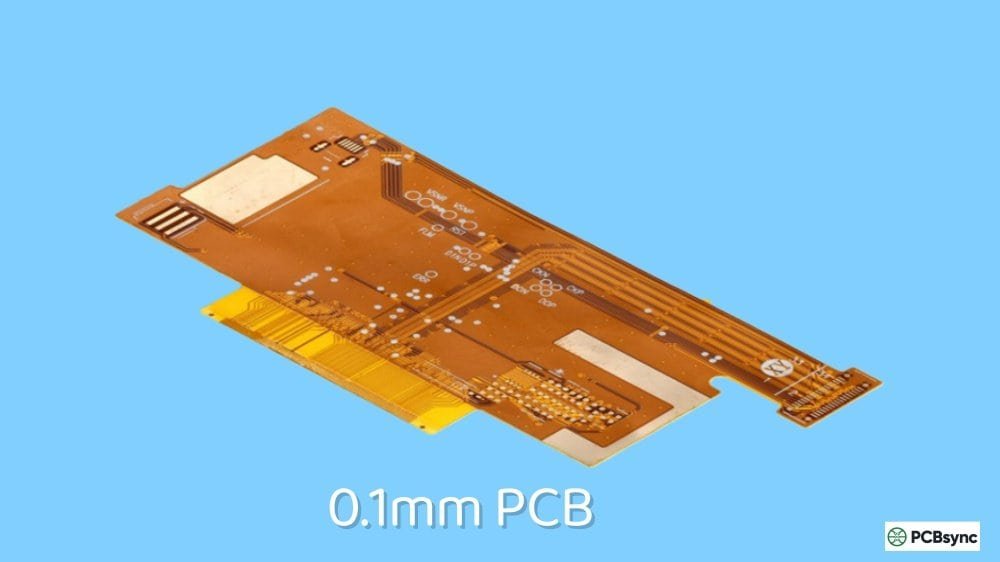
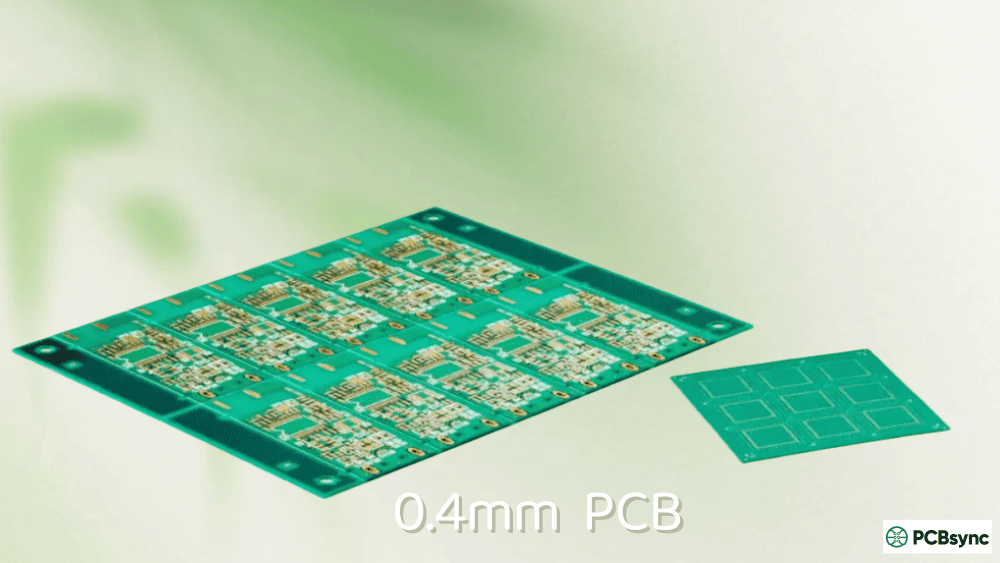
0.4mm
0.016″
Ultra-thin
Flexible circuits, wearables
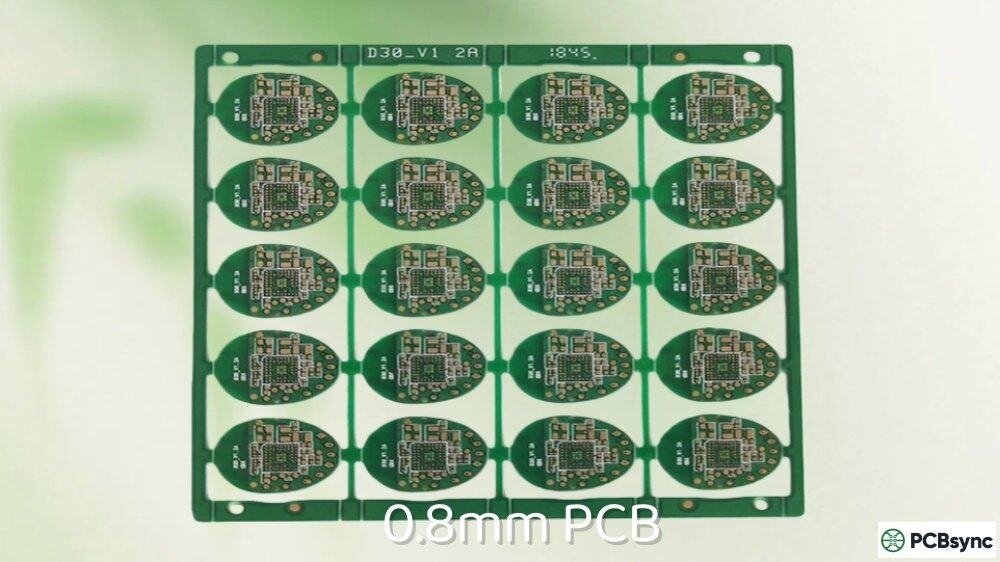
0.8mm
0.031″
Thin
Smartphones, compact devices
1.0mm
0.039″
Light
Tablets, portable electronics
1.6mm
0.063″
Standard
General consumer/commercial
2.0mm
0.079″
Enhanced
Industrial controls, automotive
2.4mm
0.094″
Heavy-duty
High-power, servers, harsh environments
3.2mm
0.126″
Extreme
Power supplies, backplanes
The jump from 2.0mm to 2.4mm represents a 20% increase in board thickness, which translates to meaningful improvements in stiffness, thermal mass, and the ability to support heavy copper layers.
Why Choose 2.4mm PCB Over Standard Thickness?
I’ve had clients ask me whether they really need 2.4mm boards or if they’re just over-engineering. The answer depends entirely on your application, but there are clear scenarios where this thickness becomes essential rather than optional.
Superior Mechanical Strength and Rigidity
The most immediate benefit of a 2.4mm PCB is mechanical. Board stiffness increases with the cube of thickness, meaning a 2.4mm board is approximately 3.4 times stiffer than a 1.6mm board of the same material. This matters tremendously when:
Your board carries heavy components like large transformers, power inductors, or multiple high-pin-count connectors. I once redesigned a motor controller from 1.6mm to 2.4mm after field returns showed cracked solder joints on the main power connector—the board was flexing during the connector mating cycle.
The assembly will experience vibration or mechanical shock. Industrial equipment on factory floors, automotive electronics, and transportation systems all benefit from the enhanced rigidity that resists fatigue failure over millions of stress cycles.
Large board dimensions are required. As PCB size increases, so does the tendency to bow and twist during manufacturing and operation. The 2.4mm thickness provides the extra rigidity needed to keep large panels flat.
Enhanced Thermal Performance
Thicker boards handle heat better in two distinct ways. First, the increased thermal mass absorbs and spreads heat more effectively, reducing peak temperatures during transient events. Second, the extra thickness accommodates heavier copper layers that conduct heat away from hot components.
For a practical example, consider a 100W power module. On a 1.6mm board with 1oz copper, the board temperature under the power stage might reach 95°C. Move to a 2.4mm board with 2oz copper, and that same module runs at 75°C—a 20°C reduction that can double component lifetime.
Heavy Copper Compatibility
The 2.4mm PCB thickness is particularly well-suited for heavy copper designs ranging from 3oz to 6oz per layer. Thicker copper creates mechanical stress during thermal cycling due to the coefficient of thermal expansion (CTE) mismatch between copper and FR-4. The additional substrate material in a 2.4mm board helps distribute and absorb these stresses.
Copper Weight
Thickness
Current Capacity (2mm trace, 20°C rise)
Recommended Min Board Thickness
1oz
35μm
~6A
1.6mm
2oz
70μm
~12A
1.6mm – 2.0mm
3oz
105μm
~18A
2.0mm – 2.4mm
4oz
140μm
~24A
2.4mm
6oz
210μm
~35A
2.4mm – 3.2mm
Critical Applications for 2.4mm PCB
Through my project experience, I’ve identified several application categories where 2.4mm thickness isn’t just beneficial—it’s often the minimum acceptable choice.
Server and Data Center Equipment
Server motherboards represent one of the highest-volume applications for 2.4mm PCB designs. These boards must support dozens of heavy components including multiple memory modules, large processor sockets, and numerous expansion slots—all while maintaining signal integrity for multi-gigabit data rates.
The mechanical demands are intense. Server boards are installed in racks where they must survive repeated handling during maintenance, yet maintain perfect flatness to ensure reliable connections. I’ve worked on blade server designs where anything thinner than 2.4mm showed measurable bow after thermal cycling, causing intermittent memory errors.
Beyond mechanical considerations, servers generate substantial heat. The extra thermal mass of a 2.4mm board helps buffer temperature spikes during workload transients, protecting sensitive components from thermal shock.
Industrial Motor Drives and Power Electronics
Variable frequency drives (VFDs), servo controllers, and industrial inverters routinely specify 2.4mm boards. These applications combine multiple challenging requirements:
High current levels often exceeding 50A continuous, requiring wide traces with heavy copper that only thicker boards can reliably support.
Extreme thermal environments with ambient temperatures reaching 50-60°C in industrial enclosures, plus heat generated by power semiconductors.
Vibration from motors, pumps, and machinery that would fatigue thinner boards over time.
Long service life expectations of 15-20 years with minimal maintenance.
I recently completed a 75kW motor drive design using a 2.4mm board with 3oz copper on the power layers. The thickness was essential for maintaining flatness across the 280mm x 200mm board area while carrying 120A peak currents.
Automotive and Transportation Electronics
Modern vehicles demand electronics that survive temperature extremes from -40°C to +125°C, constant vibration, and decades of service life. The 2.4mm PCB has become standard for many automotive power electronics applications.
Electric vehicle battery management systems (BMS) use 2.4mm boards to handle the high currents involved in monitoring and balancing large battery packs. Onboard chargers, DC-DC converters, and motor inverters similarly benefit from the enhanced thickness.
Traditional automotive applications like engine control modules and transmission controllers also frequently specify 2.4mm thickness, particularly when mounted in engine compartments where thermal and vibration stresses are most severe.
Renewable Energy Systems
Solar inverters and wind turbine controllers operate in harsh outdoor environments for 20-25 year expected lifetimes. The combination of high power levels (often 10kW to 500kW), wide temperature ranges, and humidity exposure makes 2.4mm the minimum practical thickness for main power boards.
I’ve seen solar inverter designs where engineers initially tried 2.0mm boards fail during accelerated life testing due to solder joint fatigue. The upgrade to 2.4mm eliminated the failures by providing additional stiffness that reduced board flex during thermal cycling.
Medical and Scientific Equipment
While not always high-power, medical devices like imaging equipment, surgical robots, and life support systems specify 2.4mm boards for reliability reasons. The mechanical stability ensures consistent performance over the device lifetime, and the extra thickness provides margin against the environmental stresses encountered during transport and installation.
2.4mm PCB Stack-Up Configurations
Achieving the 2.4mm target thickness requires careful stack-up planning. Unlike thinner boards where a single core might suffice, 2.4mm designs typically involve multiple cores and prepreg layers.
Common 2.4mm Stack-Up Examples
4-Layer 2.4mm Configuration:
Layer
Material
Thickness
Top Copper
1oz (35μm)
0.035mm
Prepreg
7628
0.20mm
Inner Layer 1
1oz
0.035mm
Core
FR-4
1.5mm
Inner Layer 2
1oz
0.035mm
Prepreg
7628
0.20mm
Bottom Copper
1oz
0.035mm
Total
~2.4mm
6-Layer 2.4mm Configuration:
Layer
Material
Thickness
Top Copper
2oz (70μm)
0.070mm
Prepreg
2116 x2
0.24mm
Inner Layer 1
1oz
0.035mm
Core 1
FR-4
0.71mm
Inner Layer 2
1oz
0.035mm
Prepreg
2116 x2
0.24mm
Inner Layer 3
1oz
0.035mm
Core 2
FR-4
0.71mm
Inner Layer 4
1oz
0.035mm
Prepreg
2116 x2
0.24mm
Bottom Copper
2oz
0.070mm
Total
~2.4mm
The actual stack-up depends on your copper weight requirements, impedance targets, and manufacturer capabilities. Always confirm available materials with your fabricator before finalizing the design.
Designing with 2.4mm boards requires adjustments to several aspects of your normal workflow. Here’s what I’ve learned matters most.
Via Aspect Ratio Management
The aspect ratio (board thickness divided by hole diameter) affects plating quality and reliability. For a 2.4mm board, maintaining an aspect ratio of 10:1 means minimum via diameter of 0.24mm (about 9.5 mils). Many fabricators prefer 8:1 or better for high-reliability applications, suggesting 0.3mm minimum vias.
For designs requiring smaller vias, consider blind or buried via structures that don’t traverse the full board thickness. This adds cost but enables finer pitch components on thick boards.
Component Compatibility Verification
Many connectors, card edges, and press-fit components are designed for 1.6mm board thickness. When specifying 2.4mm PCB thickness, verify that:
Card-edge connectors have sufficient contact depth for the thicker board. Some connectors specify maximum board thickness limits.
Press-fit pins are rated for the increased insertion force required with thicker plated holes.
Through-hole component leads are long enough to protrude adequately for soldering.
Board-to-board connectors maintain proper mating height with the increased board thickness.
Thermal Via Arrays
The extra board thickness in a 2.4mm design provides excellent opportunity for thermal via arrays under power components. With more material between top and bottom layers, thermal vias effectively create heat pipes that transfer thermal energy to inner copper planes and the opposite board surface.
I typically specify 0.3mm thermal vias on 0.6mm pitch in arrays under power semiconductors. The via walls plated with copper create parallel thermal paths that can reduce thermal resistance by 30-40% compared to solid FR-4.
Panelization and Routing
Thicker boards require adjusted routing parameters. The 2.4mm thickness means more material to cut, affecting router bit selection and cutting speeds. Discuss panel layout with your manufacturer early—they may have preferences for tab placement and routing direction that affect yield.
V-scoring becomes less practical on thick boards. Most fabricators limit V-score to boards 1.6mm or thinner. For 2.4mm designs, tab routing with breakaway tabs is typically the preferred panelization method.
Manufacturing Tolerances and Specifications
When specifying a 2.4mm PCB, document your requirements clearly to avoid manufacturing issues.
Standard 2.4mm PCB Tolerances
Parameter
Standard Tolerance
Tight Tolerance
Notes
Board thickness
±10% (±0.24mm)
±0.15mm
Measured over bare copper
Copper weight
±10%
±5%
Per IPC-6012
Hole diameter (PTH)
±0.08mm
±0.05mm
After plating
Hole diameter (NPTH)
±0.05mm
±0.03mm
As drilled
Registration
±0.15mm
±0.10mm
Layer-to-layer
Twist and bow
≤1.0%
≤0.5%
Critical for large boards
For server, automotive, and medical applications, specify IPC Class 2 or Class 3 requirements as appropriate. Class 3 mandates tighter tolerances, better plating coverage, and more stringent inspection criteria.
Material Selection for 2.4mm Boards
Standard FR-4 works well for most 2.4mm applications, but consider enhanced materials for demanding environments:
High-Tg FR-4 (Tg ≥170°C): Essential for automotive and industrial applications with elevated operating temperatures. The higher glass transition temperature prevents softening and delamination during thermal stress.
Low-CTE Materials: When thermal cycling is severe, materials with reduced thermal expansion coefficients minimize stress on plated through-holes and solder joints.
Halogen-Free Laminates: Increasingly required for environmental compliance, especially in European markets and consumer-adjacent industrial products.
Cost Considerations for 2.4mm PCB
Budget planning for thick boards requires understanding where costs increase relative to standard thickness.
Cost Impact Factors
Factor
Typical Impact
Notes
Material cost
+15-25%
More laminate and prepreg
Drilling time
+10-15%
Slower feeds for thick material
Plating
+5-10%
Higher aspect ratio holes
Routing
+5-10%
Slower cutting speeds
Lead time
+2-5 days
Additional processing time
Overall, expect 2.4mm boards to cost 20-35% more than equivalent 1.6mm designs. For production volumes, this premium decreases as setup costs are amortized.
The cost increase is generally justified by improved reliability and reduced field failures. In my experience, the thick-board premium pays for itself many times over when you avoid even a single warranty claim or field service call.
Testing and Quality Assurance
Thick boards warrant enhanced quality verification due to the increased manufacturing complexity and higher-value applications.
Recommended Testing for 2.4mm PCB
Cross-Section Analysis: Verify plating thickness in high-aspect-ratio holes. Request microsection reports showing copper distribution through the hole barrel.
Thermal Cycling Testing: For high-reliability applications, specify thermal cycling per IPC-TM-650 with cycles appropriate for your operating environment.
Ionic Contamination Testing: Heavy copper boards processed with aggressive etching can retain residues. Verify cleanliness meets IPC-6012 requirements.
Impedance Verification: If your design includes controlled impedance traces, request coupon testing with TDR measurements.
Useful Resources for PCB Engineers
Design Tools and Calculators
Saturn PCB Design Toolkit – Free calculator for trace width, via current, thermal resistance (saturnpcb.com)
IPC-2152 Current Calculator – Standard-based current capacity calculations
Polar Instruments Si8000/Si9000 – Professional impedance and stack-up planning tools
Industry Standards Documentation
IPC-2221B – Generic Standard on Printed Board Design
IPC-6012E – Qualification and Performance Specification for Rigid PCBs
IPC-4101 – Specification for Base Materials for Rigid and Multilayer PCBs
IPC-2152 – Standard for Determining Current Carrying Capacity in PCBs
Manufacturer Technical Resources
Most PCB fabricators publish detailed design guidelines and capability documents. Request these directly from your preferred suppliers—they contain specific information about available thicknesses, stack-up options, and tolerance capabilities that generic guidelines can’t provide.
Frequently Asked Questions About 2.4mm PCB
What is the typical manufacturing tolerance for 2.4mm PCB thickness?
Standard manufacturing tolerance for a 2.4mm PCB is ±10%, meaning acceptable finished thickness ranges from 2.16mm to 2.64mm. For applications requiring tighter control, most quality fabricators can achieve ±0.15mm tolerance with appropriate material selection and process controls. Always specify your tolerance requirements explicitly—don’t assume the manufacturer knows your constraints. For critical applications like card-edge interfaces where board thickness affects connector engagement, I recommend requesting ±0.1mm tolerance and discussing material options with your fabricator early in the design process.
How does 2.4mm PCB thickness affect controlled impedance designs?
The increased board thickness directly impacts impedance calculations since dielectric spacing between signal layers and reference planes changes. For typical 50-ohm microstrip traces, you’ll need wider traces on a 2.4mm board compared to thinner alternatives—often 20-30% wider depending on your stack-up. The good news is that thicker boards provide more flexibility in layer spacing, making it easier to achieve target impedances across multiple signal classes. Work with your fabricator’s impedance calculator or use field solver software to determine exact trace geometries for your specific stack-up configuration.
Can standard connectors be used with 2.4mm thick PCBs?
Many connectors work with 2.4mm boards, but verification is essential. Surface-mount components have no thickness dependency. Through-hole connectors typically specify maximum board thickness—check datasheets for limits. Card-edge connectors are most sensitive; many are optimized for 1.6mm boards and may not provide adequate contact depth with 2.4mm material. Press-fit connectors require longer pins and higher insertion forces for thicker boards. I always maintain a component library with verified thickness compatibility to avoid surprises during assembly. When in doubt, request samples from connector manufacturers and test fit with your actual board thickness.
What copper weights are practical with 2.4mm PCB thickness?
The 2.4mm thickness comfortably supports copper weights up to 4oz (140μm) on outer layers and 3oz (105μm) on inner layers with standard manufacturing processes. For higher copper weights up to 6oz outer / 4oz inner, the 2.4mm thickness becomes essentially mandatory to handle the mechanical stress from CTE mismatch during thermal cycling. Beyond 6oz copper, consider upgrading to 3.2mm boards. The practical limit isn’t just manufacturability—it’s long-term reliability. Thinner boards with extremely heavy copper tend to develop stress cracks at layer interfaces over thermal cycles. The 2.4mm thickness provides adequate buffering to maintain integrity through thousands of temperature cycles.
Is 2.4mm PCB thickness suitable for high-frequency RF designs?
Yes, but with considerations. The increased thickness provides more dielectric material between layers, which can actually benefit RF designs by enabling better isolation between signal layers and more precise impedance control. However, via inductance increases with board thickness, potentially affecting high-frequency performance in designs with many via transitions. For RF applications above a few GHz, consider using blind vias for signal transitions rather than through-hole vias that traverse the full 2.4mm thickness. The thermal advantages of 2.4mm boards often outweigh the RF compromises for power amplifier and transmitter applications where heat management is critical.
Making the Right Thickness Decision
Choosing between standard and thick PCB options ultimately comes down to understanding your application requirements and risk tolerance. The 2.4mm PCB represents a significant step up in capability—and cost—from standard 1.6mm boards.
Specify 2.4mm thickness when you need genuine improvements in mechanical strength for large boards or heavy components, thermal capacity for high-power designs, heavy copper support for high-current applications, or long-term reliability in harsh environments.
The modest cost premium—typically 20-35% over standard boards—is almost always justified for industrial, automotive, server, and power electronics applications where field failures carry significant consequences. I’ve never had a client regret specifying adequate board thickness, but I’ve seen plenty struggle with reliability problems from boards that were too thin for their application.
When you’re pushing the boundaries of power handling, environmental exposure, or mechanical loading, the 2.4mm PCB provides the robust foundation your design needs. It’s not the right choice for every application, but when conditions demand it, nothing else comes close to delivering the same combination of durability, thermal performance, and long-term reliability.
Inquire: Call 0086-755-23203480, or reach out via the form below/your sales contact to discuss our design, manufacturing, and assembly capabilities.
Quote: Email your PCB files to Sales@pcbsync.com (Preferred for large files) or submit online. We will contact you promptly. Please ensure your email is correct.
Notes: For PCB fabrication, we require PCB design file in Gerber RS-274X format (most preferred), *.PCB/DDB (Protel, inform your program version) format or *.BRD (Eagle) format. For PCB assembly, we require PCB design file in above mentioned format, drilling file and BOM. Click to download BOM template To avoid file missing, please include all files into one folder and compress it into .zip or .rar format.