Inquire: Call 0086-755-23203480, or reach out via the form below/your sales contact to discuss our design, manufacturing, and assembly capabilities.
Quote: Email your PCB files to Sales@pcbsync.com (Preferred for large files) or submit online. We will contact you promptly. Please ensure your email is correct.
Notes: For PCB fabrication, we require PCB design file in Gerber RS-274X format (most preferred), *.PCB/DDB (Protel, inform your program version) format or *.BRD (Eagle) format. For PCB assembly, we require PCB design file in above mentioned format, drilling file and BOM. Click to download BOM template To avoid file missing, please include all files into one folder and compress it into .zip or .rar format.
After spending over a decade designing circuit boards for everything from military equipment to industrial automation systems, I’ve learned that choosing the right PCB thickness isn’t just about checking a box on a spec sheet. When you’re dealing with high-current circuits, harsh operating environments, or heavy components that need rock-solid mounting, the standard 1.6mm board just won’t cut it. That’s where 2.0mm PCB thickness comes into play.
In this guide, I’ll walk you through everything you need to know about 2.0mm thick PCBs—when to use them, how they compare to other thicknesses, and the real-world engineering considerations that matter when your board needs to handle serious power or survive punishing conditions.
Before we dive into 2.0mm boards specifically, let’s establish why thickness is such a critical design parameter. The total thickness of a PCB isn’t arbitrary—it affects mechanical strength, thermal performance, current-carrying capacity, and even signal integrity in high-speed designs.
When I first started designing boards, I defaulted to 1.6mm for everything like most engineers do. It wasn’t until a motor controller board started warping under thermal cycling that I really understood how thickness choices cascade through the entire system.
The Key Factors Affected by PCB Thickness
Mechanical Rigidity: A thicker board resists bending and flexing. This matters when you’re mounting heavy components like power transistors, large connectors, or transformers. A 2.0mm PCB provides approximately 25% more stiffness than a 1.6mm board—enough to make a real difference in vibration-prone environments.
Thermal Mass: More material means more thermal capacity. Thicker boards can absorb and spread heat more effectively, which becomes critical when you’re dissipating tens or hundreds of watts through copper planes.
Current Handling: While copper thickness primarily determines current capacity, overall board thickness allows for more copper layers and better heat dissipation, both of which contribute to handling higher currents safely.
Component Support: Through-hole components, especially heavy ones, need adequate board thickness for reliable solder joints and mechanical stability.
What is a 2.0mm PCB?
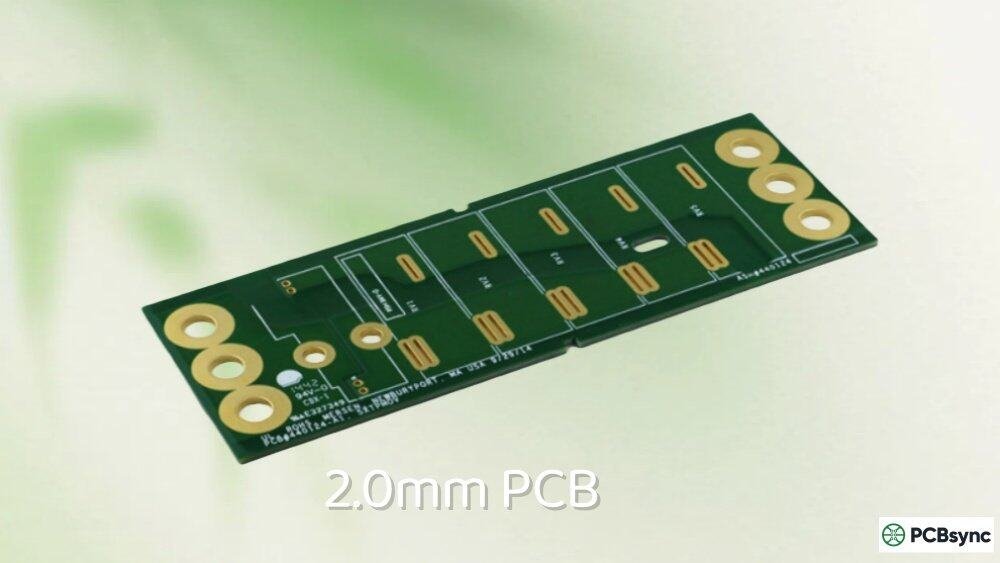
A 2.0mm PCB (approximately 0.079 inches or 79 mils) is a printed circuit board with a total finished thickness of 2.0 millimeters. This measurement includes all layers: substrate material (typically FR-4), copper layers, prepreg, solder mask, and surface finish.
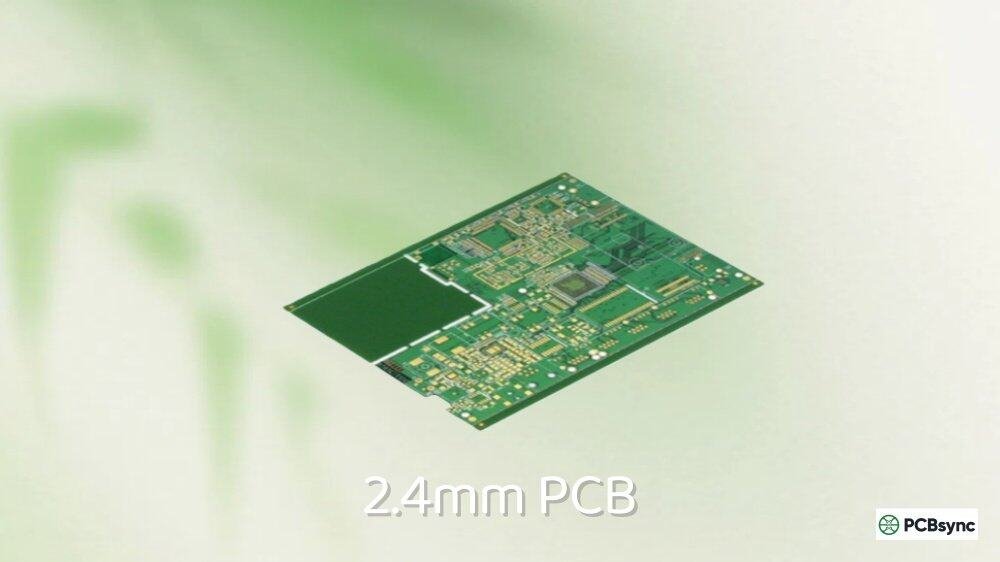
This thickness sits in what I call the “heavy-duty” category—thicker than the standard 1.6mm but not as extreme as 2.4mm or 3.2mm boards used in very specialized applications. It’s the sweet spot for many industrial and high-power designs where you need extra robustness without dramatically increasing cost or weight.
Standard PCB Thickness Options Compared
To put 2.0mm in context, here’s how it compares to other common thickness options:
Thickness
Imperial (inches)
Typical Applications
Key Characteristics
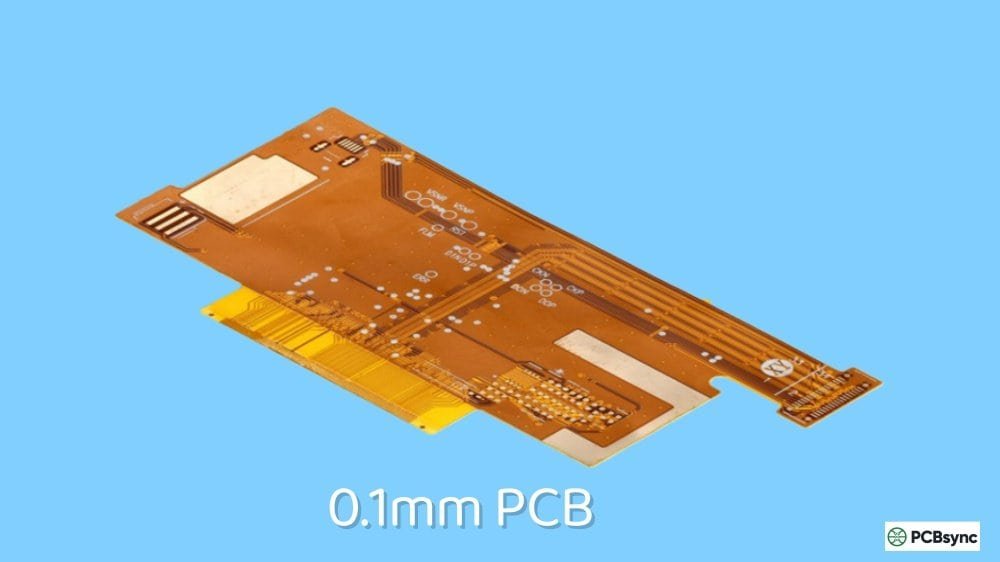
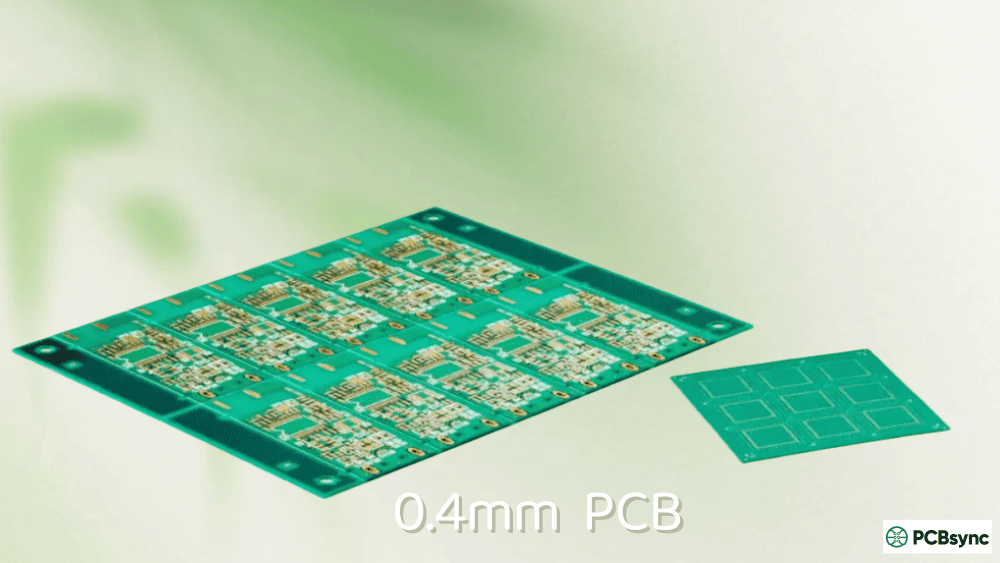
0.4mm
0.016″
Flexible circuits, ultra-compact devices
Very thin, requires careful handling
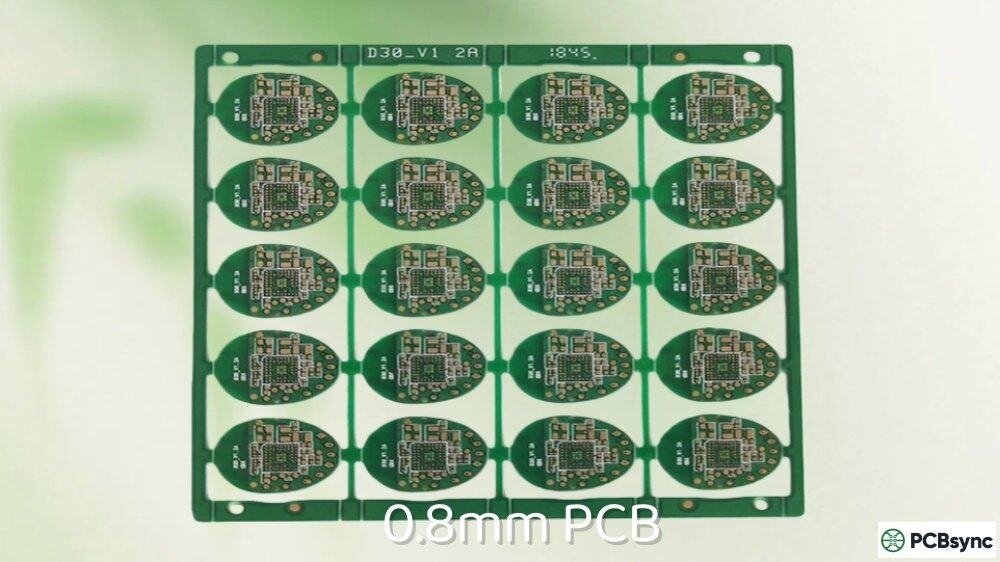
0.8mm
0.031″
Smartphones, wearables, drones
Lightweight, space-constrained designs
1.0mm
0.039″
Tablets, portable electronics
Balance of thin profile and durability
1.6mm
0.063″
Standard consumer electronics
Industry default, most cost-effective
2.0mm
0.079″
Industrial equipment, automotive, power electronics
Enhanced durability, better thermal performance
2.4mm
0.094″
Heavy industrial, server equipment
High mechanical strength, heavy copper support
3.2mm
0.126″
Power supplies, extreme environments
Maximum durability, excellent heat dissipation
When Should You Specify a 2.0mm PCB?
Through my experience designing boards for various industries, I’ve identified several scenarios where upgrading to 2.0mm thickness is worth the modest cost increase.
Industrial Control Systems
Factory floors are brutal environments. Between constant vibration from heavy machinery, temperature swings, and the occasional physical impact, standard-thickness boards can fail prematurely. I once worked on a PLC module that experienced a 15% field failure rate with 1.6mm boards—switching to 2.0mm cut that number to under 3%.
The extra thickness provides better resistance to warping during thermal cycles and improved mechanical stability for large terminal blocks and connectors that see repeated insertion cycles.
Automotive Electronics
Modern vehicles put electronics through temperature extremes ranging from -40°C to 125°C or higher under the hood. Add in constant vibration and you have a recipe for solder joint fatigue. The 2.0mm PCB thickness provides the extra margin needed for long-term reliability in engine control modules, battery management systems, and infotainment units.
For electric vehicles specifically, the power electronics handling battery charging and motor control often run at hundreds of amps. Thicker boards with heavy copper layers are essential for managing these current levels without excessive heating.
Power Supply and Conversion Equipment
Switch-mode power supplies, DC-DC converters, and inverters all benefit from 2.0mm boards. The extra thickness supports heavier copper weights (2oz, 3oz, or even heavier) needed for high-current traces while providing better thermal spreading to keep power components within safe operating temperatures.
I’ve found that the combination of 2.0mm board thickness with 2oz copper strikes an excellent balance between current capacity and manufacturability for most power designs in the 10-50A range.
Heavy Component Mounting
Some designs simply have heavy components that need solid mechanical support. Large transformers, power inductors, multiple-row connectors, and heatsink assemblies all benefit from thicker boards. The 2.0mm thickness provides better thread engagement for mounting hardware and reduces the risk of board flex causing component stress.
Technical Specifications for 2.0mm PCB Design
When you’re specifying a 2.0mm board, several related parameters need consideration. Here’s what I typically include in my fab notes:
Typical 2.0mm PCB Stack-Up Configurations
Layer Count
Core Thickness
Prepreg
Copper Weight
Total
2-Layer
1.5mm FR-4
N/A
1oz outer
2.0mm
4-Layer
0.8mm cores (x2)
0.2mm
1oz all layers
2.0mm
6-Layer
0.6mm cores + thin cores
0.15mm
1oz/2oz inner
2.0mm
Manufacturing Tolerances
According to IPC standards, the typical thickness tolerance for a 2.0mm PCB is ±10%, meaning acceptable boards will measure between 1.8mm and 2.2mm. For tighter requirements, most manufacturers can achieve ±0.1mm tolerance, though this increases cost and may require specific material selection.
One aspect that often gets overlooked is how board thickness affects thermal performance. Having worked extensively on power electronics, I can tell you that the extra thermal mass of a 2.0mm board makes a measurable difference.
Heat Spreading Capacity
Copper’s thermal conductivity (approximately 401 W/m·K) makes it an excellent heat spreader. In a thicker board with multiple copper layers, heat generated by power components can spread across larger areas before being dissipated to the environment. This reduces hot spots and lowers peak component temperatures.
For context, I measured a 12°C reduction in MOSFET junction temperature when moving from a 1.6mm 2-layer board to a 2.0mm 4-layer board with identical copper weights—simply because the additional inner planes provided better heat spreading.
Thermal Cycling Resistance
The coefficient of thermal expansion (CTE) mismatch between copper (17 ppm/°C) and FR-4 (14-18 ppm/°C) creates mechanical stress during temperature changes. Thicker boards with greater stiffness resist the warping and deformation that can crack solder joints or delaminate layers over repeated thermal cycles.
For applications expecting 500+ thermal cycles over product lifetime, the 2.0mm thickness provides significant improvement in long-term reliability compared to thinner alternatives.
Heavy Copper Integration with 2.0mm PCB
The 2.0mm PCB thickness is particularly well-suited for heavy copper designs. While standard boards typically use 1oz (35μm) copper, high-power applications often require 2oz (70μm), 3oz (105μm), or heavier.
Copper Weight and Current Capacity Reference
Copper Weight
Thickness
Current Capacity (1mm trace, 20°C rise)
1oz
35μm
~3A
2oz
70μm
~6A
3oz
105μm
~9A
4oz
140μm
~12A
The extra board thickness of 2.0mm provides more substrate material to accommodate the stress from thick copper layers during thermal cycling. It also allows for adequate dielectric spacing between high-voltage traces and planes without compromising overall mechanical strength.
Design Considerations for 2.0mm PCB Projects
Based on my experience, here are the practical considerations that affect your design when working with 2.0mm boards.
Aspect Ratio for Vias
The hole diameter relative to board thickness (aspect ratio) affects plating quality and reliability. For a 2.0mm board, I recommend keeping the aspect ratio at 10:1 or better for through-hole vias. This means minimum via diameter of 0.2mm for standard processes, or 0.15mm if your fab house has advanced drilling and plating capability.
Component Compatibility
Many standard connectors are designed for 1.6mm board thickness. When specifying a 2.0mm board, verify that your connectors, card edges, and press-fit components are rated for the thicker material. Some may require specific part numbers or longer leads.
Weight Considerations
A 2.0mm FR-4 board weighs approximately 25% more than a 1.6mm board. While this rarely matters for stationary industrial equipment, it can be significant for handheld devices, drones, or aerospace applications. Always calculate total assembly weight when thickness decisions are being made.
Cost Impact
Expect roughly 5-15% higher board cost for 2.0mm compared to 1.6mm, depending on layer count and other specifications. The extra material and potentially longer drilling times contribute to this increase. However, for industrial applications, this cost is often trivial compared to the field failure costs that thicker boards help prevent.
Common Applications for 2.0mm PCB
Let me share some real applications where 2.0mm boards make sense:
Industrial Power Inverters and Motor Drives
Variable frequency drives (VFDs) and servo motor controllers commonly use 2.0mm boards with heavy copper. The combination handles high switching currents while providing the thermal mass needed during motor startup surge conditions.
Battery Management Systems (BMS)
Electric vehicle and energy storage BMS boards often operate at hundreds of amps during fast charging. The 2.0mm thickness supports wide power traces and provides mechanical stability for multiple high-current connectors.
Outdoor and Harsh Environment Equipment
Telecom base stations, solar inverters, and agricultural equipment all face challenging environments. The enhanced durability of 2.0mm boards improves field reliability where service access is difficult or expensive.
Medical and Scientific Instruments
Laboratory equipment and medical devices requiring high reliability often specify 2.0mm boards even when electrical requirements don’t demand it—the extra mechanical robustness reduces failure risk in critical applications.
Design Tips from the Trenches
After designing dozens of boards at 2.0mm thickness, here are some lessons learned:
Plan your stack-up early. Work with your fabricator to define the exact laminate and prepreg combination that achieves 2.0mm. Don’t assume they’ll figure it out—different material combinations affect impedance, thermal behavior, and reliability.
Consider panelization effects. Thicker boards in panels can experience more stress during routing. Discuss panel layout and scoring requirements with your manufacturer to minimize warpage.
Specify twist and bow limits. For 2.0mm boards, I typically specify ≤0.5% twist and bow for critical applications. Standard tolerance is around 1%, but tighter specs prevent assembly issues with surface-mount components.
Use thermal vias liberally. Take advantage of the board thickness to incorporate thermal via arrays under power components. The vias transfer heat to inner copper planes more effectively than relying on surface spreading alone.
Document everything. Include explicit stack-up requirements, thickness tolerances, and any special manufacturing notes on your fab drawing. What’s obvious to you may not be to your manufacturer’s process engineers.
Industry Standards and Compliance
When designing 2.0mm PCBs for industrial applications, several standards become relevant:
IPC Standards Reference
Standard
Description
Relevance to 2.0mm PCB
IPC-6012
Qualification and Performance Specification for Rigid PCBs
Defines classes (1, 2, 3) and acceptance criteria
IPC-A-600
Acceptability of Printed Boards
Visual quality standards
IPC-2221
Generic Standard on Printed Board Design
Spacing, trace width, and design rules
IPC-4101
Specification for Base Materials
Laminate specifications including Tg requirements
For industrial and automotive applications, IPC Class 2 or Class 3 construction is typically required. Class 3 mandates tighter tolerances, better plating coverage, and more stringent inspection criteria—all of which become more important as board thickness increases.
Useful Resources for PCB Engineers
Here are resources I regularly reference when working on heavy-duty PCB designs:
Online Calculators and Tools
Saturn PCB Toolkit – Free tool for trace width, via current, and thermal calculations
IPC-2152 Trace Current Calculator – Standard-compliant current capacity calculations
Altium/KiCad Stackup Managers – Built-in tools for planning multilayer configurations
Technical Documentation
IPC-2221B Generic Standard on Printed Board Design
IPC-2152 Standard for Determining Current-Carrying Capacity
IPC-6012 Qualification and Performance Specification for Rigid PCBs
Manufacturer Resources
Most PCB fabricators publish detailed capability documents listing their standard and available thickness options, tolerances, and design rules. Request these directly—they’re invaluable for understanding what’s achievable.
Frequently Asked Questions About 2.0mm PCB
What is the standard tolerance for 2.0mm PCB thickness?
The standard manufacturing tolerance for a 2.0mm PCB is typically ±10%, meaning finished boards will measure between 1.8mm and 2.2mm. For applications requiring tighter control, most manufacturers can achieve ±0.1mm tolerance with appropriate material selection and process controls. Always specify your tolerance requirements explicitly on the fabrication drawing rather than assuming the manufacturer will meet specific needs.
How does 2.0mm PCB thickness affect signal integrity in high-speed designs?
The increased board thickness does impact controlled impedance calculations. With 2.0mm boards, dielectric spacing between signal layers and reference planes typically increases, requiring adjustments to trace width for target impedance values. For a 50-ohm microstrip, you might need trace widths 15-20% wider than on a 1.6mm board to maintain the same impedance. Work with your manufacturer’s impedance calculator or use field solver software to dial in exact dimensions.
Can I use standard components with 2.0mm thick PCBs?
Most surface-mount components work fine on any PCB thickness since they mount on the surface. Through-hole components and connectors require more attention. Standard card-edge connectors, PCB-mount jacks, and press-fit pins are typically designed for 1.6mm boards. When specifying 2.0mm thickness, verify component compatibility and source variants rated for thicker boards where necessary. Press-fit pins especially need longer engagement zones for thicker boards.
What copper weights work best with 2.0mm PCB for high-current applications?
The 2.0mm thickness comfortably supports copper weights up to 3oz (105μm) on inner layers and 4oz (140μm) on outer layers for most manufacturers. For high-current applications in the 20-50A range, I typically specify 2oz copper on power layers combined with the 2.0mm board thickness. This provides excellent current capacity while maintaining reasonable manufacturing complexity and cost. Heavier copper (6oz and above) is possible but may require specialized fabrication processes.
Is 2.0mm PCB thickness suitable for multilayer designs?
Absolutely. The 2.0mm thickness actually works well for 4, 6, and 8-layer designs because it provides adequate space for multiple copper layers with appropriate dielectric spacing. The extra thickness compared to 1.6mm allows for better impedance control and thermal performance in multilayer configurations. For designs requiring more than 8 layers within 2.0mm, work closely with your fabricator on stack-up optimization, as layer-to-layer spacing becomes constrained.
Making the Right Thickness Decision
Choosing between 1.6mm and 2.0mm PCB thickness often comes down to application requirements and risk tolerance. If you’re designing consumer electronics where weight and size matter, stick with 1.6mm or thinner. But when you’re building for industrial environments, handling significant power, or need maximum reliability, the modest cost increase for 2.0mm boards is almost always justified.
The key is understanding your specific requirements—current levels, thermal loads, mechanical stress, operating environment—and selecting the thickness that provides adequate margin without unnecessary over-engineering. In my experience, when in doubt for industrial applications, going slightly thicker is the safer bet. The field failure you prevent will more than pay for the incremental board cost.
Whether you’re designing motor controllers, power supplies, or industrial automation equipment, the 2.0mm PCB thickness provides that extra measure of robustness that can mean the difference between a product that survives its intended service life and one that becomes a warranty headache.
Inquire: Call 0086-755-23203480, or reach out via the form below/your sales contact to discuss our design, manufacturing, and assembly capabilities.
Quote: Email your PCB files to Sales@pcbsync.com (Preferred for large files) or submit online. We will contact you promptly. Please ensure your email is correct.
Notes: For PCB fabrication, we require PCB design file in Gerber RS-274X format (most preferred), *.PCB/DDB (Protel, inform your program version) format or *.BRD (Eagle) format. For PCB assembly, we require PCB design file in above mentioned format, drilling file and BOM. Click to download BOM template To avoid file missing, please include all files into one folder and compress it into .zip or .rar format.