Inquire: Call 0086-755-23203480, or reach out via the form below/your sales contact to discuss our design, manufacturing, and assembly capabilities.
Quote: Email your PCB files to Sales@pcbsync.com (Preferred for large files) or submit online. We will contact you promptly. Please ensure your email is correct.
Notes: For PCB fabrication, we require PCB design file in Gerber RS-274X format (most preferred), *.PCB/DDB (Protel, inform your program version) format or *.BRD (Eagle) format. For PCB assembly, we require PCB design file in above mentioned format, drilling file and BOM. Click to download BOM template To avoid file missing, please include all files into one folder and compress it into .zip or .rar format.
10K Resistor: Color Code, Uses & Specifications Complete Guide
If there’s one resistor value I reach for more than any other, it’s the 10K resistor. After countless Arduino projects, sensor interfaces, and production boards, I’ve found that a 10K ohm resistor covers an incredibly wide range of applications. This modest component sits in that sweet spot where it’s high enough to limit current effectively but low enough to work reliably with digital inputs and voltage dividers.
This guide covers everything you need to know about identifying, specifying, and using the 10K resistor in your projects. Whether you’re a hobbyist building your first button circuit or an engineer designing production hardware, understanding this fundamental component will serve you well.
A 10K resistor is an electronic component that provides 10,000 ohms (10 kilohms) of electrical resistance. The “K” represents the metric prefix “kilo,” meaning 1,000. When current flows through a 10K ohm resistor, it impedes that flow according to Ohm’s Law, creating a voltage drop proportional to the current.
The 10K value has become a de facto standard in electronics for several practical reasons. It’s high enough to prevent excessive current draw from sensitive circuits, yet low enough to provide clean signal levels for digital inputs. This balance makes the 10K resistor ideal for pull-up resistors, pull-down resistors, voltage dividers, and countless other applications.
Specification
Typical Value
Resistance
10,000Ω (10kΩ)
Common Tolerances
±1%, ±5%
Power Ratings
1/8W, 1/4W, 1/2W, 1W
Temperature Coefficient
50-250 ppm/°C
Package Types
Through-hole, SMD (0402-2512)
10K Resistor Color Code Identification
Resistors use colored bands to indicate their resistance value and tolerance. Understanding this color code system is essential for quickly identifying components during prototyping and troubleshooting.
4-Band 10K Resistor Color Code
The standard 4-band color code for a 10K resistor is:
Band
Color
Value
1st Band
Brown
1 (first digit)
2nd Band
Black
0 (second digit)
3rd Band
Orange
×1,000 (multiplier)
4th Band
Gold
±5% (tolerance)
Reading from left to right: Brown (1) + Black (0) = 10, multiplied by Orange (1,000) = 10,000 ohms. The gold band indicates ±5% tolerance, meaning the actual resistance can range from 9,500Ω to 10,500Ω.
5-Band 10K Resistor Color Code
Precision resistors use five bands for greater accuracy:
Band
Color
Value
1st Band
Brown
1 (first digit)
2nd Band
Black
0 (second digit)
3rd Band
Black
0 (third digit)
4th Band
Red
×100 (multiplier)
5th Band
Brown
±1% (tolerance)
The calculation: 100 × 100 = 10,000 ohms with ±1% tolerance. Five-band resistors provide tighter tolerance specifications needed for precision circuits.
6-Band 10K Resistor Color Code
High-precision applications use 6-band resistors that add a temperature coefficient indicator:
Band
Color
Value
1st-4th Bands
Same as 5-band
Resistance value
5th Band
Brown
±1% tolerance
6th Band
Brown
100 ppm/°C TCR
The sixth band specifies how much the resistance changes per degree Celsius, crucial for precision instrumentation and measurement circuits where temperature stability matters.
SMD 10K Resistor Markings
Surface-mount 10K resistors use numerical codes instead of color bands:
Marking System
Code for 10K
Tolerance
3-Digit Code
103
±5% typically
4-Digit Code
1002
±1% typically
EIA-96 Code
01C
±1%
The 3-digit code “103” means 10 × 10³ = 10,000Ω. The 4-digit code “1002” means 100 × 10² = 10,000Ω. EIA-96 codes require a lookup table where “01” represents 100 and “C” indicates ×100 multiplier.
10K Ohm Resistor Specifications
Selecting the right 10K resistor requires understanding several key specifications beyond just the resistance value.
Power Rating
The power rating specifies the maximum energy the resistor can safely dissipate as heat. Exceeding this rating causes overheating and potential failure.
Power Rating
Through-Hole Size
SMD Package
1/8W (0.125W)
Small axial
0402, 0603
1/4W (0.25W)
Standard axial
0805, 1206
1/2W (0.5W)
Large axial
1210, 2010
1W
Power resistor
2512
To calculate power dissipation, use P = I²R or P = V²/R. For a 10K resistor with 5V across it, power dissipation would be 25/10,000 = 0.0025W (2.5mW), well within any standard rating.
Tolerance
Tolerance indicates how much the actual resistance may vary from the nominal 10,000Ω value:
±5% (Gold band): 9,500Ω to 10,500Ω — suitable for most general applications
±1% (Brown band): 9,900Ω to 10,100Ω — needed for precision circuits
±0.1% (Violet band): 9,990Ω to 10,010Ω — measurement and instrumentation
For pull-up resistors and basic voltage dividers, ±5% tolerance works fine. Precision analog circuits and calibration networks require tighter tolerances.
Temperature Coefficient (TCR)
The temperature coefficient specifies resistance change per degree Celsius, expressed in parts per million (ppm/°C). A 10K resistor with 100 ppm/°C TCR changes by 1Ω for every 1°C temperature change—a 0.01% shift that matters in precision applications.
The 10K ohm resistor appears in virtually every category of electronic circuit. Here are the most common uses I encounter regularly.
Pull-Up and Pull-Down Resistors
This is the most frequent application for a 10K resistor. When connecting buttons, switches, or open-collector outputs to microcontroller inputs, a pull-up or pull-down resistor ensures a defined logic level when the input isn’t actively driven.
Pull-up configuration: The 10K resistor connects between the input pin and VCC (typically 3.3V or 5V). The pin reads HIGH by default and goes LOW when the button connects it to ground.
Pull-down configuration: The 10K resistor connects between the input pin and ground. The pin reads LOW by default and goes HIGH when the button connects it to VCC.
The 10K value works well because it limits current to safe levels (0.5mA at 5V) while providing enough drive strength for reliable digital reading. Many microcontrollers, including Arduino, have internal pull-up resistors, but external 10K resistors often provide more reliable operation.
Voltage Divider Circuits
Two resistors in series create a voltage divider that reduces voltage proportionally. A common application uses two 10K resistors to divide a voltage in half:
Vout = Vin × (R2 / (R1 + R2))
With two equal 10K resistors and 5V input, the output equals 2.5V. This technique interfaces 5V signals with 3.3V microcontrollers or scales sensor outputs to ADC input ranges.
Arduino and Microcontroller Projects
The 10K resistor is ubiquitous in Arduino projects:
Button inputs: Pull-down resistor ensures clean LOW state when button isn’t pressed
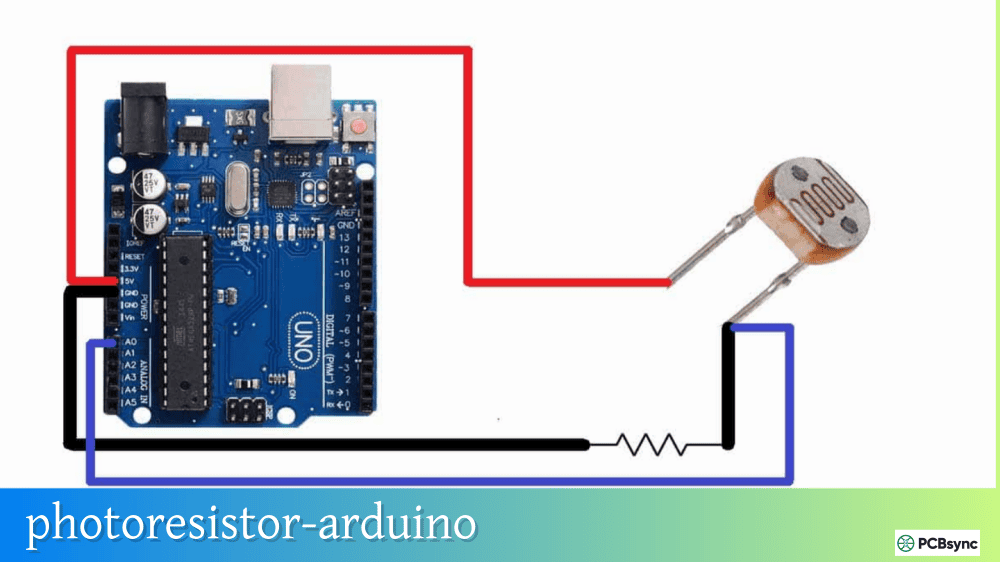
Sensor interfaces: Voltage divider with thermistors, photoresistors, and other variable-resistance sensors
I2C pull-ups: Though 4.7K is more common, 10K works for slower I2C speeds
Analog reference: Setting reference voltages for comparators and ADCs
Op-Amp Feedback Networks
Operational amplifier gain depends on the ratio of feedback resistors. Using 10K resistors in both positions creates unity gain (gain = 1). Different combinations with other values set specific amplification factors.
RC Timing Circuits
Combined with capacitors, 10K resistors set timing intervals in oscillators, timers, and delay circuits. The time constant τ = R × C. With a 10K resistor and 100µF capacitor, τ = 1 second.
How to Test a 10K Resistor
Verifying resistor values with a multimeter is essential for troubleshooting and confirming components before installation.
Multimeter Testing Procedure
Set the multimeter to resistance (Ω) mode
Select appropriate range — 20kΩ range for a 10K resistor
Disconnect the resistor from any circuit
Touch probes to each resistor lead
Read the display — should show approximately 10.00kΩ
A good 10K resistor with ±5% tolerance should read between 9.5kΩ and 10.5kΩ. Readings significantly outside this range indicate a damaged or incorrect component.
Common Testing Issues
Symptom
Likely Cause
Reading “OL” or infinity
Open resistor (failed)
Reading much lower than expected
Parallel path in circuit
Fluctuating reading
Poor probe contact
Reading higher than expected
Oxidized leads
Always test resistors out of circuit when possible, as parallel paths through other components can affect readings.
Selecting the Right 10K Resistor
Choosing the appropriate 10K resistor involves matching specifications to your application requirements.
Selection Criteria Summary
Application
Recommended Specs
General pull-up/pull-down
1/4W, ±5%, through-hole or 0805 SMD
Precision voltage reference
1/4W, ±1%, metal film
High-temperature environment
1/2W, ±1%, 50 ppm/°C TCR
High-density PCB
1/8W, 0402 or 0603 SMD
Prototyping/breadboard
1/4W, ±5%, through-hole
Resistor Types
Carbon film: Economical, ±5% tolerance, adequate for most applications
Metal film: Better stability, ±1% tolerance, lower noise, preferred for precision work
Thick film (SMD): Standard surface-mount technology, good balance of cost and performance
Thin film (SMD): Highest precision, tightest tolerances, lowest TCR
Useful Resources for 10K Resistors
Online Calculators and Tools
DigiKey Resistor Color Code Calculator (digikey.com)
Mouser Resistor Parametric Search (mouser.com)
Vishay Resistor Selector (vishay.com)
All About Circuits Resistor Calculator (allaboutcircuits.com)
IEC 60062: Marking codes for resistors and capacitors
Frequently Asked Questions About 10K Resistors
Why is the 10K resistor so commonly used as a pull-up resistor?
The 10K value strikes an optimal balance between current consumption and signal reliability. At 5V, a 10K pull-up draws only 0.5mA when the input is pulled low, minimizing power waste while still providing adequate current to maintain a stable high state. Lower values would waste more power; higher values risk the input floating or being affected by noise. For most microcontroller applications operating at 3.3V or 5V, 10K provides reliable operation across a wide range of conditions.
Can I substitute a different resistor value for a 10K resistor?
It depends on the application. For pull-up resistors, values from 4.7K to 47K typically work, though 10K is ideal. For voltage dividers, any substitution changes the output voltage proportionally. For timing circuits, changing the resistor value directly affects timing intervals. Always calculate the impact of substitution on your specific circuit before making changes. In precision applications, even ±5% tolerance variation within the 10K specification may cause issues.
What’s the difference between a 4-band and 5-band 10K resistor?
The primary difference is precision. A 4-band 10K resistor typically offers ±5% tolerance (gold fourth band), meaning actual resistance ranges from 9,500Ω to 10,500Ω. A 5-band 10K resistor provides ±1% tolerance (brown fifth band), narrowing the range to 9,900Ω-10,100Ω. The extra band in 5-band resistors represents an additional significant digit, enabling more precise value marking. Use 5-band resistors when circuit performance depends on accurate resistance values.
How do I identify a 10K SMD resistor without markings?
Unmarked or unreadable SMD resistors require measurement with a multimeter. Set your meter to resistance mode, carefully probe both ends of the component, and read the value. If the resistor is soldered to a board, you may need to lift one end to get an accurate reading, as parallel circuit paths can affect measurements. For future reference, many engineers mark unmarked components with a fine-tip permanent marker after verification.
What happens if I use a 10K resistor with too low a power rating?
If power dissipation exceeds the resistor’s rating, it will overheat. Initial symptoms include resistance drift as the component heats up. Continued overload causes visible discoloration, eventual open-circuit failure, or in extreme cases, the resistor can catch fire. Always calculate power dissipation using P = V²/R or P = I²R and select a resistor rated for at least 50% more than your calculated maximum. For a 10K resistor at 5V, dissipation is only 2.5mW, so even 1/8W ratings are adequate for most low-voltage applications.
Conclusion
The 10K resistor earns its place as a staple component through sheer versatility. From stabilizing digital inputs to dividing voltages and setting timing intervals, this single value addresses a remarkable range of circuit needs. Understanding its color code, specifications, and proper applications ensures you’ll use it effectively in your projects.
Keep a healthy stock of 10K resistors in both through-hole and SMD formats. When in doubt about pull-up values, timing resistors, or general-purpose current limiting, the 10K ohm resistor is almost always a safe and effective choice.
Inquire: Call 0086-755-23203480, or reach out via the form below/your sales contact to discuss our design, manufacturing, and assembly capabilities.
Quote: Email your PCB files to Sales@pcbsync.com (Preferred for large files) or submit online. We will contact you promptly. Please ensure your email is correct.
Notes: For PCB fabrication, we require PCB design file in Gerber RS-274X format (most preferred), *.PCB/DDB (Protel, inform your program version) format or *.BRD (Eagle) format. For PCB assembly, we require PCB design file in above mentioned format, drilling file and BOM. Click to download BOM template To avoid file missing, please include all files into one folder and compress it into .zip or .rar format.