Inquire: Call 0086-755-23203480, or reach out via the form below/your sales contact to discuss our design, manufacturing, and assembly capabilities.
Quote: Email your PCB files to Sales@pcbsync.com (Preferred for large files) or submit online. We will contact you promptly. Please ensure your email is correct.
Notes: For PCB fabrication, we require PCB design file in Gerber RS-274X format (most preferred), *.PCB/DDB (Protel, inform your program version) format or *.BRD (Eagle) format. For PCB assembly, we require PCB design file in above mentioned format, drilling file and BOM. Click to download BOM template To avoid file missing, please include all files into one folder and compress it into .zip or .rar format.
If you’ve ever ordered a PCB prototype or looked at manufacturer specifications, you’ve probably noticed that 1.6mm PCB thickness appears as the default option everywhere. This isn’t a coincidence. The 1.6mm PCB has earned its place as the global industry standard through decades of optimization, and understanding why can help you make better design decisions.
In this guide, I’ll explain exactly how 1.6mm became the dominant thickness, when you should use it, when you shouldn’t, and provide complete stackup configurations for multilayer designs. Whether you’re designing your first board or your hundredth, this information will save you time and help you avoid costly mistakes.
A 1.6mm PCB refers to a printed circuit board with a total finished thickness of 1.6 millimeters (approximately 0.063 inches or 63 mils). This measurement includes all layers of the board: the FR-4 substrate, copper layers, prepreg materials, solder mask, and surface finish.
Measurement
Value
Metric
1.6mm
Imperial (inches)
0.063″
Imperial (mils)
63 mil
Tolerance (standard)
±10% (1.44mm – 1.76mm)
Tolerance (tight)
±0.1mm (1.5mm – 1.7mm)
The 1.6mm thickness represents what most manufacturers consider their “standard” offering. When you submit a design without specifying thickness, your fabricator will almost certainly default to 1.6mm. This standardization means faster production times, lower costs, and predictable results.
How 1.6mm Became the Global PCB Standard
The dominance of 1.6mm PCB thickness didn’t happen by accident. It traces back to the early days of printed circuit board manufacturing, and understanding this history helps explain why it remains the standard today.
The Origin Story: From Imperial to Metric
During the vacuum tube era, when the PCB industry was just beginning, manufacturers needed a thickness that could provide adequate mechanical support for heavy components while remaining practical to produce. The material of choice was phenolic laminate, and the standard production thickness was 1/16 inch.
Imperial Origin
Metric Conversion
Common Usage
1/16 inch
1.5875mm
Rounds to 1.6mm
0.062 inch
1.5748mm
Often cited as 1.57mm
62-63 mils
1.57-1.60mm
Industry standard range
When the electronics industry transitioned to metric measurements, 1/16 inch converted to approximately 1.5875mm. Different regions rounded this differently: some use 1.57mm, others 1.58mm, and most simply round to 1.6mm. This is why you’ll occasionally see specifications listing 1.57mm as the “standard” thickness. They’re all referring to the same original imperial dimension.
Why the Industry Standardized on This Thickness
Several factors cemented 1.6mm as the default choice.
Connector Compatibility: Board-to-board connectors, edge connectors, and card slots were designed around the 1/16 inch specification. PCIe slots, ISA connectors, and countless other interface standards assume this thickness. Deviating from 1.6mm means risking compatibility issues with standard connectors.
Manufacturing Economics: Fabricators optimized their processes, equipment, and material inventories around 1.6mm boards. Lamination presses, drilling machines, and handling equipment all work most efficiently with this thickness. Non-standard thicknesses require process adjustments that increase cost and lead time.
Mechanical Balance: The 1.6mm thickness provides an optimal balance between rigidity and weight. Boards are stiff enough to support through-hole components and withstand handling during assembly, yet thin enough to fit in most enclosures without excessive material cost.
IPC Standardization: Industry standards like IPC-2221 specify 1.6mm as the baseline thickness for general-purpose PCBs, giving engineers and manufacturers a common reference point.
Key Benefits of 1.6mm PCB Thickness
Before choosing a PCB thickness, you need to understand what 1.6mm boards do well. Here’s why the standard thickness works for the majority of applications.
Mechanical Strength and Durability
A 1.6mm PCB provides excellent rigidity for boards up to approximately 200mm x 200mm without requiring additional stiffeners. The board can support heavy components like large transformers, heat sinks, and through-hole connectors without flexing during assembly or operation.
Board Dimension
1.6mm Suitability
Notes
Up to 100mm x 100mm
Excellent
No flex concerns
100mm – 200mm
Good
Suitable for most components
200mm – 300mm
Adequate
Consider support points
Over 300mm
Marginal
May need stiffeners or thicker board
Thermal Performance
Thicker boards generally dissipate heat more effectively than thinner alternatives. The additional FR-4 material acts as a thermal mass, helping to spread and absorb heat from power components. For designs with moderate power dissipation, 1.6mm provides adequate thermal management without requiring special materials.
Signal Integrity for High-Speed Design
The 1.6mm thickness accommodates proper impedance-controlled stackups. With adequate dielectric spacing between signal and reference planes, you can achieve controlled impedance traces (typically 50Ω single-ended or 100Ω differential) using practical trace widths. Thinner boards compress these spacings, making impedance control more difficult with standard PCB manufacturing tolerances.
Cost Effectiveness
Because 1.6mm is the industry standard, it’s also the most economical choice for most projects.
Thickness
Relative Cost
Lead Time Impact
0.8mm
+5-15%
May add 1-2 days
1.0mm
+0-10%
Usually standard
1.2mm
+0-5%
Usually standard
1.6mm
Baseline
Fastest
2.0mm
+5-15%
May add 1-2 days
2.4mm+
+15-25%
Often adds 3+ days
1.6mm PCB Stackup Configurations
One advantage of 1.6mm thickness is its versatility across different layer counts. Here are standard stackup configurations you can use directly in your designs.
2-Layer 1.6mm PCB Stackup
The simplest configuration, ideal for low-complexity designs with modest routing density.
Layer
Material
Thickness
Copper Weight
Top
Copper
35µm
1 oz
Core
FR-4
1.5mm
—
Bottom
Copper
35µm
1 oz
Total
~1.6mm
This stackup works well for simple power supplies, LED drivers, and basic control circuits where signal integrity isn’t critical.
4-Layer 1.6mm PCB Stackup
The workhorse configuration for most embedded systems and moderate-complexity designs.
Layer
Function
Material
Thickness
Copper
L1
Signal
Copper
35µm
1 oz
Prepreg
PP 2116
0.12mm
—
L2
Ground
Copper
35µm
1 oz
Core
FR-4
1.2mm
—
L3
Power
Copper
35µm
1 oz
Prepreg
PP 2116
0.12mm
—
L4
Signal
Copper
35µm
1 oz
Total
~1.6mm
With dedicated ground and power planes, this stackup provides good EMI performance and supports impedance-controlled routing on the outer layers.
6-Layer 1.6mm PCB Stackup
For high-speed digital designs, mixed-signal circuits, or dense routing requirements.
Layer
Function
Material
Thickness
Copper
L1
Signal
Copper
35µm
1 oz
Prepreg
PP 1080
0.075mm
—
L2
Ground
Copper
18µm
0.5 oz
Core
FR-4
0.4mm
—
L3
Signal
Copper
18µm
0.5 oz
Prepreg
PP 7628
0.2mm
—
L4
Signal
Copper
18µm
0.5 oz
Core
FR-4
0.4mm
—
L5
Power
Copper
18µm
0.5 oz
Prepreg
PP 1080
0.075mm
—
L6
Signal
Copper
35µm
1 oz
Total
~1.6mm
This configuration places signal layers adjacent to reference planes, providing excellent EMI shielding and stable impedance control. The thicker prepreg in the middle reduces crosstalk between internal signal layers.
8-Layer 1.6mm PCB Stackup
For complex designs requiring maximum routing density within standard thickness.
Layer
Function
Material
Thickness
Copper
L1
Signal
Copper
35µm
1 oz
Prepreg
PP 1080
0.065mm
—
L2
Ground
Copper
18µm
0.5 oz
Core
FR-4
0.2mm
—
L3
Signal
Copper
18µm
0.5 oz
Prepreg
PP 2116
0.1mm
—
L4
Power
Copper
18µm
0.5 oz
Core
FR-4
0.3mm
—
L5
Ground
Copper
18µm
0.5 oz
Prepreg
PP 2116
0.1mm
—
L6
Signal
Copper
18µm
0.5 oz
Core
FR-4
0.2mm
—
L7
Power
Copper
18µm
0.5 oz
Prepreg
PP 1080
0.065mm
—
L8
Signal
Copper
35µm
1 oz
Total
~1.6mm
Note that 8-layer boards in 1.6mm thickness require thin cores and prepregs. This makes impedance control more challenging and may require closer coordination with your fabricator.
The 1.6mm thickness excels in a wide range of applications. Here’s where it makes the most sense.
Industrial Control Systems
Industrial environments demand reliability. The 1.6mm thickness provides mechanical robustness to withstand vibration, temperature cycling, and rough handling during installation and maintenance. PLCs, motor controllers, and instrumentation systems commonly use 1.6mm boards.
Computer Motherboards and Expansion Cards
PC motherboards, graphics cards, and expansion cards rely on 1.6mm thickness for edge connector compatibility. PCIe, DIMM, and other standard slots expect this thickness for proper contact alignment and retention.
General Consumer Electronics
Television controllers, home appliances, audio equipment, and similar products benefit from the cost-effectiveness and availability of 1.6mm PCBs. The thickness provides adequate performance without premium pricing.
Automotive Electronics
While some automotive applications use thicker boards for extreme durability, many ECUs, body controllers, and infotainment systems use 1.6mm boards with appropriate material grades (high-Tg FR-4 or similar).
Power Electronics
Moderate-power supplies, battery management systems, and LED drivers often use 1.6mm boards. The thickness supports adequate copper weight for current-carrying traces while providing mechanical support for transformers and heat sinks.
Application
Recommended Layers
Key Considerations
Industrial controls
4-6
High-Tg material for temperature
Computer peripherals
2-4
Edge connector compatibility
Consumer electronics
2-4
Cost optimization
Automotive
4-6
Vibration resistance
Power supplies
2-4
Heavy copper option
Telecom equipment
6-8
Impedance control
When NOT to Use 1.6mm PCB
While 1.6mm works for most applications, some designs benefit from different thicknesses.
Compact Mobile Devices
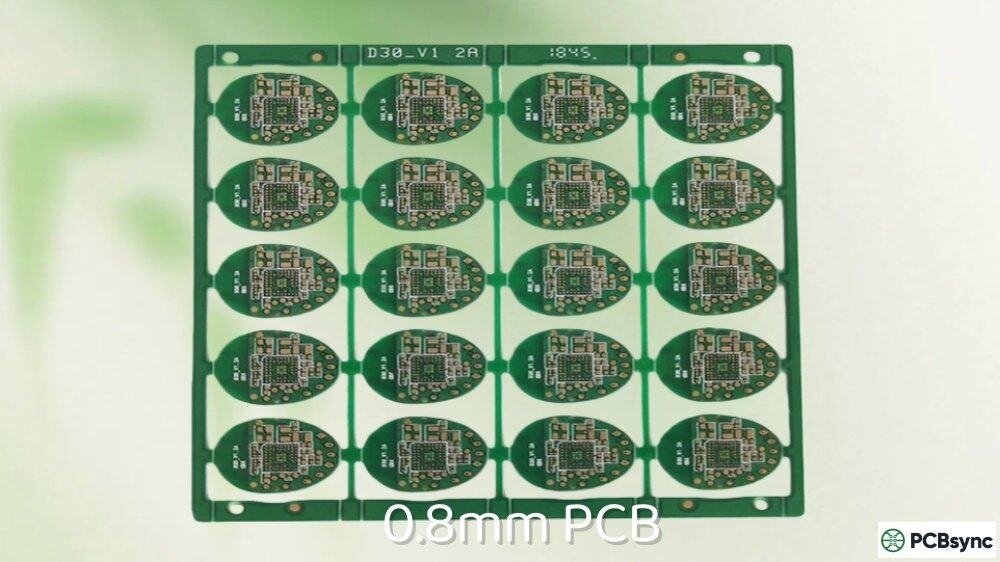
Smartphones, tablets, and wearables need every fraction of a millimeter. These devices typically use 0.8mm to 1.0mm boards to minimize overall product thickness.
Ultra-Thin Form Factors
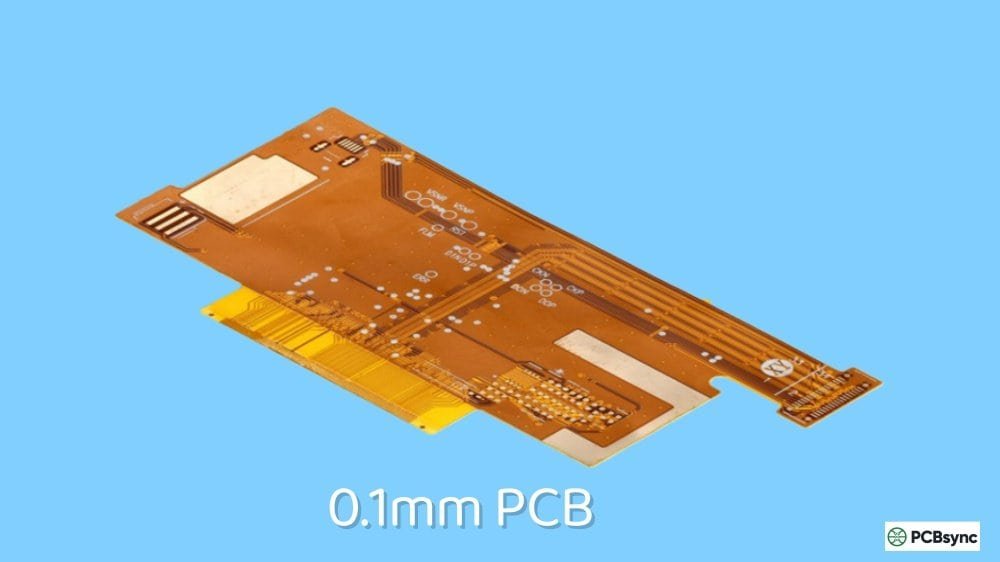
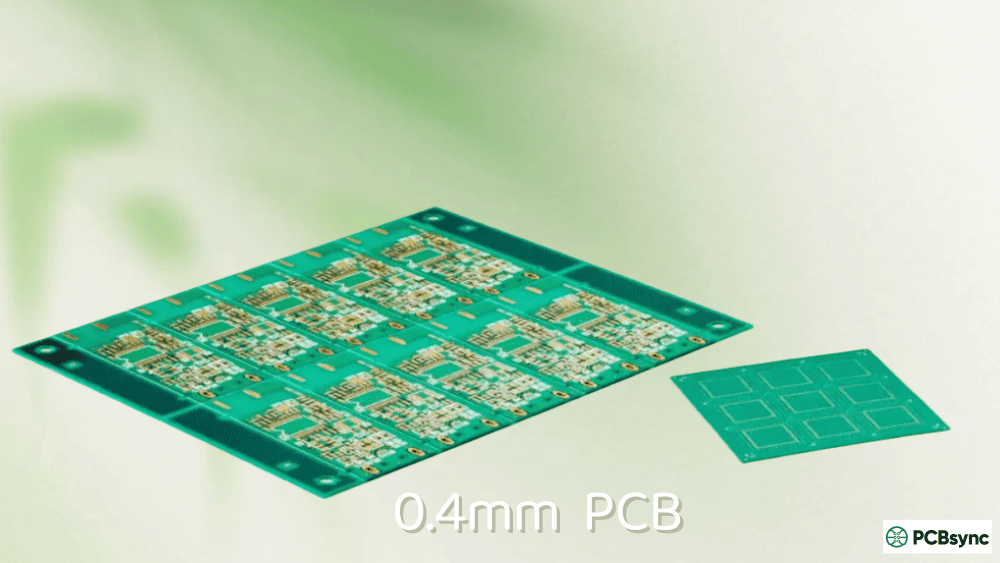
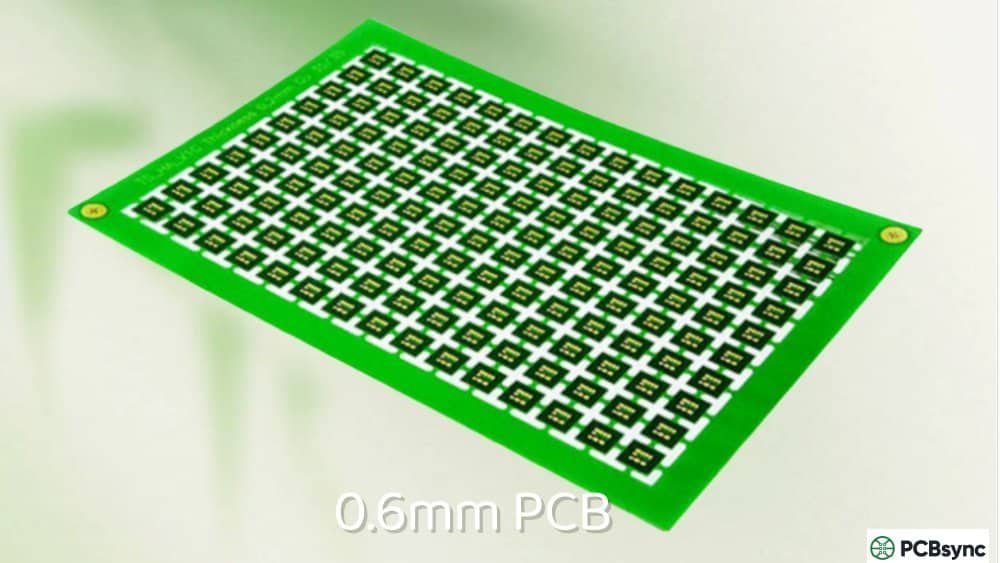
Credit card-sized devices, smart cards, and similar applications may require boards as thin as 0.4mm to 0.6mm.
High-Power Industrial Equipment
Heavy industrial equipment with large transformers, high-current busbars, or extreme vibration may benefit from 2.0mm to 2.4mm boards for additional strength.
Specific Connector Requirements
Some specialized connectors require non-standard thicknesses. Always verify connector specifications before finalizing board thickness.
If Your Design Needs…
Consider Instead
Minimal device thickness
0.8mm or 1.0mm
Maximum mechanical strength
2.0mm or thicker
Credit card form factor
0.4mm – 0.6mm
Specific connector compatibility
Match connector spec
Flex or rigid-flex
Different approach entirely
1.6mm PCB vs Other Thicknesses: Detailed Comparison
Here’s how 1.6mm compares to other common thickness options across multiple parameters.
Parameter
0.8mm
1.0mm
1.2mm
1.6mm
2.0mm
Mechanical Strength
Low
Moderate
Good
Excellent
Superior
Weight
Lightest
Light
Moderate
Standard
Heavy
Thermal Mass
Limited
Limited
Moderate
Good
Excellent
Max Practical Layers
4
6
6
8
10+
Impedance Control Ease
Difficult
Moderate
Good
Excellent
Excellent
Standard Connector Fit
No
Some
Most
Yes
May not fit
Relative Cost
+10%
+5%
+0-5%
Baseline
+10%
Availability
Good
Good
Excellent
Best
Good
Warp Risk
Higher
Moderate
Low
Lowest
Lowest
Manufacturing Considerations for 1.6mm PCB
Understanding manufacturing aspects helps you design boards that fabricators can build reliably.
Drilling Aspect Ratios
The aspect ratio (board thickness ÷ hole diameter) affects plating quality in through-holes.
Hole Diameter
Aspect Ratio
Plating Quality
0.3mm
5.3:1
Acceptable
0.25mm
6.4:1
Challenging
0.2mm
8:1
Difficult, higher cost
0.15mm
10.7:1
Requires HDI process
For 1.6mm boards, keep minimum hole diameters at 0.25mm or larger for standard fabrication. Smaller holes may require advanced processes.
Warpage Prevention
Even at 1.6mm, boards can warp if copper distribution is uneven. Follow these guidelines to minimize warpage.
Maintain symmetric copper distribution between top and bottom layers. Keep inner layer copper percentages within 20% of each other between opposing layers. Use adequate ground fill on signal layers. Avoid concentrating heavy copper pours on one side of the board.
Surface Finish Selection
All standard surface finishes work well with 1.6mm boards.
Surface Finish
Shelf Life
Lead-Free
Fine Pitch
HASL
12 months
No
0.5mm+
Lead-Free HASL
12 months
Yes
0.5mm+
ENIG
12 months
Yes
0.4mm+
OSP
6 months
Yes
0.4mm+
Immersion Silver
6 months
Yes
0.4mm+
Immersion Tin
6 months
Yes
0.4mm+
Design Tips for 1.6mm PCB Projects
After working with countless 1.6mm board designs, here are practical tips that will save you trouble.
Tip 1: Verify Connector Specifications Early Before finalizing your stackup, check all connector datasheets for PCB thickness requirements. Some connectors specify exact thickness ranges that may not align with your initial assumptions.
Tip 2: Communicate Stackup Requirements Clearly Don’t assume your fabricator will use the stackup you want. Specify layer count, thickness, and impedance requirements explicitly in your fabrication notes. Request stackup confirmation before production.
Tip 3: Consider Panelization Effects Large panels with multiple boards can exhibit more warpage than single boards. If you’re panelizing, discuss panel size with your fabricator and consider adding tooling holes for better support during processing.
Tip 4: Account for Thickness Tolerance in Enclosure Design With ±10% tolerance, a 1.6mm board could be anywhere from 1.44mm to 1.76mm. Design enclosure slots and mounting features to accommodate this range.
Tip 5: Use Standard Prepreg and Core Combinations Exotic stackups require special material orders. Stick to standard prepreg types (1080, 2116, 7628) and common core thicknesses for fastest delivery and lowest cost.
Useful Resources for 1.6mm PCB Design
These tools and references will help you work with 1.6mm PCB designs effectively.
Impedance Calculators
Saturn PCB Design Toolkit: Free Windows application with trace impedance, via current, and thermal calculations. Download from saturnpcb.com.
JLCPCB Impedance Calculator: Online tool specifically calibrated for JLCPCB’s stackups and materials. Access at jlcpcb.com/impedance-calculator.
Stackup References
PCBWay Standard Stackups: Comprehensive library of pre-defined stackups for various layer counts and thicknesses. Available at pcbway.com/multi-layer-laminated-structure.html.
Industry Standards
IPC-2221: Generic Standard on Printed Board Design. Defines baseline requirements including the 1.6mm standard thickness.
IPC-4101: Specification for Base Materials for Rigid and Multilayer Printed Boards. Details FR-4 material properties.
Material Databases
Isola Laminate Selector: Compare properties of different laminate materials at isola-group.com.
Rogers Corporation Design Tools: High-frequency material data and calculators at rogerscorp.com.
Frequently Asked Questions
Why is 1.6mm considered the standard PCB thickness?
The 1.6mm standard originated from the imperial measurement of 1/16 inch (approximately 0.0625 inches or 63 mils), which was the production thickness of early phenolic laminates. As PCB technology evolved, connectors and manufacturing processes were optimized around this dimension. Industry standards like IPC-2221 formalized 1.6mm as the baseline, and the economics of standardization have kept it dominant ever since.
Can I fit 6 or 8 layers in a 1.6mm PCB?
Yes, 6-layer and 8-layer designs are entirely practical in 1.6mm thickness. Six-layer boards are common and straightforward with standard materials. Eight-layer boards require thinner cores and prepregs, which makes impedance control more sensitive to manufacturing tolerances. Work closely with your fabricator to verify their standard 8-layer 1.6mm stackup meets your requirements.
What’s the difference between 1.6mm, 1.57mm, and 62 mil PCB specifications?
These all refer to the same original dimension. The imperial measurement of 1/16 inch equals 1.5875mm, which different sources round to 1.57mm, 1.58mm, or 1.6mm depending on regional convention. North American sources often cite 0.062″ (62 mils), European sources commonly use 1.5mm or 1.6mm, and Asian manufacturers typically specify 1.6mm. For practical purposes, they’re interchangeable.
Is 1.6mm PCB suitable for high-frequency RF designs?
For moderate RF frequencies (up to several GHz), standard 1.6mm FR-4 boards work adequately. The thickness allows proper spacing for impedance control. However, for demanding RF applications above 3-5 GHz, you may need specialized materials (Rogers, Taconic, etc.) regardless of thickness. The limiting factor becomes material properties rather than board thickness.
How does 1.6mm PCB thickness affect assembly?
Standard SMT assembly processes are optimized for 1.6mm boards. Pick-and-place machines, reflow ovens, and wave soldering equipment handle this thickness without adjustment. Thinner boards (0.8mm or less) may require carrier fixtures to prevent warping during reflow. Thicker boards may need modified thermal profiles. Sticking with 1.6mm simplifies assembly and reduces risk.
Conclusion
The 1.6mm PCB has earned its position as the industry standard through decades of proven performance. Its balance of mechanical strength, thermal capacity, manufacturing economics, and design flexibility makes it the right choice for the majority of electronic products.
When designing your next board, start with 1.6mm as your default assumption. Only deviate from this standard when your specific requirements genuinely demand a different thickness. By working within established norms, you’ll benefit from faster fabrication, lower costs, and more predictable results.
Understanding why 1.6mm became standard helps you make informed decisions about when to use it and when alternatives make more sense. The stackup configurations and design guidelines in this article give you practical starting points for your own projects, whether you’re building a simple 2-layer prototype or a complex 8-layer production board.
Inquire: Call 0086-755-23203480, or reach out via the form below/your sales contact to discuss our design, manufacturing, and assembly capabilities.
Quote: Email your PCB files to Sales@pcbsync.com (Preferred for large files) or submit online. We will contact you promptly. Please ensure your email is correct.
Notes: For PCB fabrication, we require PCB design file in Gerber RS-274X format (most preferred), *.PCB/DDB (Protel, inform your program version) format or *.BRD (Eagle) format. For PCB assembly, we require PCB design file in above mentioned format, drilling file and BOM. Click to download BOM template To avoid file missing, please include all files into one folder and compress it into .zip or .rar format.